Quotes
For where is the man that has incontestable evidence of the truth of all that he holds, or of the falsehood of all he condemns; or can say that he has examined to the bottom all his own, or other men's opinions? The necessity of believing without knowledge, nay often upon very slight grounds, in this fleeting state of action and blindness we are in, should make us more busy and careful to inform ourselves than constrain others. At least, those who have not thoroughly examined to the bottom all their own tenets, must confess they are unfit to prescribe to others; and are unreasonable in imposing that as truth on other men's belief, which they themselves have not searched into, nor weighed the arguments of probability, on which they should receive or reject it. Those who have fairly and truly examined, and are thereby got past doubt in all the doctrines they profess and govern themselves by, would have a juster pretence to require others to follow them: but these are so few in number, and find so little reason to be magisterial in their opinions, that nothing insolent and imperious is to be expected from them: and there is reason to think, that, if men were better instructed themselves, they would be less imposing on others.
The single greatest world transformation would simply be the embrace of global reasonableness and pluralistic tolerance—the global embrace of egoic-rationality (on the way to centauric vision-logic).
If we judge the achievements of other social groups in relation to the kind of objectives we set ourselves, we have at times to acknowledge their superiority; but in doing so we acquire the right to judge them, and hence to condemn all their other objectives which do not coincide with those we approve of. We implicitly acknowledge that our society with its customs and norms enjoys a privileged position, since an observer belonging to another social group would pass different verdicts on the same examples. This being so, how can the study of anthropology claim to be scientific? To reestablish an objective approach, we must abstain from making judgments of this kind. We must accept the fact that each society has made a certain choice, within the range of existing human possibilities, and that the various choices cannot be compared with each other: they are all equally valid. But in this case a new problem arises; while in the first instance we were in danger of falling into obscurantism, in the form of a blind refusal of everything foreign to us, we now run the risk of accepting a kind of eclecticism which would prevent us denouncing any feature of a given culture — not even cruelty, injustice and poverty, against which the very society suffering these ills may be protesting. And since these abuses also exist in our society, what right have we to combat them at home, if we accept them as inevitable when they occur elsewhere?
p. 385
I could give you a list a mile long of the homosexuals in the arts but there's no point in making a big tzimis about a relatively harmless and cool state of affairs — Each man to his own tastes.
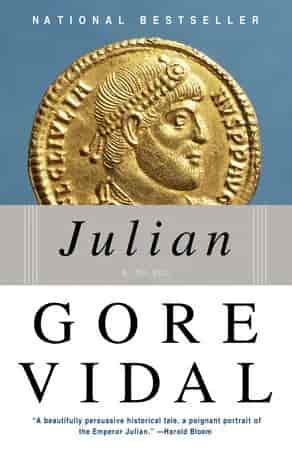
The malice of a true Christian attempting to destroy an opponent is something unique in the world. No other religion ever considered it necessary to destroy others because they did not share the same beliefs. At worst, another man's belief might inspire amusement or contempt—the Egyptians and their animal gods, for instance. Yet those who worshipped the Bull did not try to murder those who worshipped the Snake, or to convert them by force from Snake to Bull. No evil ever entered the world quite so vividly or on such a vast scale as Christianity did.
I take it to be axiomatic that people are revolted by witnessing the shameless gratification of an appetite they do not share.
As long as we are not actually destroyed, we can work to gain greater understanding of other peoples and to try to present to the peoples of the world the values of our own beliefs. We can do this by demonstrating our conviction that human life is worth preserving and that we are willing to help others to enjoy benefits of our civilization just as we have enjoyed it. (20 December 1961)
When strangers meet, great allowances should be made for differences of custom and training.
I have no objection to any person's religion, be it what it may, so long as that person does not kill or insult any other person, because that other person don't believe it also. But when a man's religion becomes really frantic; when it is a positive torment to him; and, in fine, makes this earth of ours an uncomfortable inn to lodge in; then I think it high time to take that individual aside and argue the point with him.
p. 95
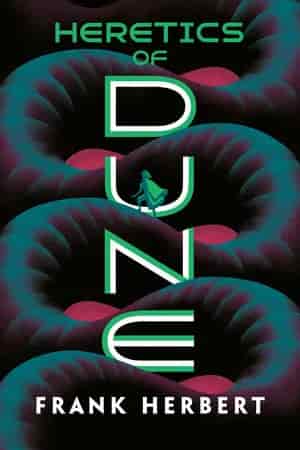
Every one of us is, in the cosmic perspective, precious. If a human disagrees with you, let him live. In a hundred billion galaxies, you will not find another.
p. 339
I wish more of us could understand that our increasing isolation, no matter how much it seems to express pride and self-affirmation, is not the answer to our problems. Rather, the answer is a revival of our ancient commitment to God, who rules over all the peoples of the world and exalts no one over any other, and to the moral and spiritual values which were once legendary in America. We must reach out our hand in friendship both to those who would befriend us and those who would be our enemy. We must believe in the power of education. We must respect just laws. We must love ourselves, our old and our young, our women as well as our men.
I see nothing inconsistent between being proud of oneself and one's ancestors and, at the same time, seeing oneself first and foremost a member of the commonwealth of all races and creeds.
p. 186
My hands tend to be full enough dealing with people who hate me for who I am. Concentrate too hard on the millions of people who hate you for what you are and you're likely to turn into one of those unkempt, sloppy dressers who sag beneath the weight of the two hundred political buttons they wear pinned to their coats and knapsacks. I haven't got the slightest idea how to change people, but still I keep a long list of prospective candidates just in case I should ever figure it out.
p. 251