


Quotes
When he had left the room, I mused over the conversation which had just taken place between us, but I could make nothing out of it, except that it argued an even greater perversity of mental vision than I had been yet prepared for. And this made me wretched; for I cannot bear having much to do with people who think differently from myself.
These fellow-mortals, every one, must be accepted as they are: you can neither straighten their noses, nor brighten their wit, nor rectify their dispositions; and it is these people — amongst whom your life is passed — that it is needful you should tolerate, pity, and love: it is these more or less ugly, stupid, inconsistent people whose movements of goodness you should be able to admire — for whom you should cherish all possible hopes, all possible patience. And I would not, even if I had the choice, be the clever novelist who could create a world so much better than this, in which we get up in the morning to do our daily work, that you would be likely to turn a harder, colder eye on the dusty streets and the common green fields — on the real breathing men and women, who can be chilled by your indifference or injured by your prejudice; who can be cheered and helped onward by your fellow-feeling, your forbearance, your outspoken, brave justice.
So I am content to tell my simple story, without trying to make things seem better than they were; dreading nothing, indeed, but falsity, which, in spite of one's best efforts, there is reason to dread. Falsehood is so easy, truth so difficult. The pencil is conscious of a delightful facility in drawing a griffin — the longer the claws, and the larger the wings, the better; but that marvellous facility which we mistook for genius is apt to forsake us when we want to draw a real unexaggerated lion. Examine your words well, and you will find that even when you have no motive to be false, it is a very hard thing to say the exact truth, even about your own immediate feelings — much harder than to say something fine about them which is not the exact truth.
Whether a virgin became the mother of her Creator, whether she gave birth to God, or merely to a man into whom God has entered, whether the Father and the Son are of the same substance or of like substance only, whether the Spirit proceeded from one or both of these who are but one, or from both together, however important these questions may seem, I cannot see that it is any more necessary for the human race to come to a decision with regard to them than to know what day to keep Easter, or whether we should tell our beads, fast, and refuse to eat meat, speak Latin or French in church, adorn the walls with statues, hear or say mass, and have no wife of our own. Let each think as he pleases; I cannot see that it matters to any one but himself; for my own part it is no concern of mine. But what does concern my fellow-creatures and myself alike is to know that there is indeed a judge of human fate, that we are all His children, that He bids us all be just, He bids us love one another, He bids us be kindly and merciful, He bids us keep our word with all men, even with our own enemies and His; we must know that the apparent happiness of this world is naught; that there is another life to come, in which this Supreme Being will be the rewarder of the just and the judge of the unjust. Children need to be taught these doctrines and others like them and all citizens require to be persuaded of their truth. Whoever sets his face against these doctrines is indeed guilty; he is the disturber of the peace, the enemy of society. Whoever goes beyond these doctrines and seeks to make us the slaves of his private opinions, reaches the same goal by another way; to establish his own kind of order he disturbs the peace; in his rash pride he makes himself the interpreter of the Divine, and in His name demands the homage and the reverence of mankind; so far as may be, he sets himself in God's place; he should receive the punishment of sacrilege if he is not punished for his intolerance.
"Hard pressed by these arguments, some prefer to make God unjust and to punish the innocent for the sins of their fathers, rather than to renounce their barbarous dogmas. Others get out of the difficulty by kindly sending an angel to instruct all those who in invincible ignorance have lived a righteous life. A good idea, that angel! Not content to be the slaves of their own inventions they expect God to make use of them also! "Behold, my son, the absurdities to which pride and intolerance bring us, when everybody wants others to think as he does, and everybody fancies that he has an exclusive claim upon the rest of mankind. I call to witness the God of Peace whom I adore, and whom I proclaim to you, that my inquiries were honestly made; but when I discovered that they were and always would be unsuccessful, and that I was embarked upon a boundless ocean, I turned back, and restricted my faith within the limits of my primitive ideas. I could never convince myself that God would require such learning of me under pain of hell. So I closed all my books. There is one book which is open to every one—the book of nature. In this good and great volume I learn to serve and adore its Author. There is no excuse for not reading this book, for it speaks to all in a language they can understand. Suppose I had been born in a desert island, suppose I had never seen any man but myself, suppose I had never heard what took place in olden days in a remote corner of the world; yet if I use my reason, if I cultivate it, if I employ rightly the innate faculties which God bestows upon me, I shall learn by myself to know and love him, to love his works, to will what he wills, and to fulfil all my duties upon earth, that I may do his pleasure. What more can all human learning teach me?
"In my exposition you find nothing but natural religion; strange that we should need more! How shall I become aware of this need? What guilt can be mine so long as I serve God according to the knowledge he has given to my mind, and the feelings he has put into my heart? What purity of morals, what dogma useful to man and worthy of its author, can I derive from a positive doctrine which cannot be derived without the aid of this doctrine by the right use of my faculties? Show me what you can add to the duties of the natural law, for the glory of God, for the good of mankind, and for my own welfare; and what virtue you will get from the new form of religion which does not result from mine. The grandest ideas of the Divine nature come to us from reason only. Behold the spectacle of nature; listen to the inner voice. Has not God spoken it all to our eyes, to our conscience, to our reason? What more can man tell us?
Their revelations do but degrade God, by investing him with passions like our own. Far from throwing light upon the ideas of the Supreme Being, special doctrines seem to me to confuse these ideas; far from ennobling them, they degrade them; to the inconceivable mysteries which surround the Almighty, they add absurd contradictions, they make man proud, intolerant, and cruel; instead of bringing peace upon earth, they bring fire and sword. I ask myself what is the use of it all, and I find no answer. I see nothing but the crimes of men and the misery of mankind.
As soon as the nations took to making God speak, every one made him speak in his own fashion, and made him say what he himself wanted. Had they listened only to what God says in the heart of man, there would have been but one religion upon earth.
"Those among us who have the opportunity of talking with Jews are little better off. These unhappy people feel that they are in our power; the tyranny they have suffered makes them timid; they know that Christian charity thinks nothing of injustice and cruelty; will they dare to run the risk of an outcry against blasphemy? Our greed inspires us with zeal, and they are so rich that they must be in the wrong. The more learned, the more enlightened they are, the more cautious. You may convert some poor wretch whom you have paid to slander his religion; you get some wretched old-clothes-man to speak, and he says what you want; you may triumph over their ignorance and cowardice, while all the time their men of learning are laughing at your stupidity. But do you think you would get off so easily in any place where they knew they were safe! At the Sorbonne it is plain that the Messianic prophecies refer to Jesus Christ. Among the rabbis of Amsterdam it is just as clear that they have nothing to do with him. I do not think I have ever heard the arguments of the Jews as to why they should not have a free state, schools and universities, where they can speak and argue without danger.
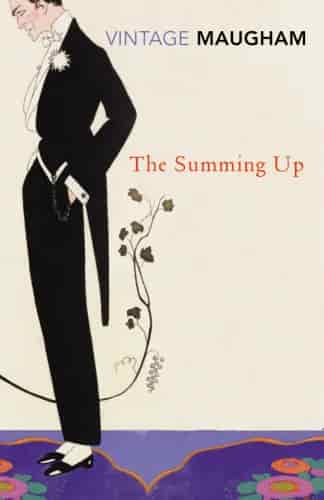
You are not angry with people when you laugh at them. Humour teaches tolerance, and the humorist, with a smile and perhaps a sigh, is more likely to shrug his shoulders than to condemn.
p. 67
Since I learned the truth in Mecca, my dearest friends have come to include all kinds — some Christians, Jews, Buddhists, Hindus, agnostics, and even atheists! I have friends who are called capitalists, Socialists, and Communists! Some of my friends are moderates, conservatives, extremists — some are even Uncle Toms! My friends today are black, brown, red, yellow, and white!
p. 375
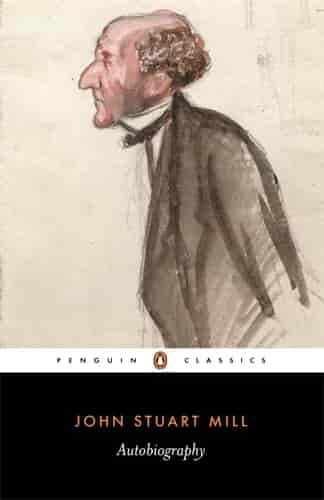
All this is merely saying that he, in a degree once common, but now very unusual, threw his feelings into his opinions; which truly it is difficult to understand how any one who possesses much of both, can fail to do. None but those who do not care about opinions, will confound it with intolerance. Those, who having opinions which they hold to be immensely important, and their contraries to be prodigiously hurtful, have any deep regard for the general good, will necessarily dislike, as a class and in the abstract, those who think wrong what they think right, and right what they think wrong: though they need not therefore be, nor was my father, insensible to good qualities in an opponent, nor governed in their estimation of individuals by one general presumption, instead of by the whole of their character.
p. 50







That’s all the quotes.
9 quotes in the collection · come back when we add more