Quotes
"It's so hard to forget pain, but it's even harder to remember sweetness. We have no scar to show for happiness. We learn so little from peace."
Art advances by self-mutilation of the artist.
p. 54
I just wanted to try another line on the audience. It is difficult to stir rebellion among those to whom all things are good. There is no room for evil in their minds, despite the fact that they suffer it constantly. The slave upon the rack who knows that he will be born again — perhaps as a fat merchant — if he suffers willingly — his outlook is not the same as that of a man with but one life to live. He can bear anything, knowing that great as his present pain may be, his future pleasure will rise higher. If such a one does not choose to believe in good or evil, perhaps then beauty and ugliness can be made to serve him as well. Only the names have been changed.
p. 38
In our nature, however, there is a provision, alike marvelous and merciful, that the sufferer should never know the intensity of what he endures by its present torture, but chiefly by the pang that rankles after it.
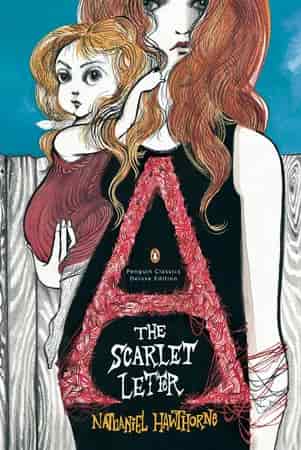
The scarlet letter was her passport into regions where other women dared not tread. Shame, Despair, Solitude! These had been her teachers — stern and wild ones, — and they had made her strong, but taught her much amiss.
She could no longer borrow from the future to help her through the present grief. Tomorrow would bring its own trial with it; so would the next day, and so would the next; each its own trial.
And dimly she realized one of the great laws of the human soul: that when the emotional soul receives a wounding shock, which does not kill the body, the soul seems to recover as the body recovers. But this is only appearance. It is really only the mechanism of the reassumed habit. Slowly, slowly the wound to the soul begins to make itself felt, like a bruise, which only slowly deepens its terrible ache, till it fills all the psyche. And when we think we have recovered and forgotten, it is then that the terrible after-effects have to be encountered at their worst.
In some ways suffering ceases to be suffering at the moment it finds a meaning, such as the meaning of a sacrifice. [...] But let me make it perfectly clear that in no way is suffering necessary to find meaning. I only insist that meaning is possible even in spite of suffering--provided, certainly, that the suffering is unavoidable. If it were avoidable, however, the meaningful thing to do would be to remove its cause, be it psychological, biological or political.
The way in which a man accepts his fate and all the suffering it entails, the way in which he takes up his cross, gives him ample opportunity — even under the most difficult circumstances — to add a deeper meaning to his life. It may remain brave, dignified and unselfish. Or in the bitter fight for self-preservation he may forget his human dignity and become no more than an animal. Here lies the chance for a man either to make use of or to forgo the opportunities of attaining the moral values that a difficult situation may afford him. And this decides whether he is worthy of his sufferings or not.
If there is a meaning in life at all, then there must be a meaning in suffering. Suffering is an ineradicable part of life, even as fate and death.
p. 67
There is a region in the experience of pain where the certainty of alleviation often permits superhuman endurance. We learn to live with pain in varying degrees daily, or over longer periods of time, and we are more often than not mercifully free of it. When we endure severe discomfort of a physical nature our conditioning has taught us since childhood to make accommodations to the pain’s demands — o accept it, whether pluckily or whimpering and complaining, according to our personal degree of stoicism, but in any case to accept it. Except in intractable terminal pain, there is almost always some form of relief; we look forward to that alleviation, whether it be through sleep or Tylenol or self-hypnosis or a change of posture or, most often, through the body’s capacity for healing itself, and we embrace this eventual respite as the natural reward we receive for having been, temporarily, such good sports and doughty sufferers, such optimistic cheerleaders for life at heart.
In depression this faith in deliverance, in ultimate restoration, is absent. The pain is unrelenting, and what makes the condition intolerable is the foreknowledge that no remedy will come — not in a day, an hour, a month, or a minute. If there is mild relief, one knows that it is only temporary; more pain will follow. It is hopelessness even more than pain that crushes the soul. So the decision-making of daily life involves not, as in normal affairs, shifting from one annoying situation to another less annoying — or from discomfort to relative comfort, or from boredom to activity — but moving from pain to pain. One does not abandon, even briefly, one's bed of nails, but is attached to it wherever one goes.
When a client is driven to the utmost extremity, it is warmth and food and ease from pain he wants. Peace and justice come afterward. Rain symbolizes mercy and sunlight charity, but rain and sunlight are better than mercy and charity. Otherwise they would degrade the things they symbolize.