Quotes about depression
27 quotes · 16 authors
Quotes
Just because I did good doesn’t mean I don’t feel bad, because the feeling bad, it’s not particularly because of anything that’s happened, it’s just the way I’m wired.
p. 195
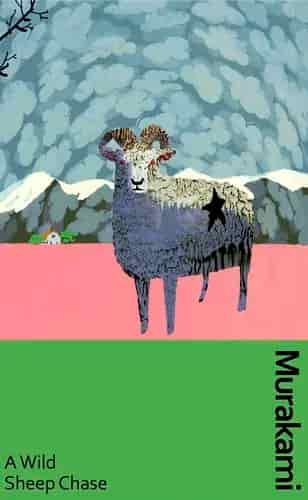
I was twenty-one at the time, about to turn twenty-two. No prospect of graduating soon, and yet no reason to quit school. Caught in the most curiously depressing circumstances. For months I'd been stuck, unable to take one step in any new direction. The world kept moving on; I alone was at a standstill. In the autumn, everything took on a desolate cast, the colors swiftly fading before my eyes. The sunlight, the smell of the grass, the faintest patter of rain, everything got on my nerves.
She knows most of this, to some extent, and she knows she’s depressed, but if knowing the problem was the solution, most patients wouldn’t need us at all.
p. 159
“I suppose an optimistic comment wouldn’t do much good right now.”
Galladon smiled slightly. “Definitely not—you optimists just can’t understand that a depressed person doesn’t want you to try and cheer them up. It makes us sick.”
p. 324
When I am tired, it is easy to believe that my exhaustion is the reason I am depressed and lonely and uninspired. But when I am well-rested [sic], I can realize that these negative feelings are not a result of too little sleep. They are a result of my being a miserable, hopeless, misanthropic wretch.
Depression is seductive: it offends and teases, frightens you and draws you in, tempting you with its promise of sweet oblivion, then overwhelming you with a nearly sexual power, squirming past your defenses, dissolving your will, invading the tired spirit so utterly that it becomes difficult to recall that you ever lived without it...or to imagine that you might live that way again. With all the guile of Satan himself, depression persuades you that its invasion was all your own idea, that you wanted it all along. It fogs the part of the brain that reasons, that knows right and wrong. It captures you with its warm, guilty, hateful pleasures, and, worst of all, it becomes familiar. All at once, you find yourself in thrall to the very thing that most terrifies you. Your work slides, your friendships slide, your marriage slides, but you scarcely notice: to be depressed is to be half in love with disaster.
She recognised in Mr Honey a man of moods, capable of deep depression; all geniuses, she had read, were men like that.
p. 166
The so-called ‘psychotically depressed’ person who tries to kill herself doesn't do so out of quote ‘hopelessness’ or any abstract conviction that life's assets and debits do not square. And surely not because death seems suddenly appealing. The person in whom Its invisible agony reaches a certain unendurable level will kill herself the same way a trapped person will eventually jump from the window of a burning high-rise. Make no mistake about people who leap from burning windows. Their terror of falling from a great height is still just as great as it would be for you or me standing speculatively at the same window just checking out the view; i.e. the fear of falling remains a constant. The variable here is the other terror, the fire's flames: when the flames get close enough, falling to death becomes the slightly less terrible of two terrors. It's not desiring the fall; it's terror of the flames. Yet nobody down on the sidewalk, looking up and yelling ‘Don‘t!’ and ‘Hang on!’, can understand the jump. Not really. You'd have to have personally been trapped and felt flames to really understand a terror way beyond falling.
These worst mornings with cold floors and hot windows and merciless light—the soul’s certainty that the day will have to be not traversed but sort of climbed, vertically, and then that going to sleep again at the end of it will be like falling, again, off something tall and sheer.
I saw that I was from now on, for ever, contemptible. I had been and remained, intensely depressed, but I had also been, and always would be, intensely false; in existentialist terms, inauthentic. I knew I would never kill myself, I knew I would always want to go on living with myself, however hollow I became, however diseased.
The more depressed and maladjusted you are, the more likely it is that you are seeing things right, with minimal bias.
Depression is a disorder of mood, so mysteriously painful and elusive in the way it becomes known to the self — to the mediating intellect — as to verge close to being beyond description. It thus remains nearly incomprehensible to those who have not experienced it in its extreme mode, although the gloom, “the blues” which people go through occasionally and associate with the general hassle of everyday existence are of such prevalence that they do give many individuals a hint of the illness in its catastrophic form.