Quotes
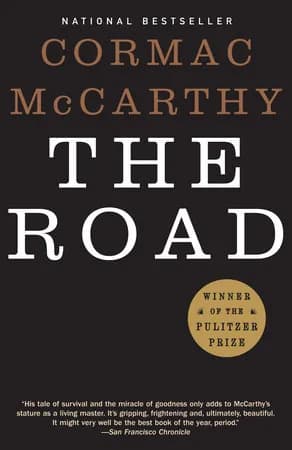
No lists of things to be done. The day providential to itself. The hour. There is no later. This is later. All things of grace and beauty such that one holds them to one's heart have a common provenance in pain. Their birth in grief and ashes. So, he whispered to the sleeping boy. I have you.
'All action leads to suffering, someone else's, or one's own.'
p. 117
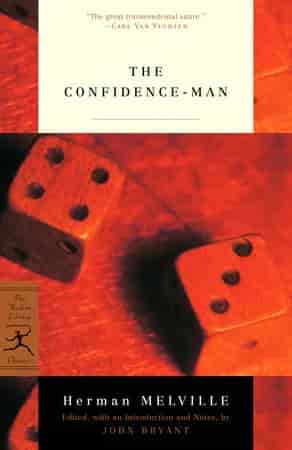
If ever, in days to come, you shall see ruin at hand, and, thinking you understand mankind, shall tremble for your friendships, and tremble for your pride; and, partly through love for the one and fear for the other, shall resolve to be beforehand with the world, and save it from a sin by prospectively taking that sin to yourself, then will you do as one I now dream of once did, and like him will you suffer; but how fortunate and how grateful should you be, if like him, after all that had happened, you could be a little happy again.
Yes, learn from me that, though the sorrows of the world are great, its wickedness — that is, its ugliness — is small.
Well, there is sorrow in the world, but goodness too; and goodness that is not greenness, either, no more than sorrow is.
I myself have known adversity, and know it still. But for that, do I turn cynic? No, no: it is small beer that sours. To my fellow-creatures I owe alleviations. So, whatever I may have undergone, it but deepens my confidence in my kind.
A hospital alone shows what war is.
p. 263
There's an inherent limit to the stress that any material can bear. Water has its boiling point, metals their melting points. The elements of the spirit behave the same way. Happiness can reach a pitch so great that any further happiness can't be felt. Pain, despair, humiliation, disgust, and fear are no different. Once the vessel is full, the world can't add to it.
Pain is a coward. He flees when faced by the irresistible power of the will-to-live, which is more strongly rooted in the flesh than the intensest passion is rooted in the spirit.
In my youth and comparative inexperience I had always regarded the yearning and pangs of love as the worst torture that could afflict the human heart. At this moment, however, I began to realize that there was another and perhaps grimmer torture than that of longing and desiring: that of being loved against one's will and of being unable to defend oneself against the urgency of another's passion; of seeing another human being seared by the flame of her desire and of having to look impotently, lacking the power, the capacity, the strength to pluck her from the flames. He who is himself crossed in love is able from time to time to master his passion, for he is not the creature but the creator of his own misery; and if a lover is unable to control his passim, he at least knows that he is himself to blame for his sufferings.
Those whom fate has dealt hard knocks remain vulnerable for ever afterwards.
In some mysterious way, once one has gained an insight into human nature, that insight grows from day to day, and he to whom it has given to experience vicariously even one single form of earthly suffering acquires, by reason of this tragic lesson, an understanding of all its forms, even those most foreign to him, and apparently abnormal.