Quotes
But the soul has no culture. The soul has no color, or accent, or way of life. The soul is forever. The soul is one. And when the heart has its moment of truth and sorrow, the soul cannot be stilled.
Let's give this entity which you call soul another name. Soul has too many incorrect meanings for humans, too many verbal reverberations, too many contrary definitions.
p. 127
What is man but a little soul holding up a corpse?
p. 287
As the result of his talks with Gerald and with Gerald’s friend and teacher, the Hindu monk Prabhavananda, Christopher would find himself able to believe — as a possibility, at least — that an eternal impersonal presence (call it "the soul" if you like) exists within all creatures and is other than the mutable non-eternal "person." He would then feel that all his earlier difficulties had been merely semantic; that he could have been converted to this belief at any time in his life, if only someone had used the right words to explain it to him. Now, I doubt this. I doubt if one ever accepts a belief until one urgently needs it.
But, although Christopher wasn’t yet aware that he needed such a belief, he may have been feeling the need subconsciously. This would explain his recently increased hostility toward what he thought of as "religion" — the version of Christianity he had been taught in his childhood. Perhaps he was afraid that he would be forced to accept it, at last, after nearly fifteen years of atheism.
p. 306
I went away and cried to the Master of the Universe, "What have you done to me? A mind like this I need for a son? A heart I need for a son, a soul I need for a son, compassion I want from my son, righteousness, mercy, strength to suffer and carry pain, that I want from my son, not a mind without a soul!"
p. 264
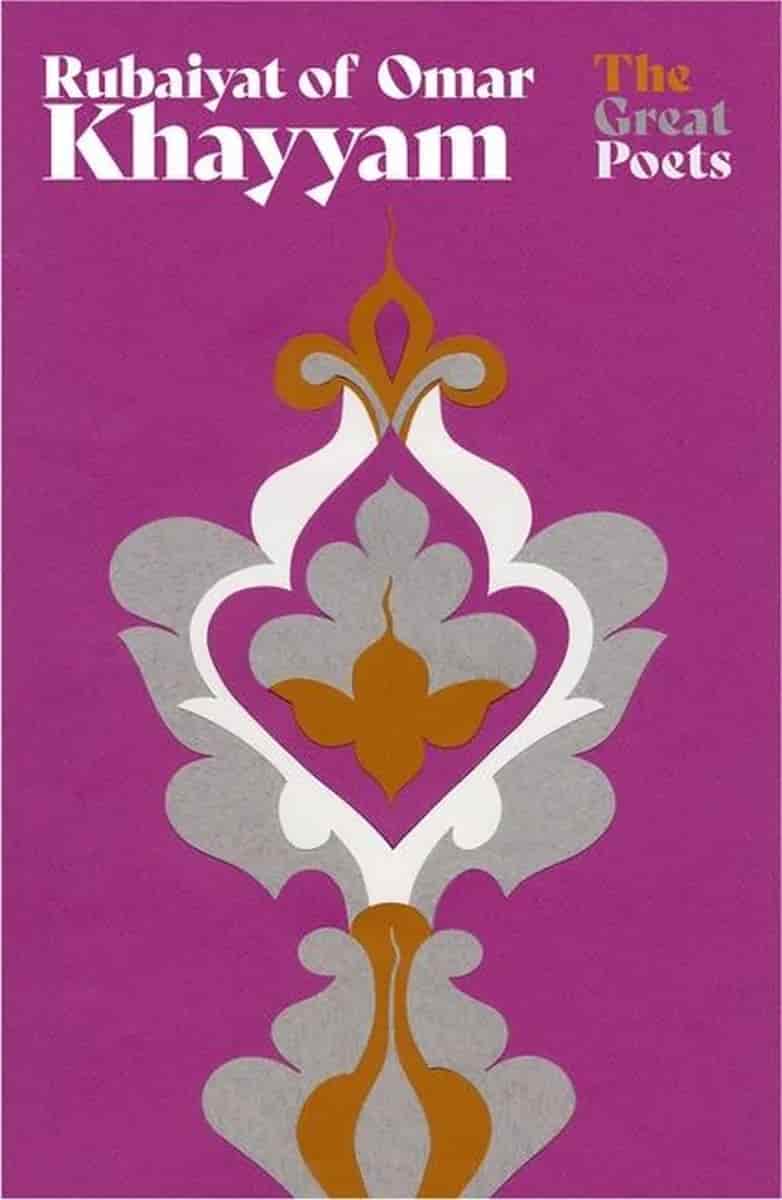
Why, if the Soul can fling the Dust aside,
And naked on the Air of Heaven ride,
Were't not a Shame — were't not a Shame for him
In this clay carcase crippled to abide?
I sent my Soul through the Invisible,
Some letter of that After-life to spell:
And by and by my Soul return'd to me,
And answer'd "I Myself am Heav'n and Hell."
Although he devoted hours of each day to his new discipline, he finds its first premise, as enunciated in the Communications 101 handbook, preposterous: 'Human society has created language in order that we may communicate our thoughts, feelings, and intentions to each other.' His own opinion, which he does not air, is that the origins of speech lie in song, and the origins of song in the need to fill out with sound the overlarge and rather empty human soul.
p. 3
I am convinced, Yorick, continued my father, half reading and half discoursing, that there is a Northwest Passage to the intellectual world; and that the soul of man has shorter ways of going to work, in furnishing itself with knowledge and instruction, than we generally take with it.
Abbot Zerchi smiled thinly. 'You don't have a soul, Doctor. You are a soul. You have a body, temporarily.'
"In the end, we should simply imagine a joke; a long joke that's being continually retold in an accent too thick and too strange to ever be completely understood. Life is that joke. The soul is its punchline."
"What you feel in the presence of a thing you admire is just one word—'Yes.' The affirmation, the acceptance, the sign of admittance. And that 'Yes' is more than an answer to one thing, it's a kind of 'Amen' to life, to the earth that holds this thing, to the thought that created it, to yourself for being able to see it. But the ability to say 'Yes' or 'No' is the essence of all ownership. It's your ownership of your own ego. Your soul, if you wish. Your soul has a single basic function—the act of valuing. 'Yes' or 'No,' 'I wish' or 'I do not wish.' You can't say 'Yes' without saying 'I.' There's no affirmation without the one who affirms. In this sense, everything to which you grant your love is yours.
[...]
"Howard, that 'Yes'—once granted, can it be withdrawn?"
"Never."
p. 539