Quotes about reading
268 quotes · 149 authors
Quotes
Booksellers are the most valuable destination for the lonely, given the numbers of books that were written because authors couldn't find anyone to talk to.
p. 148
“I thought I would be safe here.”
“You are.” For the first time, he touched her, touched her hand. “Safe from everything but paper and ink. Please. Put those down.”
“Paper and ink.” She clutched the books to her ample chest. “They’re not nothing, Alec. They’re pretty much everything to me: the embodiment of ideas, of thought—of free and open thought. Of inquiry and supposition. All of it.”
p. 386
The foolish read to escape reality; the wise surrender to it.
People used to think that learning to read evidenced human progress; they still celebrate the decline of illiteracy as a great victory; they condemn countries with a large proportion of illiterates; they think that reading is a road to freedom. All this is debatable, for the important thing is not to be able to read, but to understand what one reads, to reflect on and judge what one reads. Outside of that, reading has no meaning (and even destroys certain automatic qualities of memory and observation). But to talk about critical faculties and discernment is to talk about something far above primary education and to consider a very small minority. The vast majority of people, perhaps ninety percent, know how to read, but do not exercise their intelligence beyond this. They attribute authority and eminent value to the printed word, or, conversely, reject it altogether. As these people do not possess enough knowledge to reflect and discern, they believe — or disbelieve — in toto what they read. And as such people, moreover, will select the easiest, not the hardest, reading matter, they are precisely on the level at which the printed word can seize and convince them without opposition. They are perfectly adapted to propaganda.
I seek occasional relief in old books. They help me tell the transient from the enduring.
p. 291
[R]eading a splendid writer, or even just a very entertaining writer, is not a particularly passive business. An accomplished artist is giving us his or her best shots, in what she or he regards as their most effective sequence—of words, of actions, of foreshadowings and plot-twists and insights and carefully prepared dramatic moments. It's up to us to respond to those best shots with our minds and hearts and spirits and our accumulated experience of life and of art.
p. 27
The triumph of the written word is often attained when the writer achieves union and trust with the reader, who then becomes ready to be drawn into unfamiliar territory, walking in borrowed literary shoes so to speak, toward a deeper understanding of self or society, or of foreign peoples, cultures, and situations.
If you have come to these pages for laughter, may you find it.
If you are here to be offended, may your ire rise and your blood boil.
If you seek an adventure, may this song sing you away to blissful escape.
If you need to test or confirm your beliefs, may you reach comfortable conclusions.
All books reveal perfection, by what they are or what they are not.
May you find that which you seek, in these pages or outside them.
May you find perfection, and know it by name.
I've often thought that my scruples about stealing books were the only thing that stood in the way of my being a really great scholar.
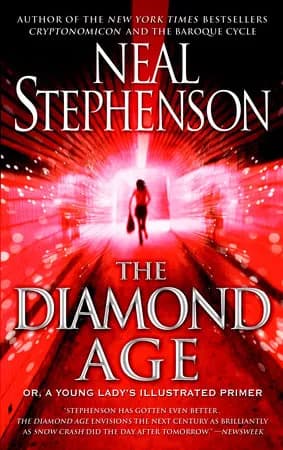
It was a vast open marketplace with thousands of stalls, filled with carts and runners carrying product in all directions. But no vegetables, fish, spices, or fodder were to be seen here; all the product was information written down in books.... Book-carriers bumped into each other, compared notes as to what they were carrying and where they were going, and swapped books for other books. Stacks of books were sold in great, raucous auctions—and paid for not with gold but with other books. Around the edges of the market were stalls where books were exchanged for gold, and beyond that, a few alleys where gold could be exchanged for food.
If the item of stolen property had been anything other than a book, it would have been confiscated. But a book is different—it is not just a material possession but the pathway to an enlightened mind, and thence to a well-ordered society, as the Master stated many times.
Besides, I simply had to get back to my books right away, because the company of most people, once the predictable events have taken their course, does not inspire conversation on my part.