Quotes about racism
105 quotes · 59 authors
Quotes
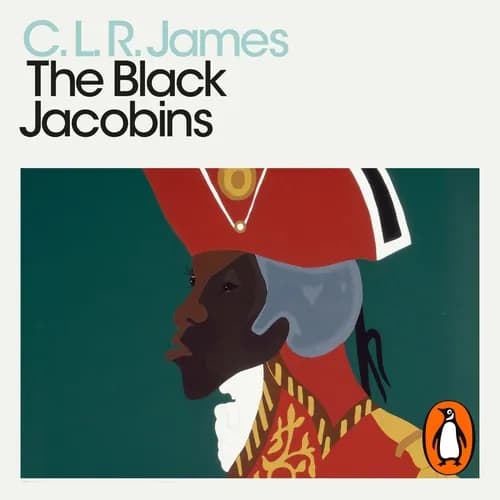
The race question is subsidiary to the class question in politics, and to think of imperialism in terms of race is disastrous. But to neglect the racial factor as merely incidental is an error only less grave than to make it fundamental.
p. 283
The educational system as it has developed both in Europe and America an antiquated process which does not hit the mark even in the case of the needs of the white man himself. If the white man wants to hold on to it, let him do so; but the Negro, so far as he is able, should develop and carry out a program of his own.
The so-called modern education, with all its defects, however, does others so much more good than it does the Negro, because it has been worked out in conformity to the needs of those who have enslaved and oppressed weaker peoples. For example, the philosophy and ethics resulting from our educational system have justified slavery, peonage, segregation, and lynching. The oppressor has the right to exploit, to handicap, and to kill the oppressed. Negroes daily educated in the tenets of such a religion of the strong have accepted the status of the weak as divinely ordained, and during the last three generations of their nominal freedom they have done practically nothing to change it.
The chief reason why so many give such a little attention to the background of the Negro is the belief that this study is unimportant. They consider as history only such deeds as those of Mussolini who after building up an efficient war machine with the aid of other Europeans would now use it to murder unarmed and defenseless Africans who have restricted themselves exclusively to attending to their own business. If Mussolini succeeds in crushing Abyssinia he will be recorded in "history" among the Caesars, and volumes written in praise of the conqueror will find their way to the homes and libraries of thousands of miseducated Negroes. The oppressor has always indoctrinated the weak with this interpretation of the crimes of the strong.
p. 131
When you control a man's thinking you do not have to worry about his actions. You do not have to tell him not to stand here or go yonder. He will find his "proper place" and will stay in it. You do not need to send him to the back door. He will go without being told. In fact, if there is no back door, he will cut one for his special benefit. His education makes it necessary.
The same educational process which inspires and stimulates the oppressor with the thought that he is everything and has accomplished everything worth while, depresses and crushes at the same time the spark of genius in the Negro by making him feel that his race does not amount to much and never will measure up to the standards of other peoples. The Negro thus educated is a hopeless liability of the race.
p. 21
It was not until I joined the faculty of Spelman College, a college for black women in Atlanta, Georgia, that I began to read the African-American historians who never appeared on my reading lists in graduate school (W. E. B. Du Bois, Rayford Logan, Lawrence Reddick, Horace Mann Bond, John Hope Franklin). Nowhere in my history education had I learned about the massacres of black people that took place again and again, amid the silence of a national government pledged, by the Constitution, to protect equal rights for all.
To white Americans of the thirties, however, blacks North and South were invisible. Only the radicals made an attempt to break the racial barriers: Socialists, Trotskyists, Communists most of all.
So without an original or helpful thought in my head, I just sat for some minutes and watched these poor disconnected people shuffle past. Then I did what most white Australians do. I read my newspaper and drank my coffee and didn't see them anymore.
The ethical and political practice of nonviolence can rely neither exclusively on the dyadic encounter, nor on the bolstering of a prohibition; it requires a political opposition to the biopolitical forms of racism and war logics that rely on phantasmagoric inversions that occlude the binding and interdependent character of the social bond. It requires, as well, an account of why, and under what conditions, the frameworks for understanding violence and nonviolence, or violence and self-defense, seem to invert into one another, causing confusion about how best to pin down those terms.
p. 62
Last time I was down South I walked into this restaurant, and this white waitress came up to me and said: “We don’t serve colored people here.” I said: “That’s all right, I don’t eat colored people. Bring me a whole fried chicken.”
I am in this same river. I can't much help it. I admit it: I'm racist. The other night I saw a group (or maybe a pack?) or white teenagers standing in a vacant lot, clustered around a 4x4, and I crossed the street to avoid them; had they been black, I probably would have taken another street entirely. And I'm misogynistic. I admit that, too. I'm a shitty cook, and a worse house cleaner, probably in great measure because I've internalized the notion that these are woman's work. Of course, I never admit that's why I don't do them: I always say I just don't much enjoy those activities (which is true enough; and it's true enough also that many women don't enjoy them either), and in any case, I've got better things to do, like write books and teach classes where I feel morally superior to pimps. And naturally I value money over life. Why else would I own a computer with a hard drive put together in Thailand by women dying of job-induced cancer? Why else would I own shirts made in a sweatshop in Bangladesh, and shoes put together in Mexico? The truth is that, although many of my best friends are people of color (as the cliche goes), and other of my best friends are women, I am part of this river: I benefit from the exploitation of others, and I do not much want to sacrifice this privilege. I am, after all, civilized, and have gained a taste for "comforts and elegancies" which can be gained only through the coercion of slavery. The truth is that like most others who benefit from this deep and broad river, I would probably rather die (and maybe even kill, or better, have someone kill for me) than trade places with the men, women, and children who made my computer, my shirt, my shoes.
p. 69
No one is born hating another person because of the colour of his skin, or his background, or his religion. People must learn to hate, and if they can learn to hate, they can be taught to love, for love comes more naturally to the human heart than its opposite.
I detest racialism because I regard it as a barbaric thing, whether it comes from a black man or a white man.