
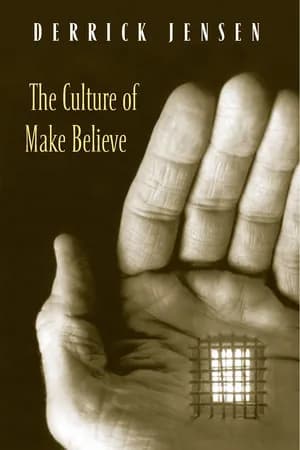
Quotes
To believe Christianity stands in opposition to slavery is at best to think anachronistically and at worst to not understand Christianity.
p. 57
Slavery was a central concern of governance form the time of the first nation-state. The Code of Hammurabi, the earliest known set of laws for governing an empire, prescribed death for anyone who harbored a fugitive or otherwise helped a slave to escape. The relationship between the law and bondage goes back even farther: Indeed, the oldest extant legal documents don't concern the sale of land, houses, or even animals, but slaves.
p. 60
Several times I have commented that hatred felt long and deeply enough no longer feels like hatred, but more like tradition, economics, religion, what have you. It is when those traditions are challenged, when the entitlement is threatened, when the masks of religion, economics, and so on are pulled away that hate transforms from its more seemingly sophisticated, "normal," chronic state--where those exploited are looked down upon, or despised--to a more acute and obvious manifestation. Hate becomes more perceptible when it is no longer normalized. Another way to say all of this is that if the rhetoric of superiority works to maintain the entitlement, hatred and direct physical force remain underground. But when that rhetoric begins to fail, force and hatred waits in the wings, ready to explode.
p. 106
How, precisely, do you define a police state? Is it the number of police per capita? How about the number of prisons? Police use of machine guns or armored personnel carriers? The use of the police or the military to put down strikes, or to otherwise "keep the trains running on time," as was Mussolini's specialty? Perhaps it's the use of the police or the military to halt civil unrest. Or maybe the widespread use of curfews. Arbitrary confiscation of private property. How about this: could a police state be defined, as in Nazi Germany, by the use of force to segregate members of a specific race into concentration camps or prisons?
p. 22
Much was made by abolitionists that the King James version of the Bible didn't use the word slaves, but, instead, servants. This meant, in their minds, that God didn't really approve of slavery. But that argument was linguistic at best. Slavery was codified and even sanctified in the tenth commandment, throwing slaves (and wives) in with other property belonging to one's neighbor that one must not covet. The Bible even regulated--as opposed to banning outright--the killing of slaves, stating that if a slave were beaten to death, the slave owner should be punished (though not killed himself, as would be his fate were he to kill a freeman), but if the slave didn't die until a day or two after the beating, the slave owner "shall not be punished, for he [the slave] is his money."
p. 56
If we wish to stop the atrocities, we will need to understand and change the social and economic conditions that cause them.
From the perspective of those who are entitled, the problems begin when those they despise do not go along with--and have the power and wherewithal to not go along with--the perceived entitlement.
p. 106
If your community is founded on an injustice, that injustice cannot be questioned.
p. 19
If any thing can be predicated as universally true of uncultivated man, it is that he will not labour beyond what is absolutely necessary to maintain his existence.
p. 59
Perception creates behavior. Perception encourages behavior. And because this institution--this artifice--continues to socially reinforce patterns of perception and behavior, if this behavior is destructive, it may not be a bad idea to eliminate or curtail the institution.
p. 50
I am in this same river. I can't much help it. I admit it: I'm racist. The other night I saw a group (or maybe a pack?) or white teenagers standing in a vacant lot, clustered around a 4x4, and I crossed the street to avoid them; had they been black, I probably would have taken another street entirely. And I'm misogynistic. I admit that, too. I'm a shitty cook, and a worse house cleaner, probably in great measure because I've internalized the notion that these are woman's work. Of course, I never admit that's why I don't do them: I always say I just don't much enjoy those activities (which is true enough; and it's true enough also that many women don't enjoy them either), and in any case, I've got better things to do, like write books and teach classes where I feel morally superior to pimps. And naturally I value money over life. Why else would I own a computer with a hard drive put together in Thailand by women dying of job-induced cancer? Why else would I own shirts made in a sweatshop in Bangladesh, and shoes put together in Mexico? The truth is that, although many of my best friends are people of color (as the cliche goes), and other of my best friends are women, I am part of this river: I benefit from the exploitation of others, and I do not much want to sacrifice this privilege. I am, after all, civilized, and have gained a taste for "comforts and elegancies" which can be gained only through the coercion of slavery. The truth is that like most others who benefit from this deep and broad river, I would probably rather die (and maybe even kill, or better, have someone kill for me) than trade places with the men, women, and children who made my computer, my shirt, my shoes.
p. 69
It seems to me that entitlement is the key to nearly all atrocities, and that any threat to perceived entitlement will provoke hatred. The man who flayed the cat presumably felt that his employers were entitled to the cat's skin. Europeans felt that they were (and are) entitled to the land of North and South America. Slave owners clearly felt they were entitled to the labor (and the lives) of their slaves, not only in partial payment for protecting slaves from their own idleness, but also simply as a return on their capital investment. Owners of nonhuman capital today feel they, too, are entitled to the "surplus return on labor," as economists put it, as part of their reward for furnishing jobs, and to provide a return on their investment in capital. Rapists act on the belief that they are entitled to their victims' bodies, and entitled to inflict cruelty upon them. Americans act as though we are entitled to consume the majority of the world's resources, and the change the world's climate. All industrialized humans act like they're entitled to anything they want on this planet.
p. 105
Property has always been the central consideration of the United States government, but it has become even more so over time. Between the signing of the Declaration of Independence in 1776, to provide just one obvious, and in some ways, silly, example (silly because all of the terms are seemingly obvious, yet in fact nearly impossible to adequately define) and the passage of the Fourteenth Amendment to the U.S. Constitution in 1868, the inalienable right with which men [sic] are self-evidently endowed by their Creator, and which may not be abridged by the State, changed from "Life, Liberty, and the pursuit of Happiness," to life, liberty, and property. The Fourteenth Amendment, passed during the KKK's maiden reign of terror, ostensibly to protect the rights of blacks from racist state governments, has been used far more often to protect the rights to property: Of the Fourteenth Amendment cases brought before the Supreme Court between 1890 and 1910, only nineteen dealt with the rights of blacks, while two hundred and eighty-eight dealt with the rights of corporations.
p. 92
I thought that, given the system of rewards central to our economic system, in which profit maximization is valued above all else and specifically above life, it is probably just as irresistible to the owners of capital (human or otherwise) to exploit workers (and the land): "Nothing personal," they say as they load their property onto the ship bound for the Middle Passage, "but a man's gotta turn a dime."
p. 102
In order for a slave--or, for that matter, a slaveholder--to become free, a series of successive perceptions must be realized. First, the person must perceive that the owners (and slaves) are merely human, that is, putting all rhetoric aside, that there exists a dichotomy of privilege and exploitation, and that the privilege is a result of exploitation. … The second realization is, once again, that the owners and slaves are merely human, meaning this time that the exploitation and consequent privilege are not inevitable, but the result of social arrangements and force (as well as a huge dollop of bad luck on the part of those enslaved). … The third realization is yet again that the owners are merely human, by which I now mean they are vulnerable. Wealth does not protect them.
p. 63


That’s all the quotes.
15 quotes in the collection · come back when we add more