Quotes
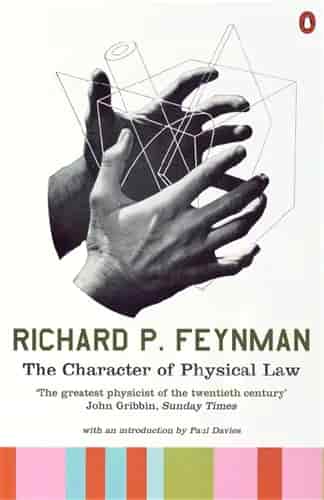
To those who do not know mathematics it is difficult to get across a real feeling as to the beauty, the deepest beauty, of nature. ... If you want to learn about nature, to appreciate nature, it is necessary to understand the language that she speaks in.
p. 58
Nature uses only the longest threads to weave her patterns, so each small piece of her fabric reveals the organization of the entire tapestry.
p. 34
This is the key of modern science and is the beginning of the true understanding of nature. This idea. That to look at the things, to record the details, and to hope that in the information thus obtained, may lie a clue to one or another of a possible theoretical interpretation.
p. 15
While I am describing to you how Nature works, you won't understand why Nature works that way. But you see, nobody understands that.
p. 10
Science, under the guise of benefiting mankind, is a dangerous force that often tampers with natural processes, without recognizing the consequences. Under such a scenario, mass destruction is inevitable.
There is in all things a pattern that is part of our universe. It has symmetry, elegance, and grace - those qualities you find always in that which the true artist captures. You can find it in the turning of the seasons, in the way sand trails along a ridge, in the branch clusters of the creosote bush or the pattern of its leaves. We try to copy these patterns in our lives and our society, seeking the rhythms, the dances, the forms that comfort. Yet, it is possible to see peril in the finding of ultimate perfection. It is clear that the ultimate pattern contains it own fixity. In such perfection, all things move toward death.
O Nature, and O soul of man! how far beyond all utterance are your linked analogies; not the smallest atom stirs or lives on matter, but has its cunning duplicate in mind.
p. 347
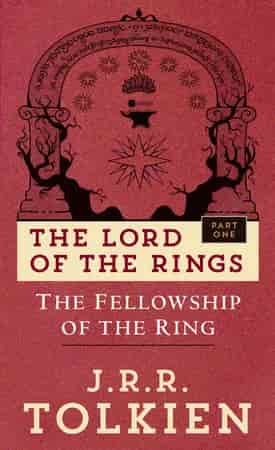
'If thou hadst thy will what wouldst thou reserve?' said Manwë. 'Of all thy realm what dost thou hold dearest?''All have their worth,' said Yavanna, 'and each contributes to the worth of the others. But the kelvar can flee or defend themselves, whereas the olvar that grow cannot. And among these I hold trees dear. Long in the growing, swift shall they be in the felling, and unless they pay toll with fruit upon bough little mourned in their passing. So I see in my thought. Would that the trees might speak on behalf of all things that have roots, and punish those that wrong them!'
Now he began to see for the first time the unbelievable magnitude of what man, when he gained power to understand and rule the world in terms of dialectic truths, had lost. He had built empires of scientific capability to manipulate the phenomena of nature into enormous manifestations of his own dreams of power and wealth—but for this he had exchanged an empire of understanding of equal magnitude: an understanding of what it is to be a part of the world, and not an enemy of it.
As Frodo prepared to follow him, he laid his hand upon the tree beside the ladder: never before had he been so suddenly and so keenly aware of the feel and texture of a tree's skin and of the life within it. He felt a delight in wood and the touch of it, neither as forester nor as carpenter; it was the delight of the living tree itself.
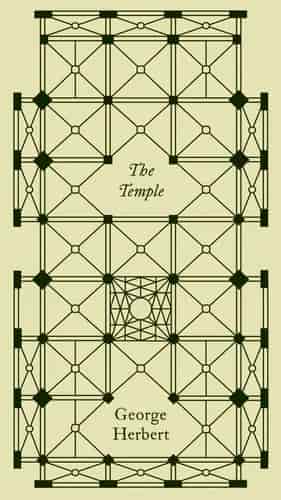
He would adore my gifts instead of me,
And rest in Nature, not the God of Nature:
So both should losers be.
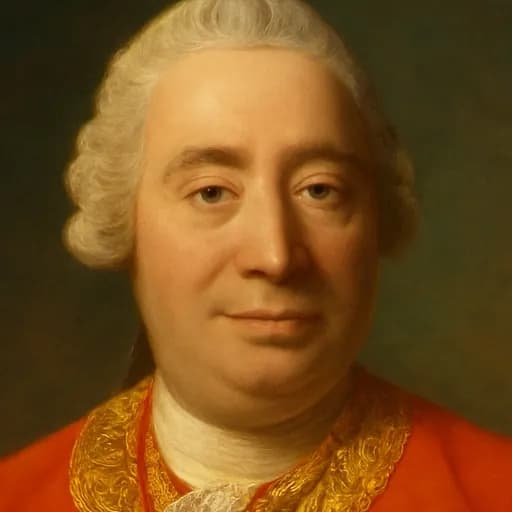
You need only look around you, replied PHILO, to satisfy yourself with regard to this question. A tree bestows order and organisation on that tree which springs from it, without knowing the order; an animal in the same manner on its offspring; a bird on its nest; and instances of this kind are even more frequent in the world than those of order, which arise from reason and contrivance. To say, that all this order in animals and vegetables proceeds ultimately from design, is begging the question; nor can that great point be ascertained otherwise than by proving, a priori, both that order is, from its nature, inseparably attached to thought; and that it can never of itself, or from original unknown principles, belong to matter.
p. 137