Quotes
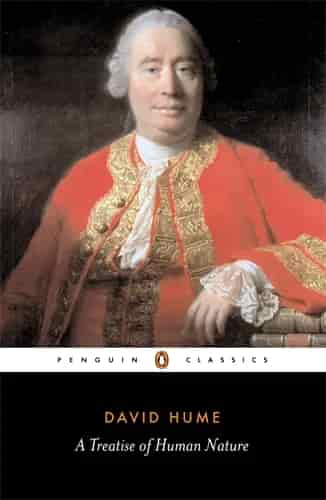
Look round this universe. What an immense profusion of beings, animated and organised, sensible and active! You admire this prodigious variety and fecundity. But inspect a little more narrowly these living existences, the only beings worth regarding. How hostile and destructive to each other! How insufficient all of them for their own happiness! How contemptible or odious to the spectator! The whole presents nothing but the idea of a blind Nature, impregnated by a great vivifying principle, and pouring forth from her lap, without discernment or parental care, her maimed and abortive children!
Look round the world: contemplate the whole and every part of it: You will find it to be nothing but one great machine, subdivided into an infinite number of lesser machines, which again admit of subdivisions, to a degree beyond what human senses and faculties can trace and explain. All these various machines, and even their most minute parts, are adjusted to each other with an accuracy, which ravishes into admiration all men, who have ever contemplated them. The curious adapting of means to ends, throughout all nature, resembles exactly, though it much exceeds, the productions of human contrivance; of human design, thought, wisdom, and intelligence.
p. 47
Nature may certainly produce whatever can arise from habit: Nay, habit is nothing but one of the principles of nature, and derives all its force from that origin.
Nature repairs her ravages, but not all. The uptorn trees are not rooted again; the parted hills are left scarred; if there is a new growth, the trees are not the same as the old, and the hills underneath their green vesture bear the marks of the past rending. To the eyes that have dwelt on the past, there is no thorough repair.
Rivers and the inhabitants of the watery element are made for wise men to contemplate, and for fools to pass by without consideration.
This Delta, he thought: This Delta. This land which man has deswamped and denuded and derivered in two generations so that white men can own plantations and commute every night to Memphis and black men own plantations and ride in jim crow cars to Chicago to live in millionaires’ mansions on Lakeshore Drive, where white men rent farms and live like niggers and niggers crop on shares and live like animals, where cotton is planted and grows man-tall in the very cracks of the sidewalks, and usury and mortgage and bankruptcy and measureless wealth, Chinese and African and Aryan and Jew, all breed and spawn together until no man has time to say which is which nor cares.... No wonder the ruined woods I used to know don’t cry for retribution! he thought: The people who have destroyed it will accomplish its revenge.
p. 347
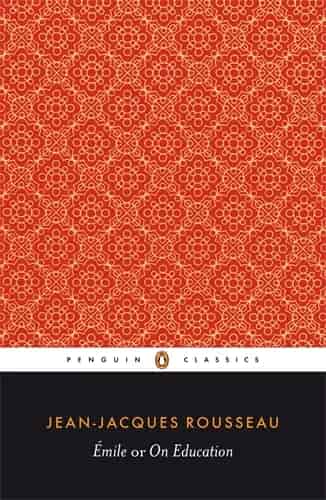
To travel on foot is to travel in the fashion of Thales, Plato, and Pythagoras. I find it hard to understand how a philosopher can bring himself to travel in any other way; how he can tear himself from the study of the wealth which lies before his eyes and beneath his feet. Is there any one with an interest in agriculture, who does not want to know the special products of the district through which he is passing, and their method of cultivation? Is there any one with a taste for natural history, who can pass a piece of ground without examining it, a rock without breaking off a piece of it, hills without looking for plants, and stones without seeking for fossils? Your town-bred scientists study natural history in cabinets; they have small specimens; they know their names but nothing of their nature. Emile's museum is richer than that of kings; it is the whole world.
This study of different nations in their remoter provinces, and in the simplicity of their native genius, gives a general result which is very satisfactory, to my thinking, and very consoling to the human heart; it is this: All the nations, if you observe them in this fashion, seem much better worth observing; the nearer they are to nature, the more does kindness hold sway in their character; it is only when they are cooped up in towns, it is only when they are changed by cultivation, that they become depraved, that certain faults which were rather coarse than injurious are exchanged for pleasant but pernicious vices.
"Hard pressed by these arguments, some prefer to make God unjust and to punish the innocent for the sins of their fathers, rather than to renounce their barbarous dogmas. Others get out of the difficulty by kindly sending an angel to instruct all those who in invincible ignorance have lived a righteous life. A good idea, that angel! Not content to be the slaves of their own inventions they expect God to make use of them also! "Behold, my son, the absurdities to which pride and intolerance bring us, when everybody wants others to think as he does, and everybody fancies that he has an exclusive claim upon the rest of mankind. I call to witness the God of Peace whom I adore, and whom I proclaim to you, that my inquiries were honestly made; but when I discovered that they were and always would be unsuccessful, and that I was embarked upon a boundless ocean, I turned back, and restricted my faith within the limits of my primitive ideas. I could never convince myself that God would require such learning of me under pain of hell. So I closed all my books. There is one book which is open to every one—the book of nature. In this good and great volume I learn to serve and adore its Author. There is no excuse for not reading this book, for it speaks to all in a language they can understand. Suppose I had been born in a desert island, suppose I had never seen any man but myself, suppose I had never heard what took place in olden days in a remote corner of the world; yet if I use my reason, if I cultivate it, if I employ rightly the innate faculties which God bestows upon me, I shall learn by myself to know and love him, to love his works, to will what he wills, and to fulfil all my duties upon earth, that I may do his pleasure. What more can all human learning teach me?
The mere generation of living organic bodies is the despair of the human mind; the insurmountable barrier raised by nature between the various species, so that they should not mix with one another, is the clearest proof of her intention. She is not content to have established order, she has taken adequate measures to prevent the disturbance of that order.
The splendour of nature lives in man's heart; to be seen, it must be felt.
God makes all things good; man meddles with them and they become evil. He forces one soil to yield the products of another, one tree to bear another's fruit. He confuses and confounds time, place, and natural conditions. He mutilates his dog, his horse, and his slave. He destroys and defaces all things; he loves all that is deformed and monstrous; he will have nothing as nature made it, not even man himself, who must learn his paces like a saddle-horse, and be shaped to his master's taste like the trees in his garden. Yet things would be worse without this education, and mankind cannot be made by halves. Under existing conditions a man left to himself from birth would be more of a monster than the rest. Prejudice, authority, necessity, example, all the social conditions into which we are plunged, would stifle nature in him and put nothing in her place. She would be like a sapling chance sown in the midst of the highway, bent hither and thither and soon crushed by the passers-by.