Quotes
I think that anyone who will take the trouble to consider the matter carefully will arrive at the same conclusion as I have, that art owes its origin to Nature herself, that this beautiful creation the world supplied the first model, while the original teacher was that divine intelligence which has not only made us superior to the other animals, but like God Himself, if I may venture to say it.
p. 5
Human beings have always been struck by the complex harmony and intricate organization of the physical world. The march of the heavenly bodies across the sky, the rhythms of the seasons, the pattern of a snowflake, the myriads of living creatures so well adapted to their environment – all these things seem too well arranged to be a mindless accident.
p. 194
"And so, it comes to pass in time, that the earth ceases for us to be a weltering chaos. We walk in the great hall of life, looking up and round reverentially. Nothing is despicable—all is meaning-full; nothing is small—all is part of a whole, whose beginning and end we know not. The life that throbs in us is a beginning and end we know not. The life that throbs in us is a pulsation from it; too mighty for our comprehension, not too small. And so, it comes to pass at last, that whereas the sky was at first a small blue rag stretched out over us, and so low that our hands might touch it, pressing down on us, it raises itself into an immeasurable blue arch over our heads, and we begin to live again."
Nature shouldn’t be able to do this, Sunday thought. It shouldn’t be able to produce something that resembled the work of directed intelligence, something artful, when the only factors involved were unthinking physics and obscene, spendthrift quantities of time. Time to lay down the sediments, in deluge after deluge, entire epochs in the impossibly distant past when Mars had been both warm and wet, a world deluded into thinking it had a future. Time for cosmic happenstance to hurl a fist from the sky, punching down through these carefully superimposed layers, drilling through these carefully superimposed layers, drilling the geological chapters like a bullet through a book. And then yesterday more time—countless millions of years—for wind and dust to work their callous handiwork, scouring and abrading, wearing the exposed layers back at subtly different rates depending on hardness and chemistry, util these deliberate-looking right-angled steps and contours began to assume grand and imperial solidity, rising from the depths like the stairways of the gods.
Awe-inspiring, yesterday. Sometimes it was entirely right and proper to be awed. And recognising the physics in these formations, the hand of time and matter and the nuclear forces underpinning all things, did not lessen that feeling. What was she, ultimately, but the end product of physics and matter? And what was her art but the product of physics and matter working on itself?
p. 292
Our deepest hope as humans lies in technology; but our deepest trust lies in nature. These forces are like tectonic plates grinding inexorably into each other in one, long, slow collision.
This collision is not new, but more than anything else it is defining our era. Technology is steadily creating the dominant issues and upheavals of our time.
p. 11
The first prerequisite for mastery of the environment is knowledge of that environment.
p. 40
Development cannot be seen purely as an economic affair, but rather as an overall social process which is dependent upon the outcome of man’s efforts to deal with his natural environment.
p. 6
The sheer beauty of our planet surprised me. It was a huge pearl, set in spangled ebony. It was nacreous, it was an opal. No, it was far more lovely than any jewel. Its patterned colouring was more subtle, more ethereal. '''It displayed the delicacy and brilliance, the intricacy and harmony of a live thing. Strange that in my remoteness I seemed to feel, as never before, the vital presence of Earth as of a creature alive but tranced and obscurely yearning to wake.
p. 14
The waves were indifferent, and the wind; and the rocks neither knew nor cared who owned them, Christ’s Vicar or an English King.
p. 179
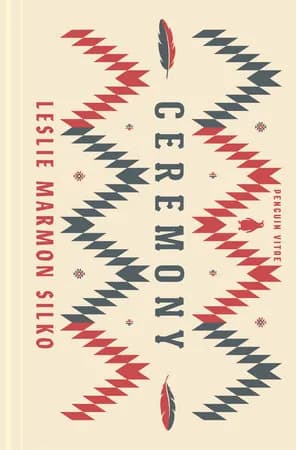
There was something about the way the old man said the word "comfortable." It had a different meaning--not the comfort of big houses or rich food or even clean streets, but the comfort of belonging with the land, and the peace of being with these hills. (p108)
...Then they grow away from the earth
then they grow away from the sun
then they grow away from the plants and the animals.
They see no life
When they look
they see only objects.
The world is a dead thing for them
the trees and the rivers are not alive.
the mountains and stones are not alive.
The deer and bear are objects
They see no life. They fear
They fear the world.
They destroy what they fear.
They fear themselves...
p. 125
Earth was their mother, but her land and water could never be desecrated; blasted open and polluted by man, but never desecrated. Man only desecrated himself in such acts; puny humans could not affect the integrity of Earth. Earth always was and would ever be sacred. Mother Earth might be ravaged by the Destroyers, but she still loved the people. (Part Five, Book One: The Foes)