

Quotes
[He] said that only humans had to endure anything, because only humans resisted what they saw outside themselves. Animals did not resist. But they persisted, because they became part of the wind. (p24)
The breaking and crushing were gone, and the love pushed inside his chest, and when he cried now, it was because she loved him so much. (p211)
He crawled deeper into the black gauzy web where he could rest in the silence, where his coming and going through this world was no more than a star falling across the night sky. He left behind the pain and buzzing in his head; they were shut out by the wide dark distance. (p154)
...how easy it was to stay alive now that he didn't care about being alive anymore. (p36)
It took only one person to tear away the delicate strands of the web, spilling the rays of sun into the sand, and the fragile world would be injured. (p35)
...feeling the instant of the dawn was an event which in a single moment gathered all things together—the last stars, the mountaintops, the clouds, and the winds—celebrating this coming. The power of each day spilled over the hills in great silence. Sunrise. (p169)
There was something about the way the old man said the word "comfortable." It had a different meaning--not the comfort of big houses or rich food or even clean streets, but the comfort of belonging with the land, and the peace of being with these hills. (p108)
The morning of the funeral an honor guard from Albuquerque fired the salute; two big flags covered the coffins completely, and it looked as if the people from the village had gathered only to bury the flags. (p240)
Being alive was all right then: he had not breathed like that for a long time. (p168)
...as I tell the story
it will begin to happen...
p. 125
If the white people never looked beyond the lie, to see that theirs was a nation built on stolen land, then they would never be able to understand how they had been used by the witchery; they would never know that they were still being manipulated by those who knew how to stir the ingredients together: white thievery and injustice boiling up the anger and hatred that would finally destroy the world: the starving against the fat, the colored against the white. The destroyers had only to set it into motion, and sit back to count the casualties. But it was more than a body count; the lies devoured white hearts, and for more than two hundred years white people had worked to fill their emptiness; they tried to glut the hollowness with patriotic wars and with great technology and the wealth it brought. And always they had been fooling themselves, and they knew it. (p178)
"...as long as you remember what you have seen, then nothing is gone. As long as you remember, it is part of this story we have together." (p215)
Only destruction is capable of arousing a sensation, the remains of something alive in them; and each time they do it, the scar thickens, and they feel less and less, yet still hungering for more. (p213)
...Then they grow away from the earth
then they grow away from the sun
then they grow away from the plants and the animals.
They see no life
When they look
they see only objects.
The world is a dead thing for them
the trees and the rivers are not alive.
the mountains and stones are not alive.
The deer and bear are objects
They see no life. They fear
They fear the world.
They destroy what they fear.
They fear themselves...
p. 125
That was the responsibility that went with being human, old Ku’oosh said, the story behind each word must be told so there could be no mistake in the meaning of what had been said; and this demanded great patience and love. (p33)
He cried the relief he felt at finally seeing the pattern, the way all the stories fit together—the old stories, the war stories, their stories—to become the story that was still being told. He was not crazy; he had never been crazy. He had only seen and heard the world as it always was: no boundaries, only transitions through all distances and time. (p229)
"She taught me this above all else: things which don't shift and grow are dead things. They are things the witchery people want. Witchery works to scare people, to make them fear growth. But it has always been necessary, and more than ever now, it is. Otherwise we won't make it. We won't survive..." (p116)
The people had been taught to despise themselves because they were left with barren land and dry rivers. But they were wrong. It was the white people who had nothing; it was the white people who were suffering as thieves do, never able to forget that their pride was wrapped in something stolen, something that had never been, and could never be, theirs. The destroyers had tricked the white people as completely as they had fooled the Indians, and now only a few people understood how the filthy deception worked; only a few people knew that the lie was destroying the white people faster than it was destroying Indian people. But the effects were hidden, evident only in the sterility of their art, which continued to feed off the vitality of other cultures, and in the dissolution of their consciousness into dead objects: the plastic and neon, the concrete and steel. Hollow and lifeless as a witchery clay figure. And what little still remained to white people was shriveled like a seed hoarded too long, shrunken past its time, and split open now, to expose a fragile, pale leaf stem, perfectly formed and dead. (p189)
“They are afraid, Tayo. They feel something happening, they can see something happening around them, and it scares them. Indians or Mexicans or whites—most people are afraid of change. They think that if their children have the same color of skin, the same color of eyes, that nothing is changing.” She laughed softly. “They are fools. They blame us, the ones who look different. That way they don’t have to think about what has happened inside themselves.” (p92)
But the effects were hidden, evident only in the sterility of their art, which continued to feed off the vitality of other cultures, and in the dissolution of their consciousness into dead objects: the plastic and neon, the concrete and steel. Hollow and lifeless as a witchery clay figure. And what little still remained to white people was shriveled like a seed hoarded too long, shrunken past its time, and split open now, to expose a fragile, pale leaf stem, perfectly formed and dead. (p190)
...But he had known the answer all along, even while the white doctors were telling him he could get well and he was trying to believe them: medicine didn't work that way, because the world didn't work that way. His sickness was only part of something larger, and his cure would be found only in something great and inclusive of everything. (p116)
It’s a matter of transitions, you see; the changing, the becoming must be cared for closely. You would do as much for the seedlings as they become plants in the field. (p120)
...an old white woman rolled down the window and said, ‘God bless you, God bless you,’ but it was the uniform, not them, she blessed. (p38)
Distances and days existed in themselves then; they all had a story. They were not barriers. If a person wanted to get to the moon, there was a way; it all depended on whether you knew the directions-exactly which way to go and what to do to get there; it depended on whether you knew the story of how others before you had gone. (p17)
He could feel it inside his skull—the tension of little threads being pulled and how it was with tangled things, things tied together, and as he tried to pull them apart and rewind them into their places, they snagged and tangled even more. (p6)
He made a story for all of them, a story to give them strength. The words of the story poured out of his mouth as if they had substance, pebbles and stone extending to hold the corporal up, to keep his knees from buckling, to keep his hands from letting go of the blanket. (p10)
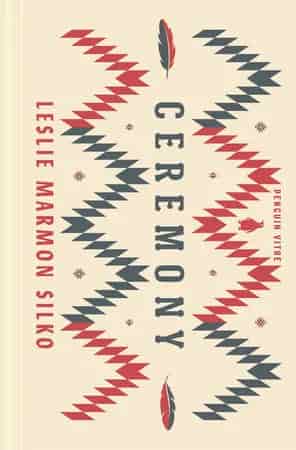
Ceremony
I will tell you something about stories,
[he said]
They aren’t just entertainment.
Don’t be fooled.
They are all we have, you see,
all we have to fight off
illness and death.
You don’t have anything
if you don’t have the stories.
Their evil is mighty
but it can’t stand up to our stories.
So they try to destroy the stories
let the stories be confused or forgotten.
They would like that
They would be happy
Because we would be defenseless then.
He rubbed his belly.
I keep it in here
[he said]
Here, put your hand on it
See, It is moving.
There is life here
for the people.
And in the belly of this story
the rituals and the ceremony
are still growing.
p. 2

That’s all the quotes.
27 quotes in the collection · come back when we add more