Quotes
When we die, we will turn into songs, and we will hear each other and remember each other.
During my detention, they kept asking me: Ai Weiwei, what is the reason you have become like this today? My answer is: First, I refuse to forget. My parents, my family, their whole generation and my generation all paid a great deal in the struggle for freedom of speech. Many people died just because of one sentence or even one word. Somebody has to take responsibility for that.
My voice is not for me. Every time I make a sentence I think how many people for how many generations had a voice that no one could hear. At most they will be remembered as numbers; in many cases, even numbers don’t exist.
Ori supposed there were as many unspeakable stories as there were men come back from war.
p. 314
Without respite he is dragged by the two wild horses, memory and hope; and he is tormented by a secret that he never can tell.
You have many years to live—do things you will be proud to remember when you're old.
[T]o a greater or lesser extent our knowledge even of close kin is often fragmentary, inferred like a fossil skeleton or an ancient vase from whatever always-limited experience and shards of memory we have of them.
p. 297
Before a culture adopts the use of writing, when its knowledge is transmitted exclusively through oral means, it can very easily revise its history. It’s not intentional, but it is inevitable; throughout the world, bards and griots have adapted their material to their audiences and thus gradually adjusted the past to suit the needs of the present. The idea that accounts of the past shouldn’t change is a product of literate cultures’ reverence for the written word. Anthropologists will tell you that oral cultures understand the past differently; for them, their histories don’t need to be accurate so much as they need to validate the community’s understanding of itself. So it wouldn’t be correct to say that their histories are unreliable; their histories do what they need to do.
p. 226
“Forgive and forget” goes the expression, and for our idealized magnanimous selves, that was all you needed. But for our actual selves the relationship between those two actions isn’t so straightforward. In most cases we have to forget a little bit before we can forgive; when we no longer experienced the pain as fresh, the insult is easier to forgive, which in turn makes it less memorable, and so on. It’s this psychological feedback loop that makes initially infuriating offenses seem pardonable in the mirror of hindsight.
p. 198
Your past is always your past. Even if you forget it, it remembers you.
Any relic of the dead is precious, if they were valued living.
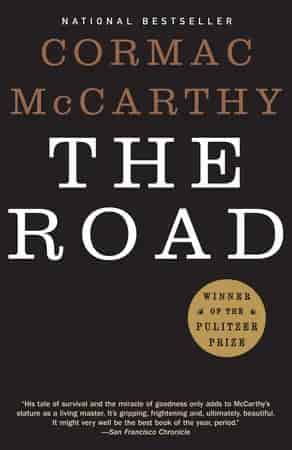
He thought if he lived long enough the world at last would be lost. Like the dying world the newly blind inhabit, all of it slowly fading from memory.