Quotes
The mathematical forms of order which the mind of a physicist manipulates coincides "miraculously" with experimental measurements.
p. 269
If mathematical objects exist independently of human thought what else are they independent of? The universe, I suppose.
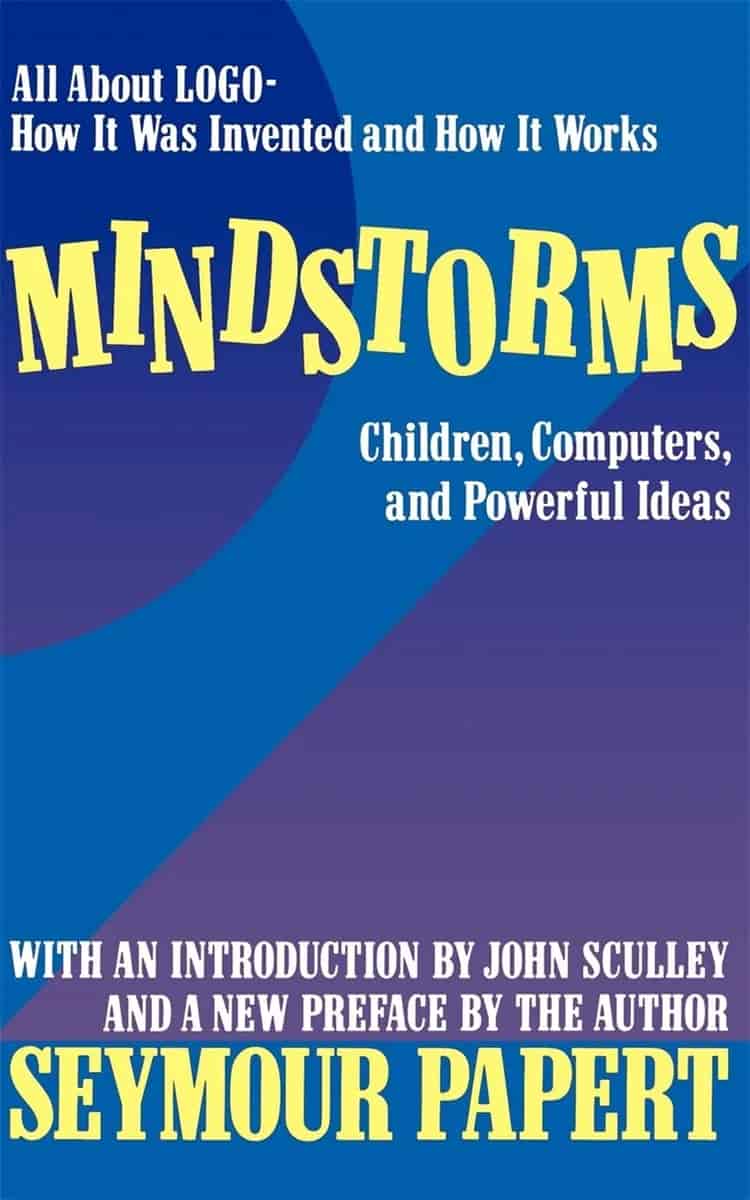
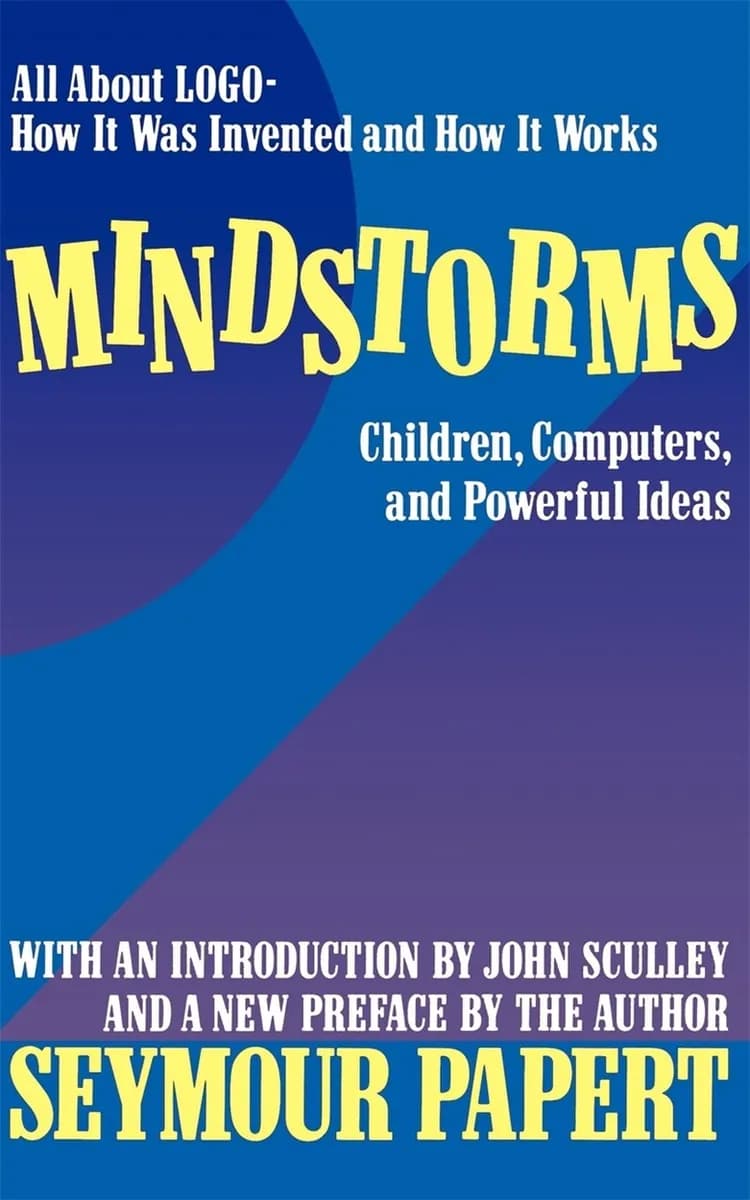
I have asked many teachers and parents what they thought mathematics to be and why it was important to learn it. Few held a view of mathematics that was sufficiently coherent to justify devoting several thousand hours of a child's life to learning it, and children sense this. When a teacher tells a student that the reason for those many hours of arithmetic is to be able to check the change at the supermarket, the teacher is simply not believed. Children see such "reasons" as one more example of adult double talk. The same effect is produced when children are told school math is "fun" when they are pretty sure that teachers who say so spend their leisure hours on anything except this allegedly fun-filled activity. Nor does it help to tell them that they need math to become scientists---most children don't have such a plan. The children can see perfectly well that the teacher does not enjoy math any more than they do and that the reason for doing it is simply that it has been inscribed into the curriculum. All of this erodes children's confidence in the adult world and the process of education. And I think it introduces a deep element of dishonestly into the education relationship.
It is not uncommon for intelligent adults to turn into passive observers of their own incompetence in anything but the most elementary mathematics. Individuals may see the direct consequences of this intellectual paralysis in terms of limiting job possibilities. But the indirect, secondary consequences are even more serious. One of the main lessons learned by most people in math class is a sense of having rigid limitations. They learn a balkanized image of human knowledge which they come to see as a patchwork of territories separated by impassable iron curtains.
The kind of mathematics foisted on children in schools is not meaningful, fun, or even very useful. This does not mean that an individual child cannot turn it into a valuable and enjoyable personal game. For some the game is scoring grades; for others it is outwitting the teacher and the system. For many, school math is enjoyable in its repetitiveness, precisely because it is so mindless and dissociated that it provides a shelter from having to think about what is going on in the classroom. But all this proves is the ingenuity of children. It is not a justifications for school math to say that despite its intrinsic dullness, inventive children can find excitement and meaning in it.
Our children grow up in a culture permeated with the idea that there are "smart people" and "dumb people". The social construction of the individual is as a bundle of aptitudes. There are people who are "good at math" and people who "can't do math." Everything is set up for children to attribute their first unsuccessful or unpleasant learning experiences to their own disabilities. As a result, children perceive failure as relegating them either to the group of "dumb people" or, more often, to a group of people "dumb at x" (where, as we have pointed out, x often equals mathematics). Within this framework children will define themselves in terms of their limitations, and this definition will be consolidated and reinforced throughout their lives. Only rarely does some exceptional event lead people to reorganize their intellectual self-image in such a way as to open up new perspectives on what is learnable.
The notions she fought with needed more than the simple algebra she’d been grudgingly taught at Lamai Hold. More and more she resented how they had robbed her of this, arguably her one talent, driving her from math and other abstractions by the simple expedient of making them seem boring.
p. 337
“It’s magic,” the chief cook concluded, in awe.
”No, not magic,” the ship’s doctor replied. “It’s much more. It’s mathematics.”
p. 466
About drafting all the scientific students into the war effort. Maybe the war is good, but, Tomar, I’m working on my own project. All at once, the thing I want most in the world is to be left alone to work on it. And I want you, and I want to have a picnic. I’m nearly at the solution, and to have to stop and work on bomb sightings and missile trajectories…Tomar, there’s a beauty in abstract mathematics that shouldn’t be dulled with that sort of thing.
p. 64
[E]ven in the most precise part of science, in mathematics, we cannot avoid using concepts that involve contradictions. ...[I]t is well known that the concept of infinity leads to contradictions... but it would be practically impossible to construct... mathematics without this concept.
Mathematics... is the set of all possible self-consistent structures, and there are vastly more logical structures than physical principles.
p. 328
Beauty cannot be defined by abscissas and ordinates; neither are circles and ellipses created by their geometrical formulas.