Quotes
“Knowledge is strange,” Eyvind Torfinn said. “You never can be sure ahead of time what you may need. Someone who is going to a strange place will carry different tools on his belt. Should he not carry different tools in his head as well?”
p. 29
You couldn’t find an answer if you didn’t know you should be asking the question.
p. 274
Know what you’re doing and you’ll never need to cheat.
p. 383
In the beginner's mind there are many possibilities, in the expert's there are few.
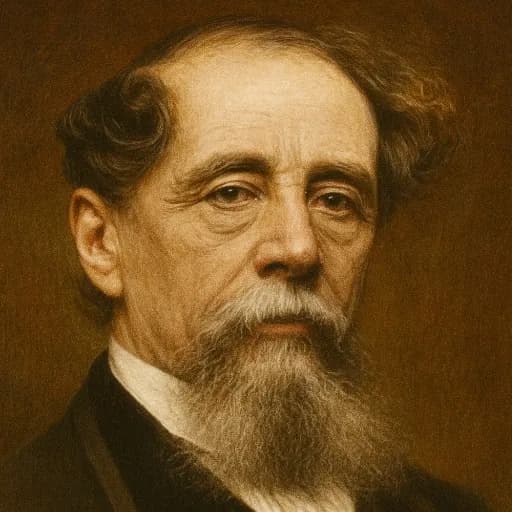
Now, what I want is, Facts. Teach these boys and girls nothing but Facts. Facts alone are wanted in life. Plant nothing else, and root out everything else. You can only form the minds of reasoning animals upon Facts: nothing else will ever be of any service to them. This is the principle on which I bring up my own children, and this is the principle on which I bring up these children. Stick to Facts, sir!
Who knows what schools will be like twenty-five years from now? Or fifty? In time, the type of student who is currently a failure may be considered a success. The type who is now successful may be regarded as a handicapped learner — slow to respond, far too detached, lacking in emotion, inadequate in creating mental pictures of reality. Consider: what Thamus called the "conceit of wisdom" — the unreal knowledge acquired through the written word — eventually became the pre-eminent form of knowledge valued by the schools. There is no reason to suppose that such a form of knowledge must always remain so highly valued.
In course of time the slow advance of knowledge, which has dispelled so many cherished illusions, convinced at least the more thoughtful portion of mankind that the alterations of summer and winter, of spring and autumn, were not merely the result of their own magical rites, but that some deeper cause, some mightier power, was at work behind the shifting scenes of nature.
The advance of knowledge is an infinite progression towards a goal that ever recedes.
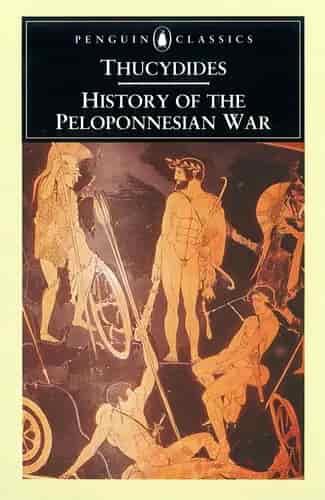
Disdain is the privilege of those who, like us, have been assured by reflection of their superiority to their adversary. And where the chances are the same, knowledge fortifies courage by the contempt which is its consequence, its trust being placed, not in hope, which is the prop of the desperate, but in a judgment grounded upon existing resources, whose anticipations are more to be depended upon.
A philosopher is a lover of wisdom, not of knowledge, which for all its great uses ultimately suffers from the crippling effect of ephemerality. All knowledge is transient, linked to the world around it and subject to change as the world changes, whereas wisdom, true wisdom is eternal, immutable. To be philosophical one must love wisdom for its own sake, accept its permanent validity and yet its perpetual irrelevance. It is the fate of the wise to understand the process of history and yet never to shape it.
“I know so little,” she murmured.
“Better admit you are up to your neck in ignorance than stand upon a pinnacle of misinformation,” he said firmly.
p. 258
“The answers to everything are in the books,” he said to her. “It is in knowing which books, of course, and where to look.”
p. 116