Quotes
The decisions I made after that moment were not the ones she would have made. They were the choices of a changed person, a new self.
You could call this selfhood many things. Transformation. Metamorphosis. Falsity. Betrayal.
I call it an education.
p. 329
My life was narrated for me by others. Their voices were forceful, emphatic, absolute. It had never occurred to me that my voice might be as strong as theirs.
p. 197
It was the age-old conundrum: How do I know that the ‘me’ who wakes after a night’s sleep is the same ‘me’ who went to bed? I don’t. I merely employ it as a working assumption, for lack of anything better.
p. 319
I don’t believe in identity politics in literature—or in life much, either. Indeed the current scholarly enchantment with identity politics strikes me as a more intellectual version of the warning oft heard around Sunnyside when I was growing up: “Stick with your own kind.” Family and cultural origins are crucial to self-definition, but they’re not the end of the story. I certainly don’t think that we readers only or even chiefly enjoy or understand books whose main characters mirror us. In fact, the opportunity to become who we are decidedly not—whether it’s Amis’s Dixon or Philip Roth’s Portnoy or Ellison’s Invisible Man or Kafka’s beetle—is one of the greatest gifts reading offers. Women readers get to serve on that floating boy’s club, the Pequod; male readers get to step into Elizabeth Bennet’s shoes and teach Mr. Darcy the dance of humility; readers of either gender who are not African American get to crawl toward freedom alongside Toni Morrison’s Sethe. One of the most magical and liberating things about literature is that it can transport us readers into worlds totally unlike our own.
p. 70
“I think I just don’t like names. Basically, I can’t see what’s wrong with calling me ‘me’ or you ‘you’ or us ‘us’ or them ‘them.”
If you could, wouldn’t you replace your damaged legs with cybernetic ones? Why hold on to malfunctioning or poorly formed flesh and bone because “we were born with it”? That’s something said only by people who have no choice or have no actual experience with being…unable. What makes you you, really? I’m a mechanic. When something isn’t working, you replace it with something better, something that is working.
p. 15
I could now move without effort from one world to the other as easily as I could change my clothes, but I appreciated that I was in danger of belonging to neither. When I was among my own people, a shadowy figure was always at my side watching them with critical, intolerant eyes.
p. 257
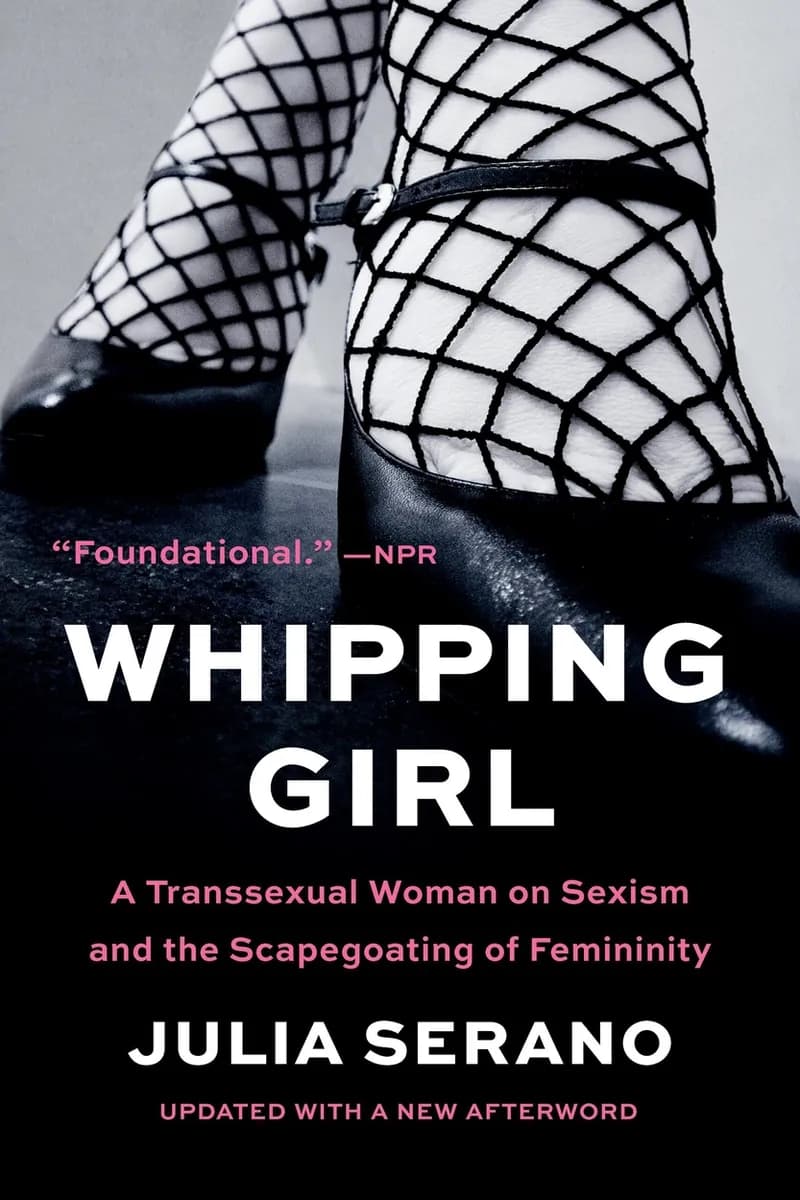
Many cissexual people seem to have a hard time accepting the idea that they too have a subconscious sex — a deep-rooted understanding of what sex their bodies should be. I suppose that when a person feels right in the sex they were born into, they are never forced to locate or question their subconscious sex, to differentiate it from their physical sex. In other words, their subconscious sex exists, but it is hidden from their view. They have a blind spot. (5 - Blind Spots: On Subconscious Sex and Gender Entitlement)
“Almost everything interesting in the human experience is the result of an individual experiencing, experimenting, explaining, and sharing,” said my young friend. “A hive mind would be the ancient television broadcasts, or life at the height of the datasphere...consensual idiocy.”
p. 464
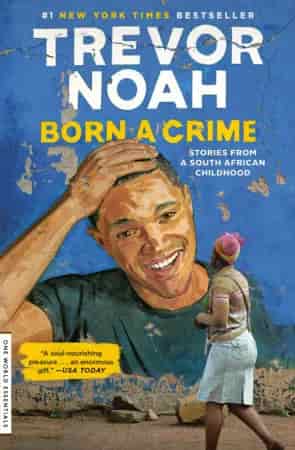
Every year under apartheid, some colored people would get promoted to white. People could submit applications to the government. Your hair might become straight enough, your skin might become light enough, your accent might become polished enough — -and you’d be reclassified as white. All you had to do was denounce your people, denounce your history, and leave your darker-skinned fiends and family behind.
Now, even when I make an outfit for myself, I wonder what other people will think. The truth is that I secretly love what seems to be my own individuality, and I hope I always will, but fully embodying it is another matter. I always want everyone to think I am a good girl. Whenever I am around a lot of people, it is amazing how obsequious I can be. I fib and chatter away, saying things I don't want to or mean in any way. I feel like it is to my advantage to do so. I hate it. I hope for a revolution in ethics and morals. Then, my obsequiousness and this need to plod through life according to others' expectations would simply dissolve.
Really, I don't know which is the true me. What ever will I do when there aren't any more books to read, or when I can't find another role model to imitate? Probably just wither away, helpless and sniveling profusely. Anyhow, these aimless thoughts I have on the train every day don't do me much good. The unpleasant warmth I still felt in my body was unbearable. I felt I had to do something, somehow, but would I be able to fully grasp what that was? My self-criticisms seem basically pointless to me. I would start to judge, and when I'd get to my negative or weak traits, I'd immediately begin to indulge or wallow in self-pity, and then decide it's no good, why not just leave well enough alone, so I've given up on criticism. It would be best if I just didn't think of anything at all.