Quotes
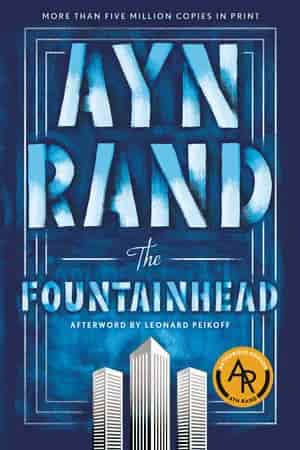
"Listen to what is being preached today. Look at everyone around us. You've wondered why they suffer, why they seek happiness and never find it. If any man stopped and asked himself whether he's ever held a truly personal desire, he'd find the answer. He'd see that all his wishes, his efforts, his dreams, his ambitions are motivated by other men. He's not really struggling even for material wealth, but for the second-handers delusion—prestige. A stamp of approval, not his own. He can find no joy in the struggle and no joy when he has succeeded. He can't say about a single thing: 'This is what I wanted because I wanted it, not because it made my neighbors gape at me.' Then he wonders why he's unhappy."
p. 660
"Here's another way. This is most important. Don't allow men to be happy. Happiness is self-contained and self-sufficient. Happy men have no time and no use for you. Happy men are free men. So kill their joy in living. Take away from them whatever is dear or important to them. Never let them have what they want. Make them feel that the mere fact of a personal desire is evil. Bring them to a state where saying ‘I want’ is no longer a natural right, but a shameful admission. Altruism is of great help in this. Unhappy men will come to you. They'll need you. They'll come for consolation, for support, for escape. Nature allows no vacuum. Empty man's soul—and the space is yours to fill."
p. 691
"Suffering? I'm not conscious of having shown that."
"You haven't. That's what I meant. No happy person can be quite so impervious to pain."
p. 438
Art never comes from happiness
But who can say what's best? That's why you need to grab whatever chance you have of happiness where you find it, and not worry about other people too much. My experience tells me that we get no more than two or three such chances in a life time, and if we let them go, we regret it for the rest of our lives.
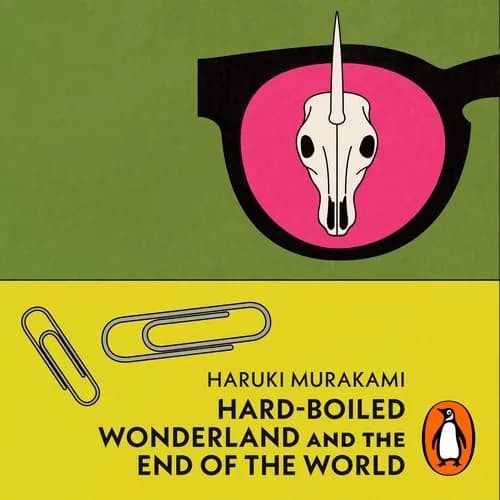
First, about the mind. You tell me there is no fighting or hatred or desire in the Town. That this is a beautiful dream, and I do want your happiness. But the absence of fighting or hatred or desire also means the opposites do not exist either. No joy, no communion, no love. Only where there is disillusionment and depression and sorrow does happiness arise; without the despair of loss, there is no hope.
Are you happy if you aren’t conscious of being happy? What is consciousness? Is consciousness the great boon we consider it? Which is better off, a lizard basking in the sun or a philosopher? Better off in what way and for what? There have been lizards for longer than there have been philosophers. Lizards do not bathe, do not bury their dead, and do not perform scientific experiments. There have been many more lizards than philosophers. Are lizards, then, a more successful species than philosophers? Does God love lizards better than he loves philosophers?
p. 162
The trouble is that we have a bad habit, encouraged by pedants and sophisticates, of considering happiness as something rather stupid. Only pain is intellectual, only evil interesting. This is the treason of the artist: a refusal to admit the banality of evil and the terrible boredom of pain. If you can’t lick ’em, join ’em. If it hurts, repeat it. But to praise despair is to condemn delight, to embrace violence is to lose hold of everything else.
p. 254
Not that freedom ensured happiness. Indeed, to be free was to live in absence. Of responsibilities, of loyalties, of the pressures that expectation imposed.
"My capacity for happiness," he added, "you could fit into a matchbox without taking out the matches first." —Marvin
"I'd far rather be happy than right any day."
"And are you?"
"No, that's where it all falls down, of course."
"Pity," said Arthur with sympathy. "It sounded like quite a good lifestyle otherwise."
This planet has—or rather had—a problem, which was this: most of the people living on it were unhappy for pretty much all of the time. Many solutions were suggested for this problem, but most of these were largely concerned with the movement of small green pieces of paper, which was odd because on the whole it wasn't the small green pieces of paper that were unhappy.