Quotes
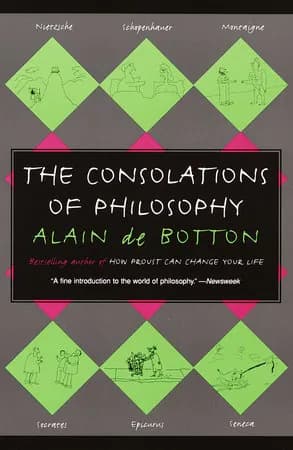
Someone who has thought rationally and deeply about how the body works is likely to arrive at better ideas about how to be healthy than someone who has followed a hunch. Medicine presupposes a hierarchy between the confusion the layperson will be in about what is wrong with him, and the more accurate knowledge available to doctors reasoning logically. … At the heart of Epicureanism is the thought that we are as bad at answering the question “What will make me happy?” as “What will make me healthy?” … Our souls do not spell out their troubles.
p. 53
Aside from the equation it draws between making money and being good, the modern ideal of a successful life posits a further linkage between making money and being happy. This latter association rests on … assumptions. First, it is presumed that identifying what will make us happy is not an inordinately difficult task. Just as our bodies typically know what they need in order to be healthy… so, too, the theory goes, can our minds to be relied upon to understand what we should aim for so as to flourish as whole human beings. … Second, it is taken for granted that the enormous range of … consumer goods available to modern civilization is not merely a gaudy, enervating show responsible for stoking desires bearing little relevance to our welfare, but is, rather, a helpful array of potentialities and products, capable of satisfying some of our most important needs.
Happiness may be difficult to obtain. The obstacles are not primarily financial.
p. 72
Why, then, if expensive things cannot bring us remarkable joy, are we so powerfully drawn to them?
p. 65
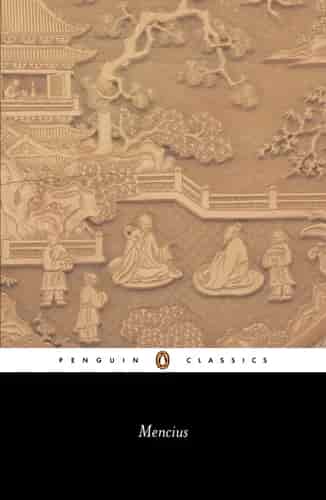
The superior man has three things in which he delights, and to be ruler over the kingdom is not one of them. That his father and mother are both alive, and that the condition of his brothers affords no cause for anxiety;—this is one delight. That, when looking up, he has no occasion for shame before Heaven, and, below, he has no occasion to blush before men;—this is a second delight. That he can get from the whole kingdom the most talented individuals, and teach and nourish them;—this is the third delight.
p. 335
But it may be that there is happiness in the very things we rejected - in work and responsibility. In the rearing of children and in the challenge of permanent love.
Mrs. Snow had lived forty years, and for fifteen of those years she had been too busy wishing things were different to find much time to enjoy things as they were.
I'm really happy, I just don't choose to show it.
The golden toad was the first documented victim of global warming. We had killed it with our profligate use of coal-fired electricity and our oversize cars just as surely as if we had flattened its forest with bulldozers. It was as if, having experienced it, we did not recognize what happiness was.
p. 119
Happiness is the consequence of personal effort. You fight for it, strive for it, insist upon it, and sometimes even travel around the world looking for it. You have to participate relentlessly in the manifestations of your own blessings. And once you have achieved a state of happiness, you must never become lax about maintaining it. You must make a mighty effort to keep swimming upward into that happiness forever, to stay afloat on top of it.
Sometimes — more precisely, some-not-times — we find "the still point of the turning world". All our most lovely moments perhaps are timeless.
But also I say this: that light is an invitation to happiness, and that happiness, when it’s done right, is a kind of holiness.