


Quotes about empathy
130 quotes · 98 authors
Quotes
It's hard to kill a creature once it lets you see its consciousness.
p. 147
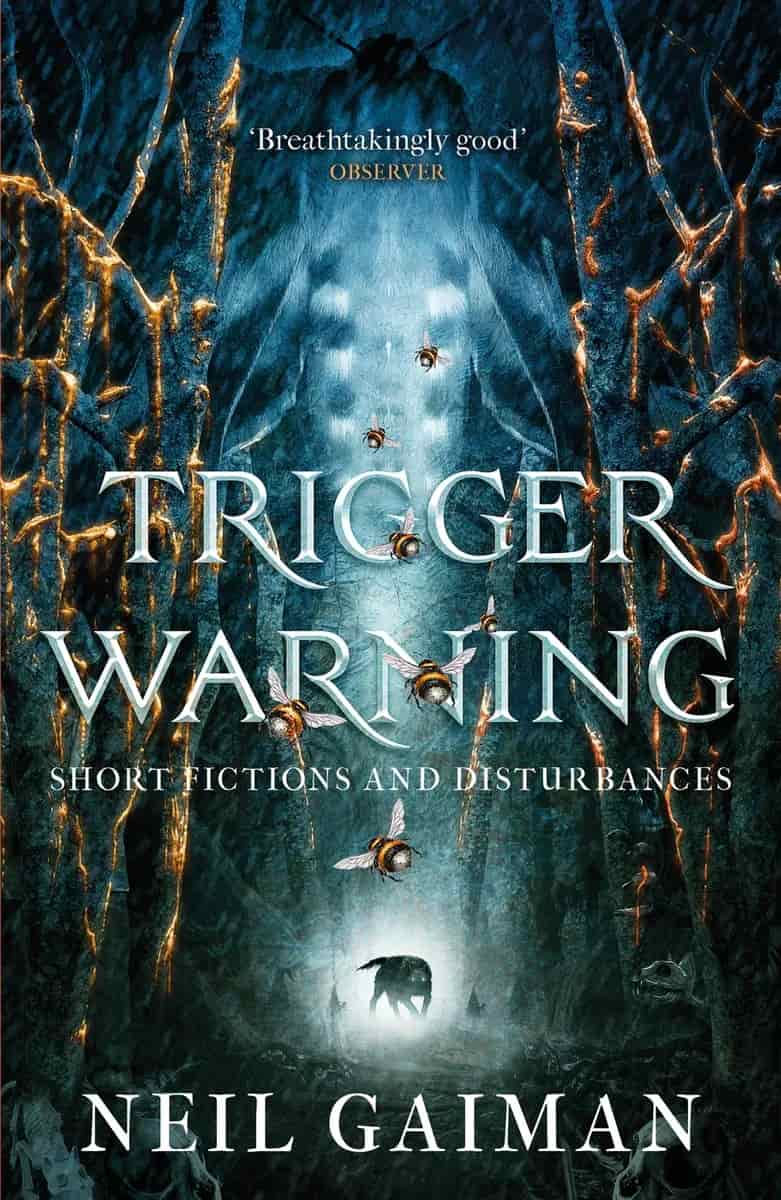
We build the stories in our heads. We take words, and we give them power, and we look out through other eyes, and we see, and experience, what others see. I wonder, Are fictions safe places? And then I ask myself, Should they be safe places?
No man, proclaimed Donne, is an Island, and he was wrong. If we were not islands, we would be lost, drowned in each other’s tragedies. We are insulated (a word that means, literally, remember, made into an island) from the tragedy of others, by our island nature, and by the repetitive shape and form of the stories. The shape does not change: there was a human being who was born, lived, and then, by some means or another, died. There. You may fill in the details from your own experience. As unoriginal as any other tale, as unique as any other life. Lives are snowflakes — forming patterns we have seen before, as like one another as peas in a pod (and have you ever looked at peas in a pod? I mean, really looked at them? There’s not a chance you’d mistake one for another, after a minute’s close inspection), but still unique.
Without individuals we see only numbers: a thousand dead, a hundred thousand dead, "casualties may rise to a million." With individual stories, the statistics become people — but even that is a lie, for the people continue to suffer in numbers that themselves are numbing and meaningless. Look, see the child’s swollen, swollen belly, and the flies that crawl at the corners of his eyes, his skeletal limbs: will it make it easier for you to know his name, his age, his dreams, his fears? To see him from the inside? And if it does, are we not doing a disservice to his sister, who lies in the searing dust beside him, a distorted, distended caricature of a human child? And there, if we feel for them, are they now more important to us than a thousand other children touched by the same famine, a thousand other young lives who will soon be food for the flies’ own myriad squirming children?
We draw our lines around these moments of pain, and remain upon our islands, and they cannot hurt us. They are covered with a smooth, safe, nacreous layer to let them slip, pearllike, from our souls without real pain.
Fiction allows us to slide into these other heads, these other places, and look out through other eyes. And then in the tale we stop before we die, or we die vicariously and unharmed, and in the world beyond the tale we turn the page or close the book, and we resume our lives.
A life that is, like any other, unlike any other.
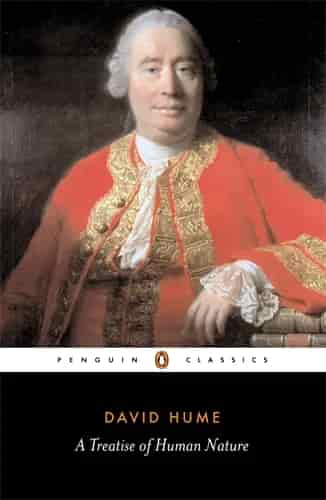
'Tis evident, that sympathy, or the communication of passions, takes place among animals, no less than among men. Fear, anger, courage and other affections are frequently communicated from one animal to another [...] And 'tis remarkable, that tho' almost all animals use in play the same member, and nearly the same action as in fighting; a lion, a tyger, a cat their paws; an ox his homs; a dog his teeth; a horse his heels: Yet they most carefully avoid harming their companion, even tho' they have nothing to fear from his resentment; which is an evident proof of the sense brutes have of each other's pain and pleasure.
No quality of human nature is more remarkable, both in itself and in its consequences, than that propensity we have to sympathize with others, and to receive by communication their inclinations and sentiments, however different from, or even contrary to our own. This is not only conspicuous in children, who implicitly embrace every opinion propos'd to them; but also in men of the greatest judgment and understanding, who find it very difficult to follow their own reason or inclination, in opposition to that of their friends and daily companions. To this principle we ought to ascribe the great uniformity we may observe in the humours and turn of thinking of those of the same nation; and ’tis much more probable, that this resemblance arises from sympathy, than from any influence of the soil and climate, which, tho’ they continue invariably the same, are not able to preserve the character of a nation the same for a century together. A good-natur'd man finds himself in an instant of the same humour with his company; and even the proudest and most surly take a tincture from their countrymen and acquaintance. A chearful countenance infuses a sensible complacency and serenity into my mind; as an angry or sorrowful one throws a sudden dump upon me. Hatred, resentment, esteem, love, courage, mirth and melancholy; all these passions I feel more from communication than from my own natural temper and disposition. So remarkable a phaenomenon merits our attention, and must be trac'd up to its first principles.
We find it difficult to sympathise with the emotions of a potato; so we do with those of an oyster. Neither of these things makes a noise on being boiled or opened, and noise appeals to us more strongly than anything else, because we make so much about our own sufferings. Since, then, they do not annoy us by any expression of pain we call them emotionless; and so qua mankind they are; but mankind is not everybody.
Take from our hearts this love of what is noble and you rob us of the joy of life. The mean-spirited man in whom these delicious feelings have been stifled among vile passions, who by thinking of no one but himself comes at last to love no one but himself, this man feels no raptures, his cold heart no longer throbs with joy, and his eyes no longer fill with the sweet tears of sympathy, he delights in nothing; the wretch has neither life nor feeling, he is already dead.
[Footnote: The precept "Do unto others as you would have them do unto you" has no true foundation but that of conscience and feeling; for what valid reason is there why I, being myself, should do what I would do if I were some one else, especially when I am morally certain I never shall find myself in exactly the same case; and who will answer for it that if I faithfully follow out this maxim, I shall get others to follow it with regard to me? The wicked takes advantage both of the uprightness of the just and of his own injustice; he will gladly have everybody just but himself. This bargain, whatever you may say, is not greatly to the advantage of the just. But if the enthusiasm of an overflowing heart identifies me with my fellow-creature, if I feel, so to speak, that I will not let him suffer lest I should suffer too, I care for him because I care for myself, and the reason of the precept is found in nature herself, which inspires me with the desire for my own welfare wherever I may be. From this I conclude that it is false to say that the precepts of natural law are based on reason only; they have a firmer and more solid foundation. The love of others springing from self-love, is the source of human justice. The whole of morality is summed up in the gospel in this summary of the law.]
A needle slid into Winston's arm. Almost in the same instant a blissful, healing warmth spread all through his body. The pain was already half-forgotten. He opened his eyes and looked up gratefully at O'Brien. At sight of the heavy, lined face, so ugly and so intelligent, his heart seemed to turn over. If he could have moved he would have stretched out a hand and laid it on O'Brien's arm. He had never loved him so deeply as at this moment, and not merely because he had stopped the pain. The old feeling, that at bottom it did not matter whether O'Brien was a friend or an enemy, had come back. O'Brien was a person who could be talked to. Perhaps one did not want to be loved so much as to be understood. O'Brien had tortured him to the edge of lunacy, and in a little while, it was certain, he would send him to his death. It made no difference. In some sense that went deeper than friendship, they were intimates: somewhere or other, although the actual words might never be spoken, there was a place where they could meet and talk.











That’s all the quotes.
10 quotes in the collection · come back when we add more