Quotes about emigration
28 quotes · 24 authors
Quotes
The trick was to understand America, to know that America was give-and-take. You gave up a lot but you gained a lot, too.
p. 198
We are all of us, it has been said, the children of immigrants and foreigners — even the American Indian, although he arrived here a little earlier. What a man is and what he becomes is in part due to his heritage, and the men and women who came west did not emerge suddenly from limbo. Behind them were ancestors, families, and former lives. Yet even as the domestic cattle of Europe evolved into the wild longhorns of Texas, so the American pioneer had the characteristics of a distinctive type.
Physically and psychologically, the pioneers' need for change had begun in the old countries with their decision to migrate. In most cases their decisions were personal, ordered by no one else. Even when migration was ordered or forced, the people who survived were characterized by physical strength, the capacity to endure, and not uncommonly, a rebellious nature.
History is not made only by kings and parliaments, presidents, wars, and generals. It is the story of people, of their love, honor, faith, hope and suffering; of birth and death, of hunger, thirst and cold, of loneliness and sorrow. In writing my stories I have found myself looking back again and again to origins, to find and clearly see the ancestors of the pioneers.
'An exile is a refugee with a library!'
"If you're going to make your life in a new country you should go before you're twenty-five. After that you start to get associations, little grooves and anchors, that make it difficult to change."
p. 214
Without comprehension, the immigrant would forever remain shut - a stranger in America. Until America can release the heart as well as train the hand of the immigrant, he would forever remain driven back upon himself, corroded by the very richness of the unused gifts within his soul. ("How I found America")
It is painful to be consciously of two worlds. The Wandering Jew in me seeks forgetfulness. I am not afraid to live on and on, if only I do not have to remember too much. A long past vividly remembered is like a heavy garment that clings to your limbs when you would run.
Me, I don’t see immigration as a real issue; for me an immigrant is just someone who used to be somewhere else, and the sooner we unite and organize to dismantle the structures that prevent all of us being free, the better I’ll feel.
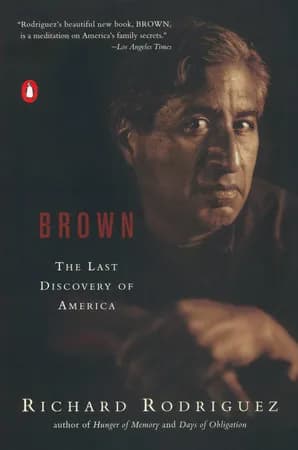
America is a faith, perhaps pancakes its sacrament. Opportunity comes to those who put away the disadvantages of family or circumstance and entrust themselves to the future. The point of the American story is simple enough for a child, particularly an immigrant child, to grasp: The past holds no sway in America.
When I was a boy and refused to speak Spanish (because I spoke English), then could not speak Spanish from awkwardness, then guilt, Mexican relatives criticized my parents for letting me “lose it”—my culture, they said.
But the bilingualists simplistically scorn the value and necessity of assimilation. They do not seem to realize that there are two ways a person is individualized. So they do not realize that while one suffers a diminished sense of private individuality by becoming assimilated into public society, such assimilation makes possible the achievement of public individuality. Supporters of bilingual education thus want it both ways. They propose bilingual schooling as a way of helping students acquire the skills of the classroom crucial for public success. But they likewise insist that bilingual instruction will give students a sense of their identity apart from the public. Behind this screen there gleams an astonishing promise: One can become a public person while still remaining a private person. At the very same time one can be both! There need be no tension between the self in the crowd and the self apart from the crowd! Who would not want to believe such an idea?
Because this is the other thing about immigrants: they cannot escape their history any more than you yourself can lose your shadow.
How can anyone in England understand what brings people from the far corners of the earth to die on a wet, miserable island which they detest and to which they have no ties? — Chapter 18, page 148.