
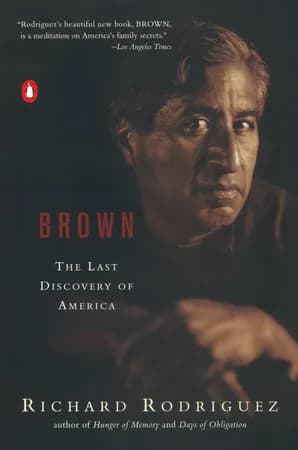
Quotes
The other night at a neighborhood restaurant the waiter, after mentioning he had read my books, said about himself, “I’m white, I’m nothing.” But that was what I wanted, you see, growing up in America—the freedom of being nothing, the confidence of it, the arrogance. And I achieved it.
It is one thing to know your author-man or woman or gay or black or paraplegic or president. It is another thing to choose only man or woman or et cetera, as the only quality of voice empowered to address you, as the only class of sensibility or experience able to understand you, or that you are able to understand.
How a society orders its bookshelves is as telling as the books a society writes and reads. American bookshelves of the twenty-first century describe fractiousness, reduction, hurt. Books are isolated from one another, like gardenias or peaches, lest they bruise or become bruised, or, worse, consort, confuse. If a man in a wheelchair writes his life, his book will be parked in a blue-crossed zone: "Self-Help" or "Health." There is no shelf for bitterness. No shelf for redemption. The professor of Romance languages at Dresden, a convert to Protestantism, was tortured by the Nazis as a Jew — only that — a Jew. His book, published sixty years after the events it recounts, is shelved in my neighborhood bookstore as "Judaica." There is no shelf for irony.
It’s a Catholic idea, actually—that the material world is redeemed; that time is continuous; that one can somehow be redeemed by the faith of an earlier age or a poorer class, if one lives within its shadow or its arrondissement or breathes its sigh.
It interests Americans that Canada is clean and empty and unimplicating; the largest country in the world that doesn’t exist. Without distinct music or food or capacity for rudeness— less rich, less angry, less complicated, less neurotic, less dark, less brilliant.
In grammar school—and as new to American history as to the American tongue—I nevertheless puzzled through several junior biographies of Franklin because young Ben’s ambition magnified my own. I kept lists in those years of the books I read. I recognized the yearning to escape the limits of family—“a strong inclination for the sea”—as well as some more vertical yearning: a boy becomes a man by gaining wisdom; each book a rung therefore; each rung a classical tag. I weighed the shame of the sordid candle shop where Franklin was forced to work for his father against the optimism of old New England.
Americans are so individualistic, they do not realize their individualism is a communally derived value. The American I is deconstructed for me by Paolo, an architect who was raised in Bologna: "You Americans are not truly individualistic, you merely are lonely. In order to be individualistic, one must have a strong sense of oneself within a group." (The "we" is a precondition for saying "I.") Americans spend all their lives looking for a community: a chatroom, a church, a support group, a fetish magazine, a book club, a class action suit... illusions become real when we think they are real and act accordingly. Because Americans thought themselves free of plural pronouns, they began to act as free agents, thus to recreate history. Individuals drifted away from tribe or color or 'hood or hometown or card of explanation, where everyone knew who they were... Americans thus extended the American community by acting so individualistically, so anonymously.
The sole religious orthodoxy permitted in our public schools is the separation of paper from plastic. Not so many miles from this beach, great-grandchildren of westering pioneers chain themselves to redwoods, martyrs of the new animism.
We grow up thinking that the beautiful and the talented have been born that way, because they are born rich. The boys in the college gym with fine, muscular bodies—I thought they were athletes because of their bodies, not that their bodies were muscular because they were athletes. I thought I was the only one in the world who had to try so hard to become.
Books should confuse. Literature abhors the typical. Literature flows to the particular, the mundane, the greasiness of paper, the taste of warm beer, the smell of onion or quince. Auden has a line: "Ports have names they call the sea." Just so will literature describe life familiarly, regionally, in terms life is accustomed to use — high or low matters not. Literature cannot by this impulse betray the grandeur of its subject — there is only one subject: What it feels like to be alive. Nothing is irrelevant. Nothing is typical.
The most important thing I learned in college about the rich is that they pursue hobbies
To watch people on their phones in a crowd is to notice how disconnected they seem; how unprepared for solitude they seem. Neurosis, yes. Novelty is the American neurosis.
Every generation of Americans since has had to reenact the loss of our innocence. Smog over L.A. was the loss of our innocence. Vietnam was the loss of our innocence. Gettysburg was the loss of our innocence. Ingrid Bergman’s baby was the loss of our innocence. Oklahoma City was the loss of our innocence. The World Trade Center was the loss of our innocence. Other nations are cynical. America has preferred the child’s game of “discovering” evil—Europe’s or Asia’s, her grandfather’s, even her own.
When I was a boy and refused to speak Spanish (because I spoke English), then could not speak Spanish from awkwardness, then guilt, Mexican relatives criticized my parents for letting me “lose it”—my culture, they said.
I think brown marks a reunion of peoples, an end to ancient wanderings. Rival cultures and creeds conspire with Spring to create children of a beauty, perhaps of a harmony, previously unknown. Or long forgotten.
I write about race in America in hopes of undermining the notion of race in America.

That’s all the quotes.
15 quotes in the collection · come back when we add more