Quotes
“But how is it you know all this about how large the ocean is? I thought you girls were limited to pretty chatter and the economics of housekeeping. I didn’t know you learned geography.”
“We don’t,” she said, somewhat shamefaced. “But we learned to read, and once one can read, one can learn anything.”
p. 272
“I don’t have much confidence,” she said. “A lot of what I’ve been taught isn’t making sense.”
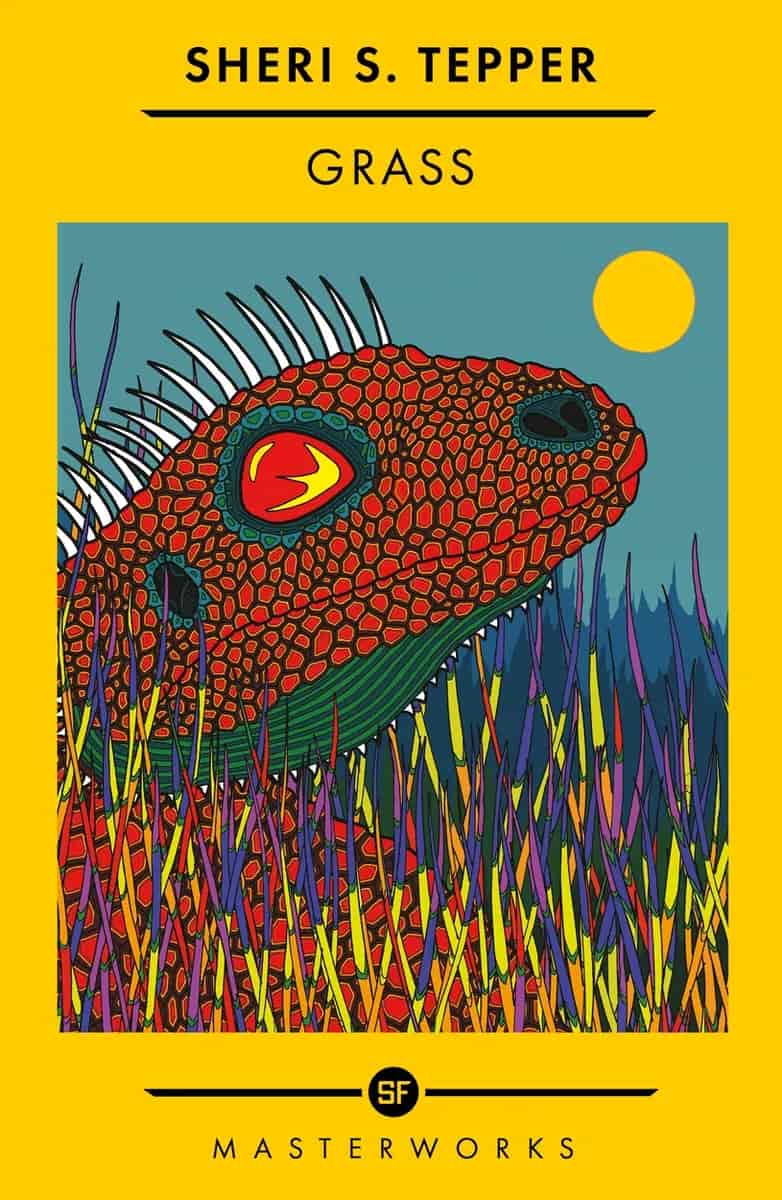
“That’s the nature of teaching. Something happens, and intelligence first apprehends it, then makes up a rule about it, then tries to pass the rule along. Very small beings invariably operate in that way. However, by the time the information is passed on, new things are happening that the old rule doesn’t fit. Eventually intelligence learns to stop making rules and understand the flow.”
p. 354
This is the problem with too much Schooling. One learns to manipulate the labels in a way that the Gamesmistresses approve, and one doesn’t realize that things do not always act in accordance with the labels in the real world. One doesn’t realize that the labels, come to that, are often wrong.
p. 138
You have not reared him to care what others do, or think, or say. How then should he care for education, for is that not the study of what others care about?
p. 109
In many schools today, the phrase "computer-aided instruction" means making the computer teach the child. One might say the computer is being used to program the child. In my vision, the child programs the computer and, in doing so, both acquires a sense of master over a piece of the most modern and powerful technology and establishes an intimate contact with some of the deepest ideas from science, from mathematics, and from the art of intellectual model building.
I have asked many teachers and parents what they thought mathematics to be and why it was important to learn it. Few held a view of mathematics that was sufficiently coherent to justify devoting several thousand hours of a child's life to learning it, and children sense this. When a teacher tells a student that the reason for those many hours of arithmetic is to be able to check the change at the supermarket, the teacher is simply not believed. Children see such "reasons" as one more example of adult double talk. The same effect is produced when children are told school math is "fun" when they are pretty sure that teachers who say so spend their leisure hours on anything except this allegedly fun-filled activity. Nor does it help to tell them that they need math to become scientists---most children don't have such a plan. The children can see perfectly well that the teacher does not enjoy math any more than they do and that the reason for doing it is simply that it has been inscribed into the curriculum. All of this erodes children's confidence in the adult world and the process of education. And I think it introduces a deep element of dishonestly into the education relationship.
It is not uncommon for intelligent adults to turn into passive observers of their own incompetence in anything but the most elementary mathematics. Individuals may see the direct consequences of this intellectual paralysis in terms of limiting job possibilities. But the indirect, secondary consequences are even more serious. One of the main lessons learned by most people in math class is a sense of having rigid limitations. They learn a balkanized image of human knowledge which they come to see as a patchwork of territories separated by impassable iron curtains.
The kind of mathematics foisted on children in schools is not meaningful, fun, or even very useful. This does not mean that an individual child cannot turn it into a valuable and enjoyable personal game. For some the game is scoring grades; for others it is outwitting the teacher and the system. For many, school math is enjoyable in its repetitiveness, precisely because it is so mindless and dissociated that it provides a shelter from having to think about what is going on in the classroom. But all this proves is the ingenuity of children. It is not a justifications for school math to say that despite its intrinsic dullness, inventive children can find excitement and meaning in it.
Our children grow up in a culture permeated with the idea that there are "smart people" and "dumb people". The social construction of the individual is as a bundle of aptitudes. There are people who are "good at math" and people who "can't do math." Everything is set up for children to attribute their first unsuccessful or unpleasant learning experiences to their own disabilities. As a result, children perceive failure as relegating them either to the group of "dumb people" or, more often, to a group of people "dumb at x" (where, as we have pointed out, x often equals mathematics). Within this framework children will define themselves in terms of their limitations, and this definition will be consolidated and reinforced throughout their lives. Only rarely does some exceptional event lead people to reorganize their intellectual self-image in such a way as to open up new perspectives on what is learnable.
An unknown but certainly significant proportion of the population has almost completely given up on learning. These people seldom, if ever engage in deliberate learning and see themselves as neither competent at it nor likely to enjoy it. The social and personal cost is enormous... Deficiency becomes identity: "I can't learn French, I don't have an ear for languages;" "I could never be a businessman, I don't have a head for figures;"... These beliefs are often repeated ritualistically, like superstitions... Although these negative self-images can be overcome, in the life of and individual they are extremely robust and powerfully self-reinforcing. If people believe firmly enough that they cannot do math, they will usually succeed in preventing themselves from doing whatever they recognize as math. The consequences of such self-sabotage is personal failure, and each failure reinforces the original belief. And such beliefs may be most insidious when held not only by individuals, but by our entire culture.
In my vision, space-age objects, in the form of small computers, will cross these cultural barriers to enter the private worlds of children everywhere. They will do so not as mere physical objects. This book is about how computers can be carriers of powerful ideas and of the seeds of cultural change, how they can help people form new relationships with knowledge that cut across the traditional lines separating humanities from sciences and knowledge of the self from both of these. It is about using computers to challenge current beliefs about who can understand what and at what age. It is about using computers to question standard assumptions in developmental psychology and in the psychology of aptitudes and attitudes. It is about whether personal computers and the cultures in which they are used will continue to be the creatures of "engineers" alone or whether we can construct intellectual environments in which people who today think of themselves as "humanists" will feel part of, not alienated from, the process of constructing computational cultures.
I’m literate, and the idea of leaving children illiterate is criminal.
p. 405