Quotes
If we judge the achievements of other social groups in relation to the kind of objectives we set ourselves, we have at times to acknowledge their superiority; but in doing so we acquire the right to judge them, and hence to condemn all their other objectives which do not coincide with those we approve of. We implicitly acknowledge that our society with its customs and norms enjoys a privileged position, since an observer belonging to another social group would pass different verdicts on the same examples. This being so, how can the study of anthropology claim to be scientific? To reestablish an objective approach, we must abstain from making judgments of this kind. We must accept the fact that each society has made a certain choice, within the range of existing human possibilities, and that the various choices cannot be compared with each other: they are all equally valid. But in this case a new problem arises; while in the first instance we were in danger of falling into obscurantism, in the form of a blind refusal of everything foreign to us, we now run the risk of accepting a kind of eclecticism which would prevent us denouncing any feature of a given culture — not even cruelty, injustice and poverty, against which the very society suffering these ills may be protesting. And since these abuses also exist in our society, what right have we to combat them at home, if we accept them as inevitable when they occur elsewhere?
p. 385
A culture is made — or destroyed — by its articulate voices.
The rudeness of many Americans depressed him, a rudeness based on a solid ignorance of the whole concept of manners, and on the proposition that for social purposes, all people are more or less equal and interchangeable.
Ideas, cultures, and histories cannot seriously be understood or studied without their force, or more precisely their configurations of power, also being studied.
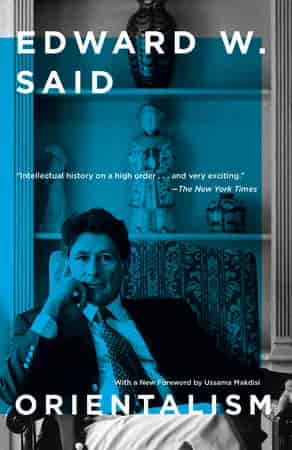
The Orient that appears in Orientalism, then, is a system of representations framed by a whole set of forces that brought the Orient into Western learning, Western consciousness, and later, Western empire. ... The Orient is the stage on which the whole East is confined. On this stage will appear the figures whose role it is to represent the larger whole from which they emanate. The Orient then seems to be, not an unlimited extension beyond the familiar European world, but rather a closed field, a theatrical stage affixed to Europe.
When strangers meet, great allowances should be made for differences of custom and training.
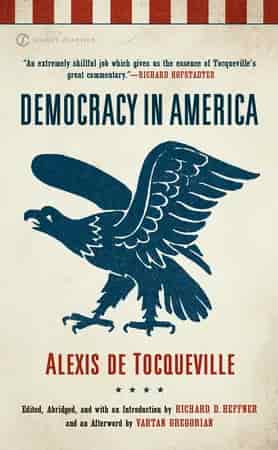
Laws are always unstable unless they are founded on the manners of a nation; and manners are the only durable and resisting power in a people.
Nothing seems at first sight less important than the outward form of human actions, yet there is nothing upon which men set more store: they grow used to everything except to living in a society which has not their own manners.
Uncle Tom's Cabin was no literary masterpiece but it was a culture-bearing book. It came at a time when the entire culture was about to reject slavery. People seized upon it as a portrayal of their own new values and it became an overwhelming success.
The success of Zen and the Art of Motorcycle Maintenance seems the result of this culture-bearing phenomenon. The involuntary shock treatment described here is against the law today. It is a violation of human liberty. The culture has changed.
A culture-bearing book, like a mule, bears the culture on its back. No one should sit down to write one deliberately. Culture-bearing books occur almost accidentally, like a sudden change in the stock market. There are books of high quality that are an part of the culture, but that is not the same. They are a part of it. They aren't carrying it anywhere. They may talk about insanity sympathetically, for example, because that's the standard cultural attitude. But they don't carry any suggestion that insanity might be something other than sickness or degeneracy.
The mythos-over-logos argument points to the fact that each child is born as ignorant as any caveman. What keeps the world from reverting to the Neandertal with each generation is the continuing, ongoing mythos, transformed into logos but still mythos, the huge body of common knowledge that unites our minds as cells are united in the body of man. To feel that one is not so united, that one can accept or discard this mythos as one pleases, is not to understand what the mythos is.
In recent times we have seen a huge split develop between a classic culture and a romantic counterculture—two worlds growingly alienated and hateful toward each other with everyone wondering if it will always be this way, a house divided against itself.