Quotes about childhood
163 quotes · 111 authors
Quotes
If one day the secret of childhood were to become no longer a secret, the state would be able to save immense sums that it spends on hospitals, psychiatric clinics, and prisons maintaining our blindness. That this might deliberately happen is almost too incredible a thought.
I should have liked, I do confess, to have had the lightest license of a child, and yet to have been man enough to know its value.
Happy, happy Christmas, that can win us back to the delusions of our childish days; that can recall to the old man the pleasures of his youth; that can transport the sailor and the traveller, thousands of miles away, back to his own fireside and his quiet home!
Children find everything in nothing, men find nothing in everything.
The years of childhood...My memory runs head-on into a scene that is like a symbol of those years. To me as I am today, that scene represents childhood itself, past and irrecoverable.When I saw the scene I felt the hand of farewell with which childhood would take its leave of me. I had a premonition at that instant that all my feeling of subjective time, or timelessness, might one day gush forth from within me and flood into the mold of that scene, to become an exact imitation of its people and movements and sounds; that simultaneous with the completion of this copy, the original might melt away into the distant perspectives of real and objective time;and that I might be left with nothing more than the mere imitation or, to say it another way, with nothing more than an accurately stuffed specimen of my childhood.
p. 18
He might have been blushing. “I’m sorry. You live there. I don’t need to tell you how fabulous they are.”
“Well, for me it is—was—just home. When one grows up in a place, no matter how exotic it may seem to others, it is still where all the usual banalities and indignities of childhood occurred. Home is always the norm. It is everywhere else that is marvellous.”
p. 369
"There's too little pleasant in this nasty dying world. We all need to remember how to play, how to be children together for a little while." (Gadi, twenty-eight: HOW CAN WE TELL THE DANCER FROM THE DANCE?)
I confess I have often fancied myself transformed into some other person, and have felt a certian pleasure in seeing myself in my new chracter. One of our first amusements as children (if we have any imagination at all) is to get out of our own characters, and to try the characters of other personages as a change—to be fairies, to be queens, to be anything, in short, but what we really are.
p. 195
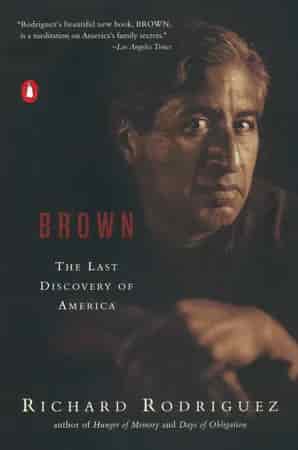
In grammar school—and as new to American history as to the American tongue—I nevertheless puzzled through several junior biographies of Franklin because young Ben’s ambition magnified my own. I kept lists in those years of the books I read. I recognized the yearning to escape the limits of family—“a strong inclination for the sea”—as well as some more vertical yearning: a boy becomes a man by gaining wisdom; each book a rung therefore; each rung a classical tag. I weighed the shame of the sordid candle shop where Franklin was forced to work for his father against the optimism of old New England.
Once upon a time, I was a ‘socially disadvantaged’ child. An enchantedly happy child. Mine was a childhood of intense family closeness. And extreme public alienation.
She was only eight years old, and still confused the way things should have been with the way they were.
p. 171
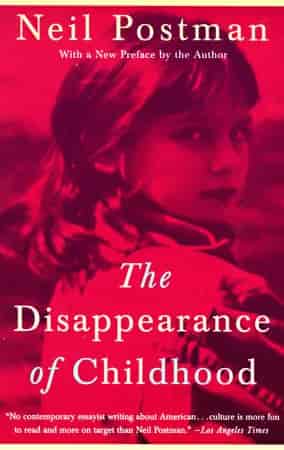
Childhood is analogous to language learning. It has a biological basis but cannot be realized unless a social environment triggers and nurtures it, that is, has need of it. If a culture is dominated by a medium that requires the segregation of the young in order that they learn unnatural, specialized, and complex skills and attitudes, then childhood, in one form or another, will emerge, articulate and indispensable.