Leafy Quotes
Recently added
The newest book quotes in the Leafy Quotes collection — passages readers have just added, each with its author, book and the page it came from.
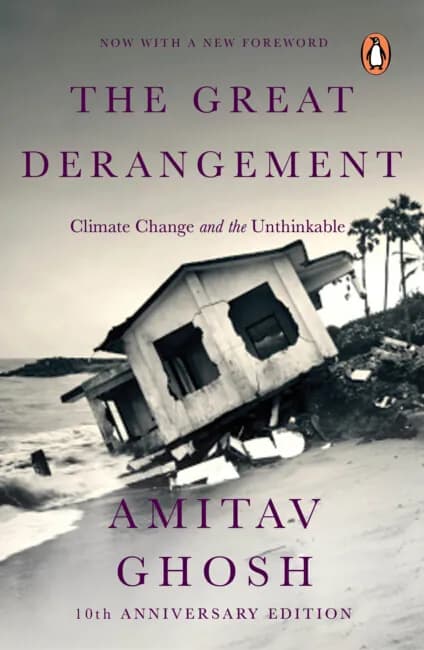
at exactly the time when it has become clear that global warming is in every sense a collective predicament, humanity finds itself in the thrall of a dominant culture in which the idea of the collective has been exiled from politics, economics, and literature alike.
Just as novels have come to be seen as narratives of identity, so too has politics become, for many, a search for personal authenticity, a journey of self-discovery.
To want to be ahead, and to celebrate and mythify this endeavor, is indeed one of the most powerful impulses of modernity itself.
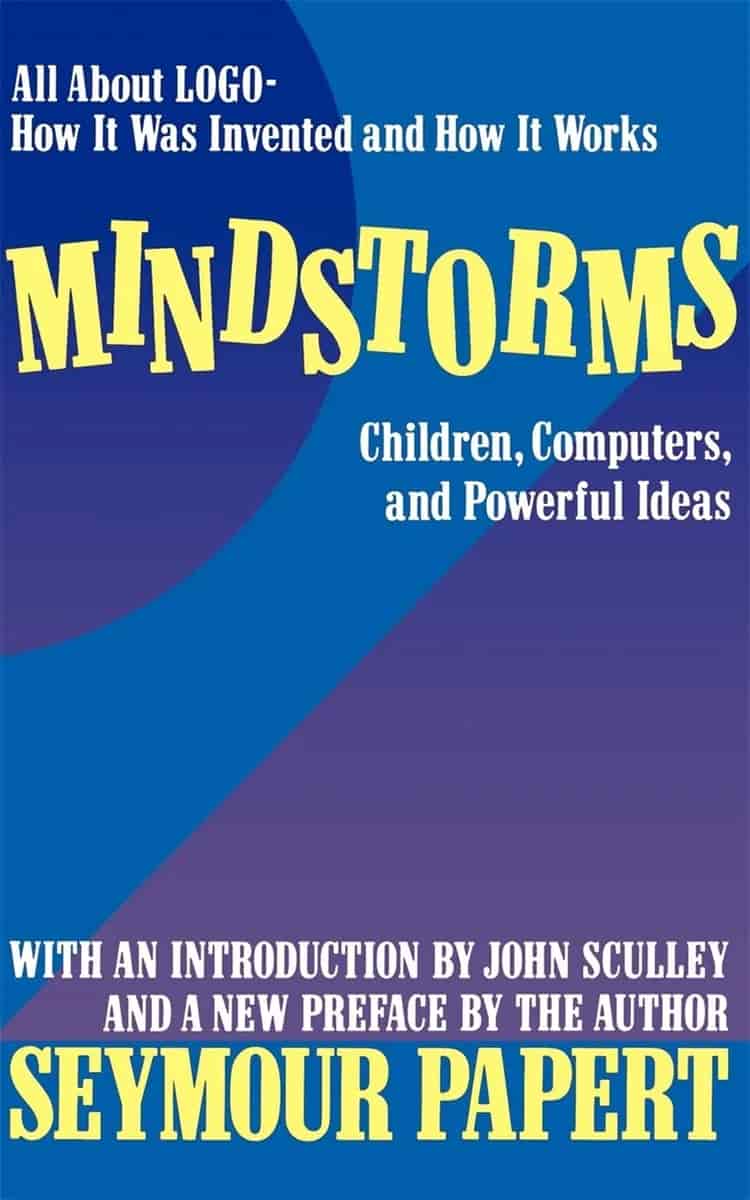
Many children who grow up in our cities are surrounded by the artifacts of science but have good reason to see them as belonging to "the others"; in many cases they are perceived as belonging to the social enemy.
It is not uncommon for intelligent adults to turn into passive observers of their own incompetence in anything but the most elementary mathematics. Individuals may see the direct consequences of this intellectual paralysis in terms of limiting job possibilities. But the indirect, secondary consequences are even more serious. One of the main lessons learned by most people in math class is a sense of having rigid limitations. They learn a balkanized image of human knowledge which they come to see as a patchwork of territories separated by impassable iron curtains.
Every time I began to take myself seriously, he let me know how small a vegetable I was in his particular stew.
p. 5
The kind of mathematics foisted on children in schools is not meaningful, fun, or even very useful. This does not mean that an individual child cannot turn it into a valuable and enjoyable personal game. For some the game is scoring grades; for others it is outwitting the teacher and the system. For many, school math is enjoyable in its repetitiveness, precisely because it is so mindless and dissociated that it provides a shelter from having to think about what is going on in the classroom. But all this proves is the ingenuity of children. It is not a justifications for school math to say that despite its intrinsic dullness, inventive children can find excitement and meaning in it.
Recognition is famously a passage from ignorance to knowledge.
Our children grow up in a culture permeated with the idea that there are "smart people" and "dumb people". The social construction of the individual is as a bundle of aptitudes. There are people who are "good at math" and people who "can't do math." Everything is set up for children to attribute their first unsuccessful or unpleasant learning experiences to their own disabilities. As a result, children perceive failure as relegating them either to the group of "dumb people" or, more often, to a group of people "dumb at x" (where, as we have pointed out, x often equals mathematics). Within this framework children will define themselves in terms of their limitations, and this definition will be consolidated and reinforced throughout their lives. Only rarely does some exceptional event lead people to reorganize their intellectual self-image in such a way as to open up new perspectives on what is learnable.
to imagine other forms of human existence is exactly the challenge that is posed by the climate crisis: for if there is one thing that global warming has made perfectly clear it is that to think about the world only as it is amounts to a formula for collective suicide. We need, rather, to envision what it might be.
We of Betand do not change our laws readily, so says my father, but we interpret them to our needs.
p. 39
An unknown but certainly significant proportion of the population has almost completely given up on learning. These people seldom, if ever engage in deliberate learning and see themselves as neither competent at it nor likely to enjoy it. The social and personal cost is enormous... Deficiency becomes identity: "I can't learn French, I don't have an ear for languages;" "I could never be a businessman, I don't have a head for figures;"... These beliefs are often repeated ritualistically, like superstitions... Although these negative self-images can be overcome, in the life of and individual they are extremely robust and powerfully self-reinforcing. If people believe firmly enough that they cannot do math, they will usually succeed in preventing themselves from doing whatever they recognize as math. The consequences of such self-sabotage is personal failure, and each failure reinforces the original belief. And such beliefs may be most insidious when held not only by individuals, but by our entire culture.