Leafy Quotes
Recently added
The newest book quotes in the Leafy Quotes collection — passages readers have just added, each with its author, book and the page it came from.
It is just as much a matter of chance that I am still alive as that I might have been hit. In a bomb-proof dug-out I might have been smashed to atoms, and in the open may survive ten hours' bombardment unscathed. No soldier survives a thousand chances. But every soldier believes in Chance and trusts his luck.
p. 101
Nature knows no tragedies or catastrophes. It knows no good or evil. It knows only creation and destruction. and one can never truly be happy and free, in the way we were as children before learning of our mortality, without at some point confronting our destruction. And all we can ask for, all we can hope for, all we can beseech God for, is to win a few battles in a war we will ultimately lose.
I am very quiet. Let the months and years come, they can take nothing from me, they can take nothing more. I am so alone, and so without hope that I can confront them without fear. The life that has borne me through these years is still in my hands and my eyes. Whether I have subdued it, I know not. But so long as it is there it will seek its own way out, heedless of the will that is within me.
p. 295
A word of command has made these silent figures our enemies; a word of command might transform them into our friends.
p. 193
But now, for the first time, I see you are a man like me. I thought of your hand-grenades, of your bayonet, of your rifle; now I see your wife and your face and our fellowship. Forgive me, comrade. We always see it too late. Why do they never tell us that you are poor devils like us, that your mothers are just as anxious as ours, and that we have the same fear of death, and the same dying and the same agony — Forgive me, comrade; how could you be my enemy?
p. 223
We march up, moody or good-tempered soldiers — we reach the zone where the front begins and become on the instant human animals.
p. 56
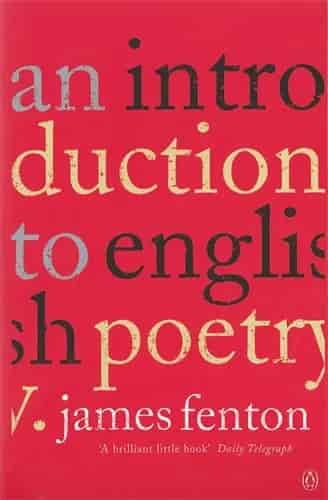
Tennyson follows his feelings in creating each line. He follows the music in his head. If you had asked him, at the end of the day, to describe the prosody of the poem to you, he would no doubt have had to think for a moment before he could answer you, not because he was ignorant of the terms, but because he had been writing a poem, not a metrical exercise. At every point, he was exerting his free will. And the outcome of that exertion was the form.
p. 24
All at once I liked him, his firm grace with others, his unlikely modesty, the exotic parties he attended. The desire to befriend him came over me suddenly and certainly, and, as I debated and decided not to shake his hand again, I thought how suddenness and certainty had attended all my childhood friendships, until that long, miserable moment of puberty during which I'd been afraid to befriend boys and seemingly unable to befriend girls.
I am infected with life and will die of it in time.
p. 255
As a child, coming home at sunset through the infinite chain of backyards that led from the schoolyard to our house, I would catch glimpses in windows of dining rooms, tables set for supper; of crayon drawings tacked to refrigerators, cartons of milk standing on counters; of feet on low hassocks, framed photographs, and empty sofas, all lit by the bland light of the television; and these quickly shifting tableaux, of strange furniture and the lives and families they divulged, would send me into a trance of curiosity. For a long time I thought that one became a spy in order to watch the houses of other people, to be confronted by the simple, wondrous fact of other kitchens, other clocks, and ottomans.
My first thirteen years, years of ecstatic, uncomfortable, and speechless curiosity, followed by six months of disaster and disappointment, convinced me somehow that every new friend came equipped with a terrific secret, which one day, deliberately, he would reveal: I need only maintain a discreet, adoring, and fearful silence.
Some compulsiveness inherited from my father, and also a kind of unnecessary delicacy, had always driven me to keep friends separate, to shun group excursions, but for this calm couple of weeks at the eye of the summer I felt free of the guilt that usually accompanied my juggling of friendships, and free of the sense of duplicity that went along with pushing the people I loved into separate corners of my life, and once in a while Phlox, Arthur, and I would eat our lunches on the same patch of grass.