Leafy Quotes
Recently added
The newest book quotes in the Leafy Quotes collection — passages readers have just added, each with its author, book and the page it came from.
The will of man is unconquerable. Even God cannot conquer it.
p. 97
Yes, I do love you, I have all the love in the world left for you, only that love seems so far away from me and so strange too, for it is as though I could almost hear it, a droning or weeping, but far, far away, and a sad lost sound, it might be either approaching or receding, I can’t tell which.
p. 200
In the final analysis there was no one you could trust to drink with you to the bottom of the bowl.
p. 147
I wake to a darkness in which I must follow myself endlessly, hating the I who so eternally pursues and confronts me. If we could rise from our misery, seek each other once more, and find again the solace of each other’s lips and eyes.
p. 346
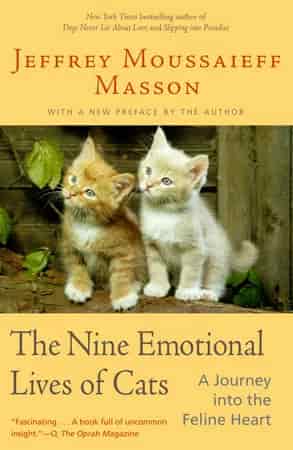
Cats are contented with their lot, with or without our approval. They have less need of us than we would like. It would flatter us to think that cats cannot survive without us, that they need us emotionally as well as materially, whereas in fact they probably do not need us in either sphere. This wounds our vanity. We need cats to need us. It unnerves us that they do not. However, if they do not need us, they nonetheless seem to love us.
The idea, to a cat, that somebody else owns him is ludicrous.
Animals cry. At least, they vocalise pain or distress, and perhaps call for help. Most people believe, therefore, that animals can be unhappy and also that they have such feelings as happiness, anger and fear. But there is a tremendous gap between the common sense viewpoint and that of official science on this subject. The ordinary layperson readily believes that his dog, her eat, their parrot or horse, feels. They not only believe it but have constant evidence of it before their eyes. All of us have extraordinary stories of animals we know well. Yet, by dint of rigorous training and great efforts of the mind, most modern scientists — especially those who study the behaviour of animals — have succeeded in becoming almost blind to these matters.
p. 11
The cat does not merely experience contentment, he exudes it. You cannot be in the presence of a contented cat and not have some of that contentment rub off on you. Which surely is a good part of the reason we love cats so.
Unlike a human smile, purring cannot be, as far as anyone knows, faked.
Those who live with pigs often speak of them as we normally speak of dogs—intelligent, loyal, and above all, affectionate. Each one, I am continually reminded by people who know them, is a complete individual, like no other pig.
p. 52
There is rarely an exception: once a cat makes up her mind to do something, your pleadings matter not at all. A dog, in the same circumstances, no matter how urgently he needs to do something, will change his mind if you insist. He is made for compromise, for self-sacrifice, for thinking about how you feel. Not cats.
The professional and financial interest in continuing animal experimentation helps to explain at least some resistance to the notion that animals have a complex emotional life and are capable of experiencing the higher emotions, such as love, compassion, altruism, disappointment and nostalgia. To acknowledge such a possibility implies certain moral obligations. If chimpanzees can experience loneliness and mental anguish, it becomes more wrong to use them for experiments in which they are isolated and anticipate daily pain.
p. 15