
Lindsay C. Gibson
Quotes
Children stay in alignment with their true self if the important adults in their lives support doing so. However, when they’re criticized or shamed, they learn to feel embarrassed by their true desires. By pretending to be what their parents want, children think they’ve found the way to win their parents’ love. They silence their true selves and instead follow the guidance of their role-selves and fantasies. In the process, they lose touch with both their inner and outer reality.
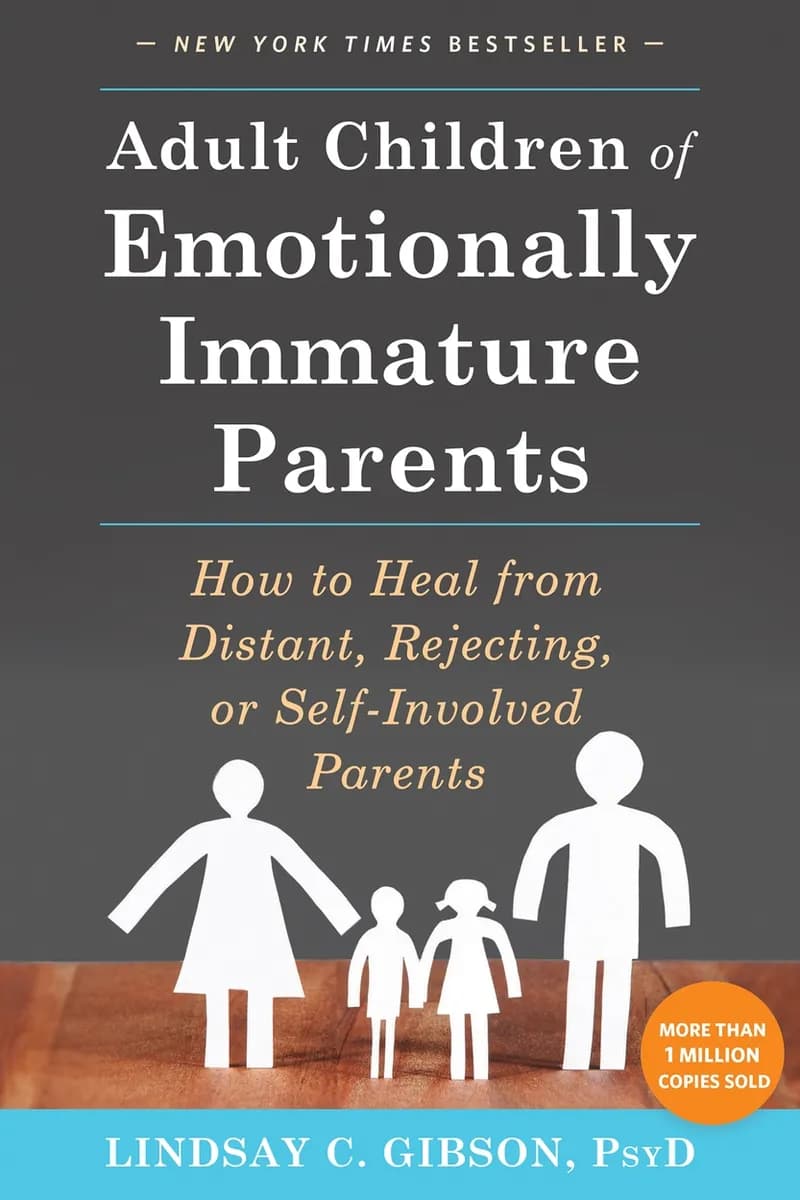 Adult Children of Emotionally Immature Parents
They act as though being a parent exempts them from respecting boundaries or being considerate.
Adult Children of Emotionally Immature ParentsAccepting the truth of your feelings and thoughts doesn’t make you a bad person. It makes you a whole person, and mature enough to know your own mind.
Adult Children of Emotionally Immature ParentsBeing well cared for in nonemotional areas can create confusion in people who grow up feeling emotionally lonely. They have overwhelming physical evidence that their parents loved and sacrificed for them, but they feel a painful lack of emotional security and closeness with their parents.
Adult Children of Emotionally Immature ParentsEmotionally mature people may tell you how they feel about what you did, but they don’t pretend to know you better than you know yourself.
Adult Children of Emotionally Immature ParentsWhen you’re going through a breakdown, a good question to ask is what is actually breaking down. We usually think it’s our self. But what’s typically happening is that our struggle to deny our emotional truth is breaking down. Emotional distress is a signal that it’s getting harder to remain emotionally unconscious. It means we’re about to discover our true selves underneath all that story business.
Adult Children of Emotionally Immature ParentsOnly emotionally phobic, emotionally immature people believe that wanting empathy and understanding is a sign of weakness.
Adult Children of Emotionally Immature Parentswe all need other people to meet our emotional needs for comfort and closeness. That’s what relationships are all about.
Adult Children of Emotionally Immature ParentsMost emotionally mature people can accept that changes and disappointments are a part of life. They accept their feelings and look for alternative ways to find gratification when they’re disappointed. They’re collaborative and open to others’ ideas.
Adult Children of Emotionally Immature ParentsRemember, you can’t expect immature, emotionally phobic people to be different from how they are.
Adult Children of Emotionally Immature ParentsEmpathy is what makes people feel safe in relationships. Along with self-awareness, it's the soul of emotional intelligence, guiding people toward prosocial behavior and fairness in dealings with others. In contrast, nonempathic people overlook your feelings and don't seem to imagine your experience or be sensitive to it. It's important to be aware of this, because a person who isn't responsive to your feelings won't be emotionally safe when the two of you have any kind of disagreement.
Adult Children of Emotionally Immature ParentsMany children of such parents learn to subjugate themselves to other people’s wishes (Young and Klosko 1993). Because they grew up anticipating their parent’s stormy emotional weather, they can be overly attentive to other people’s feelings and moods, often to their own detriment.
Adult Children of Emotionally Immature Parents
