Quotes
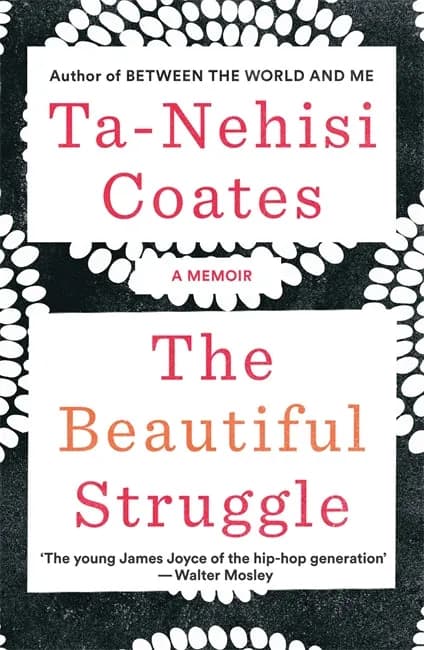
In , Dad found a literature of himself. He'd read and , but from Wright he learned that there was an entire shadow canon, a tradition of writers who grabbed the pen, not out of leisure but to break the chain.
p. 72
It is the nature of the writer to question the validity of his world and yet rely on his senses to describe it. From what other tension can great literature be born?
p. 196
As Jules Renard said, no matter how much care an author takes to write as few books as possible, there will be people who haven’t heard of some of them.
Later I became very involved in writing. I really enjoyed that moment of writing. People would pass around my sentences. That was a feeling I never had before. It was like a bullet out of the gun.
Words on the page define men to future generations.
p. 27
But I believe in writing — nothing else; just writing. Man may live like a worm, but he writes like a god. There was a time when that secret was known, but now it has been forgotten; the world is composed of disintegrating fragments, an incoherent dark chaos, sustained by writing alone. If you have a concept of the world, if you have not yet forgotten all that has happened, that you have a world at all, it is writing that has created that for you, and ceaselessly goes on creating it; Logos, the invisible spider’s thread that holds our lives together.
Writers sometimes cast themselves into the most profound depths of despair in order to master it and move on.
Suddenly one or two good sentences occur to me, suitable for a sketch or story, nice linguistic flukes the likes of which I had never experienced before. I lie there repeating these words to myself and find that they are excellent. Presently they're joined by others, I'm at once wide awake, sit up and grab paper and pencil from the table behind my bed. It was as though a vein had burst inside me - one word follows another, they connect with one another and turn into situations; scenes pile on top of other scenes, actions and dialogue well up in my brain, and a wonderful sense of pleasure takes hold of me. I write as if possessed, filling one page after another without a moment's pause. My thoughts strike me so suddenly and continue to pour out so abundantly that I lose a lot of minor details I'm not able to write down fast enough, though I am working at full blast. They continue to crowd in on me, I am full of my subject, and every word I write is put in my mouth. It goes on and on, it takes such a wonderfully long time before this singular moment ceases to be; I have 15 to 20 written pages lying on my knees in front of me when I finally stop and put my pencil away. Now, if these pages were really worth something, then I was saved!
p. 33
None of the new spiders ever quite took her place in his heart. She was in a class by herself. It is not often that someone comes along who is a true friend and a good writer. Charlotte was both.
Before a culture adopts the use of writing, when its knowledge is transmitted exclusively through oral means, it can very easily revise its history. It’s not intentional, but it is inevitable; throughout the world, bards and griots have adapted their material to their audiences and thus gradually adjusted the past to suit the needs of the present. The idea that accounts of the past shouldn’t change is a product of literate cultures’ reverence for the written word. Anthropologists will tell you that oral cultures understand the past differently; for them, their histories don’t need to be accurate so much as they need to validate the community’s understanding of itself. So it wouldn’t be correct to say that their histories are unreliable; their histories do what they need to do.
p. 226
The triumph of the written word is often attained when the writer achieves union and trust with the reader, who then becomes ready to be drawn into unfamiliar territory, walking in borrowed literary shoes so to speak, toward a deeper understanding of self or society, or of foreign peoples, cultures, and situations.
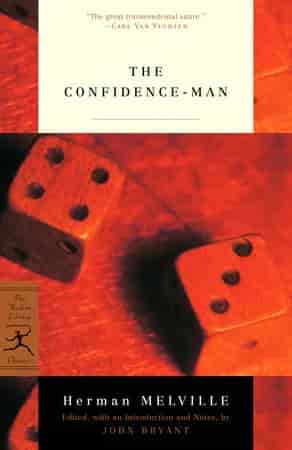
For much the same reason that there is but one planet to one orbit, so can there be but one such original character to one work of invention.
Two would conflict to chaos. In this view, to say that there are more than one to a book, is good presumption there is none at all. But for new, singular, striking, odd, eccentric, and all sorts of entertaining and instructive characters, a good fiction may be full of them. To produce such characters, an author, beside other things, must have seen much, and seen through much: to produce but one original character, he must have had much luck.