Quotes
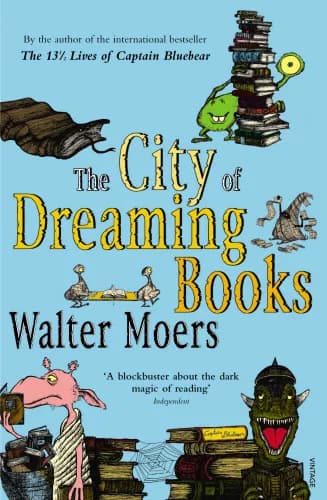
But his illness never attained the merciful degree of severity that would have entitled him to a spell in a lunatic asylum and absolve him from further work. It wasn’t quite severe enough for a lunatic; only for a writer.
p. 339
“Regenschein is dead, my friend. You’re delirious.”
“No one who writes a good book is really dead.”
p. 372
Writing is a desperate attempt to extract some dignity – and a modicum of money – from solitude.
p. 269
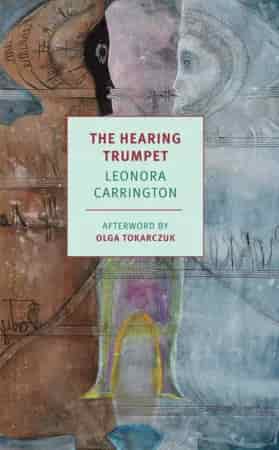
If I remember correctly writers usually find some excuse for their books, although why one should excuse oneself for having such a quiet and peaceful occupation I really don't know. Military people never seem to apologize for killing each other yet novelists feel ashamed for writing some nice inert paper book that is not certain to be read by anybody. Values are very strange, they change so quickly I can’t keep track of them. (p21)
I sit at my window and the words fly past me like birds — with God's help I catch some.
I make no conscious effort to be tough, or , or grim, or any of the things I am usually called. I merely try to write as the character would write, and I never forget that the average man, from the fields, the streets, the bars, the offices, and even the gutters of his country, has acquired a vividness of speech that goes beyond anything I could invent, and that if I stick to this heritage, this of the American countryside, I shall attain a maximum of effectiveness with very little effort.
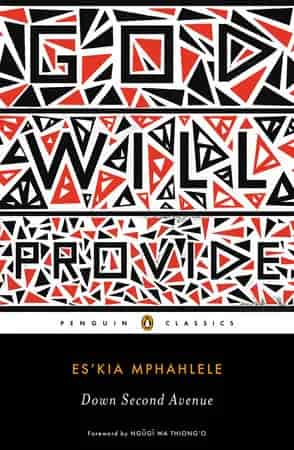
In Southern Africa, the black writer talks best about the ghetto life he knows; the white writer best about his own ghetto life. We see each other, black and white, as it were through a keyhole.
This is my life now. I’m grateful that I have arrived at this point. This is where I had always wanted to be; writing full-time is much more challenging than I had imagined, but I’m truly enjoying the experience and learning from it each day.
For me, writing is a journey, and the start of that journey is a well-worn ritual that I must observe for several days before I can even begin.
Write your truth, Ms. Tia say. Your truth.
...my gaze meets the laptop screen and the words I poured out all afternoon. It began yesterday without any particular intent, just a quick reply to my sister. But today when I went back, the email suddenly took on a different form, more feverish, more poetic. I was seized by a storytelling binge, a lucid, cutting clarity, and from page to page the words joined together and frothed and flowed. And it is then that I realize I am not writing to Iris anymore. That the recipient is in fact myself, an as-of-yet unknown self, a me who has long ago gone back to Israel and is living my tomorrow-life in Tel Aviv, a distant me who will one day open up this file and read the words, and perhaps with hindsight have a better understanding of what is occurring inside me now, what I am going through in these mad and beautiful days. She will remember us as we once were, in New York, in Hilmi's Brooklyn studio. She will read the lines and remember how I sat here once on this couch, in December of 2002, like the bird perched on the windowsill all afternoon, and watched myself loving him while I wrote these words. (chapter 14)
It is difficult to write a really good short story because it must be a complete and finished reflection of life with only a few words to use as tools. There isn't time for bad writing in a short story. In a novel one can be dull for pages and still get away with it. It is, to me, an interesting and baffling fact that today, more than thirty years after The Homely Heroine was written, it still is as difficult for me to write a short story (or anything, for that matter) as it was when first I began. A single short story may take a month, six weeks, two months to write. Usually, the easier they are to read the harder they are to write. Often a short story theme may take a year of conscious and subconscious thinking before it is ripe for writing. Sometimes a possible short story seems too tough to be worth the fight. But it stays around, taunting you, daring you to come on, and finally you write it to be rid of it...In some cases the reader may feel, after reading a short story, approximately the sensation he has experienced after having too hastily eaten a heavy meal. He has treated a dinner as a snack and his digestion rebels.