Quotes
...organizations like the church or General Motors promote a man up and up until he reaches a spot which he is obviously incapable of filling, and there they lay him to rest.
p. 587
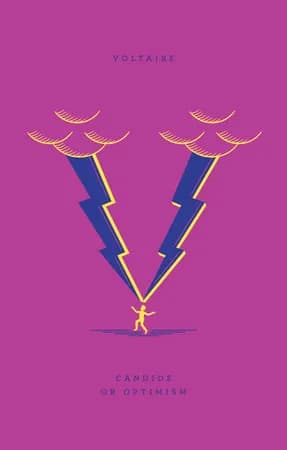
Our labour preserves us from three great evils -- weariness, vice, and want.
Let us cultivate our garden.
"Let us work without reasoning," said Martin; "it is the only way to make life endurable."
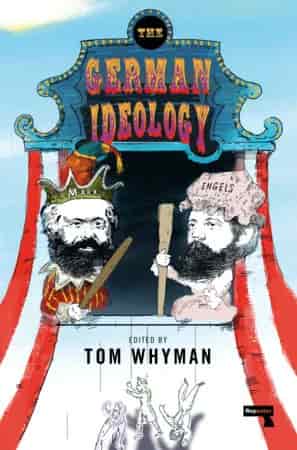
Thus, while the refugee serfs only wished to be free to develop and assert those conditions of existence which were already there, and hence, in the end, only arrived at free labour, the proletarians, if they are to assert themselves as individuals, will have to abolish the very condition of their existence hitherto (which has, moreover, been that of all society up to the present), namely, labour. Thus they find themselves directly opposed to the form in which, hitherto, the individuals, of which society consists, have given themselves collective expression, that is, the State. In order, therefore, to assert themselves as individuals, they must overthrow the State.
For as soon as the distribution of labour comes into being, each man has a particular exclusive sphere of activity, which is forced upon him and from which he cannot escape. He is a hunter, a fisherman, a shepherd, or a critical critic and must remain so if he does not wish to lose his means of livelihood; while in communist society, where nobody has one exclusive sphere of activity but each can become accomplished in any branch he wishes, society regulates the general production and thus makes it possible for me to do one thing today and another tomorrow, to hunt in the morning, to fish in the afternoon, rear cattle in the evening, criticize after dinner, just as I have in mind, without ever becoming hunter, fisherman, shepherd or critic.
Work consists of whatever a body is OBLIGED to do, and...Play consists of whatever a body is not obliged to do.
p. 32
If he had been a great and wise philosopher, like the writer of this book, he would now have comprehended that Work consists of whatever a body is obliged to do and that Play consists of whatever a body is not obliged to do.
p. 32
Tom appeared on the sidewalk with a bucket of whitewash and a long-handled brush. He surveyed the fence, and all gladness left him and a deep melancholy settled down upon his spirit. Thirty yards of board fence nine feet high. Life to him seemed hollow, and existence but a burden.
In Hiroshima, a bellman arrived at our room, literally, within one minute. He had obviously been sprinting, and he looked concerned. He checked the faucet, found it was, indeed, malfunctioning, and- now looking extremely- concerned- sprinted from the room. In no more than three minutes he was back with two more men, one of whom immediately went to work on the bathtub. The sole function of the other one, as far as we could tell, was to apologize to us on behalf of the hotel for having committed this monumentally embarrassing and totally unforgivable blunder. "We are very sorry," he kept saying, looking as though near tears. "Very sorry." "It's OK!" I kept saying. "Really!" But it did no good. The man was grieving. The bathtub was fixed in under ten minutes, after which all three men apologized extravagantly in various languages one last time, after which they left, after which I imagine the hotel's Vice President for Faucet Operations was taken outside and shot. No, just kidding. He probably took his own life. That's how seriously they take their jobs over there.
p. 48
Hey listen — I've proved a lot of things. That's how I pay my rent. Theories and little observations. A puckish remark now and then. Occasional maxims. It beats picking olives, but let's not get carried away.
All professions are conspiracies against the laity.