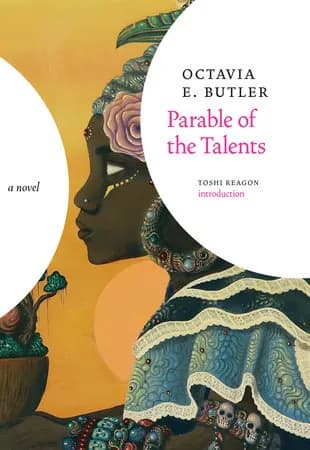
Quotes
The real cause I consider to be the one which was formerly most kept out of sight. The growth of the power of Athens, and the alarm which this inspired the Lacedaemon, made war inevitable.
“That is the god of jihad,” she said. “That is the god of crusades. They are identical except for their names.”
p. 55
Something in their history has moved them to patience. Wise leaders do not go to war with enemies, not even evil enemies, unless they have thought it through to the end.
p. 504
By the time mortal races leave their home planets, many of their gods have already amalgamated with one another. Small tribal godlets are often thrust together through shared execrations. All Death-Honor-and-War gods, for example, are identical. The people may fly different flags, but their gods are happy to drink blood from both sides of the battle.
p. 55
The world had been repeatedly swept by war and famine and plague when the population had been a quarter of what it was now! Less than a hundred years ago. Sparse population didn’t equal peace. It never had. All it meant were fewer casualties.
p. 322
“Handling surplus population is a perpetual challenge,” said Onsofruct. “Has it not been written that the poor are always with us?”
Questioner shook her head. “Handling surplus men isn’t that difficult. Just start a lively war or find some new frontier—there’s always dangerous work that needs doing. If that fails, one can create lethal rites of passage to kill off batches at a time. One needn’t pretend, not with men. The gang chief or general simply talks them into a fury and sends them into battle, and then gives them a medal after they’re maimed or dead. Or, the employer gets them to use up their lives in a factory and then tosses them aside with a memento and an inadequate pension. Team spirit does the rest.”
p. 480
Like, on Thyker, those High Baidee make a law that says no killing, ignoring the times when killing is the only merciful thing to do, but then they make exceptions for war, because they like war. I know all about it. We women know all about it.
p. 469
“Early on, of course, it was assumed that there were lots of gods who caused various things, and one needed access to them to propitiate them or ask them to undo what some other god had done or, in rarer cases, to say thank you. Since there were lots of them, one always had a god to go to if some other one was acting up. Not a bad state of affairs, really, very much the system Phansure has today. Of course, it carried the seeds of its own destruction, because some of the priests that rose up around the man-gods got carried away with their own greed or need for power.
“So, some of them became prophets, each of them claiming his particular god—or some new one he’d thought up – what is the biggest or the best or the only. Sometimes they said God was all-good or all-powerful or all-something-or-other or even, God knows, all-everything, which inevitably created dualism, because if God was all-everything, why did these contrary things keep happening? This required that man postulate some other force responsible for contrariness, either a sub-god or a bad angel or man himself, just being sinful, and that placed man squarely in the middle of this cosmic battlefield, always been told it was his fault when things went wrong.
“And as long as man was in the middle, nothing could happen but a kind of tug-of-war. Man constantly prayed to God for peace, but peace never happened, so he decided that his god must really want war because the other side was sinful. Man invented and extolled virtues which could only be exemplified under conditions of war, like heroism and gallantry and honor, and he gave himself laurel wreaths or booty or medals for such things, thus rewarding himself for behaving well while sinning. He did it when he was a primitive, and he went on with it after he thought he was civilized.”
p. 106
Marjorie thought: It always comes down to something like this, doesn’t it. No matter what our consciences say, no matter how much doctrine we’ve been taught, no matter how many ethical considerations we’ve chewed and swallowed and tried to digest, it always comes down to us arming ourselves with weapons as deadly as we can manage and going out into combat...
p. 377
“We have a saying, we travelers: ‘For a man’s business, go to your troupe leader; for a woman’s business, go to Women’s Country. For a fool’s business, go to the warriors.’”
p. 173
Overall, the Pox has had the effect of an installment-plan World War III. In fact, there were several small, bloody shooting wars going on around the world during the Pox. These were stupid affairs—wastes of life and treasure. They were fought, ostensibly, to defend against vicious foreign enemies. All too often, they were actually fought because inadequate leaders did not know what else to do. Such leaders knew that they could depend on fear, suspicion, hatred, need, and greed to arouse patriotic support for war.
Amid all this, somehow, the United States of America suffered a major, nonmilitary defeat. It lost no important war, yet it did not survive the Pox. Perhaps it simply lost sight of what it once intended to be, then blundered aimlessly until it exhausted itself.
p. 8
Life is getting better, but that won’t stop a war if politicians and business people decide it’s to their advantage to have one.
p. 90