Quotes about thinking
48 quotes · 17 authors
Quotes
“Is that important?”
“Everything is important till proven otherwise.”
p. 356
The division between human and robot is perhaps not as significant as that between intelligence and nonintelligence.
p. 29
I accept nothing on authority. A hypothesis must be backed by reason, or else it is worthless.
p. 52
There's nothing like deduction. We've determined everything about our problem but the solution.
p. 41
The machine is only a tool after all, which can help humanity progress faster by taking some of the burdens of calculations and interpretations off its back. The task of the human brain remains what it has always been; that of discovering new data to be analyzed, and of devising new concepts to be tested.
p. 187
“You can prove anything you want by coldly logical reason—if you pick the proper postulates. We have ours and Cutie [robot QT-1] has his.”
“Then let’s get at those postulates in a hurry. The storm’s due tomorrow.”
Powell sighed wearily. “That’s where everything falls down. Postulates are based on assumptions and adhered to by faith. Nothing in the Universe can shake them. ...”
p. 63
The false logic involved is: “We exist; therefore something—call it X—created us.” Once this assumption is made, the properties of the hypothetical X can be fantasied in an unlimited number of ways.
But the entire process is obviously fallacious; for by the same logic something must have created X—and so on. We are immediately involved in an infinite regress, which can have no meaning in the real universe.
p. 878
Perhaps the most concise summary of enlightenment would be: transcending dualism. … Dualism is the conceptual division of the world into categories … human perception is by nature a dualistic phenomenon—which makes the quest for enlightenment an uphill struggle, to say the least.
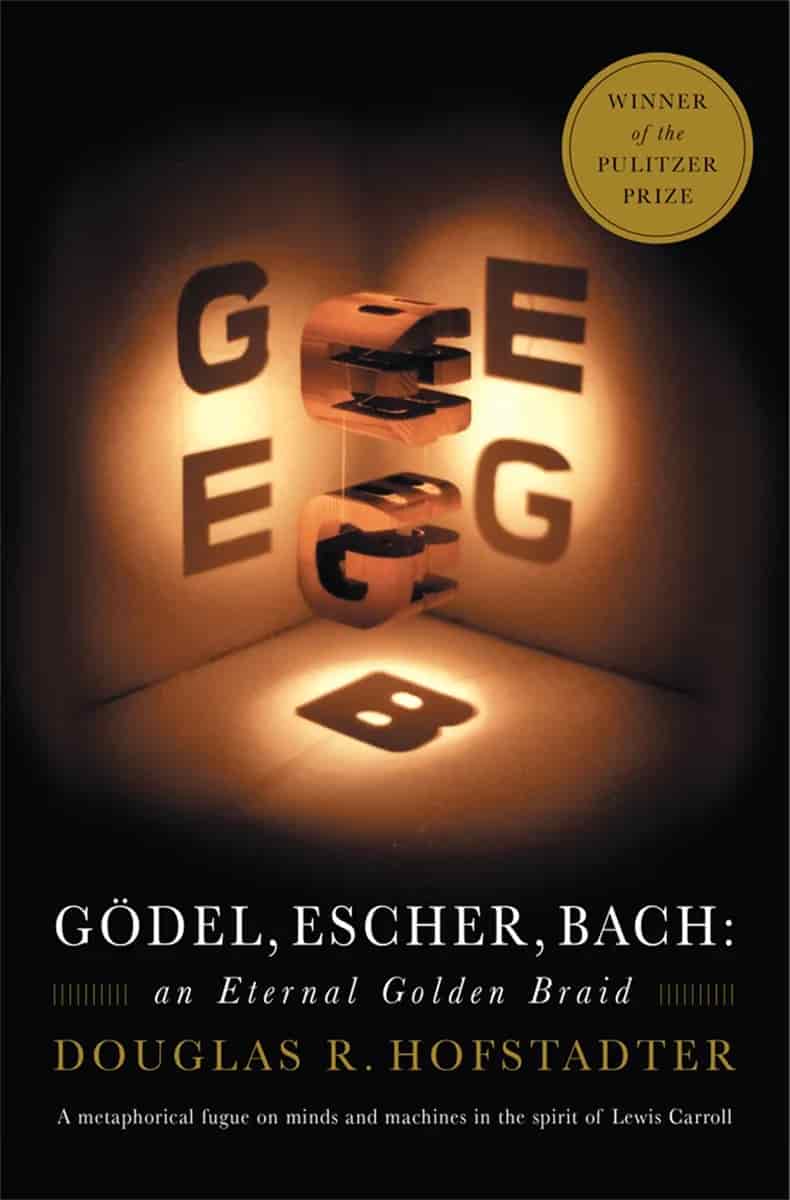
 Godel, Escher, Bach
This type of paradox is quite characteristic of Zen. It is an attempt to "break the mind of logic".
Godel, Escher, BachWhen I have to think about it, I know the picture is wrong. And sizing is a form of thinking and coloring is too. My instinct about painting says, 'If you don’t think about it, it's right'. As soon as you have to decide and choose, it's wrong. And the more you decide about, the more wrong it gets. Some people, they paint abstract, so they sit there thinking about it because their thinking makes them feel they're doing something. But my thinking never makes me feel I'm doing anything.
p. 149
The Philosophy of Andy WarholBlow the candle out, I don’t need to see what my thoughts look like.
 Germinal
I grieved to think how brief the dream of the human intellect had been. It had committed suicide. It had set itself steadfastly towards comfort and ease, a balanced society with security and permanency as its watchword, it had attained its hopes—to come to this at last. Once, life and property must have reached almost absolute safety. The rich had been assured of his wealth and comfort, the toiler assured of his life and work. No doubt in that perfect world there had been no unemployed problem, no social question left unsolved. And a great quiet had followed.
It is a law of nature we overlook, that intellectual versatility is the compensation for change, danger, and trouble. An animal perfectly in harmony with its environment is a perfect mechanism. Nature never appeals to intelligence until habit and instinct are useless. There is no intelligence where there is no change and no need of change. Only those animals partake of intelligence that have to meet a huge variety of needs and dangers.