Quotes
If you could not accept the past and its burden, there was no future, for without one there cannot be the other, and [...] if you could accept the past you might hope for the future, for only out of the past can you make the future.
For nothing is lost, nothing is ever lost. There is always the clue, the canceled check, the smear of lipstick, the footprint in the canna bed, the condom on the park path, the twitch in the old wound, the baby shoes dipped in bronze, the taint in the blood stream. And all times are one time, and all those dead in the past never lived before our definition gives them life, and out the shadow their eyes implore us.
Those must have all been important to me once. What I am now grew from that. A former self is a fool, an insufferable ass, but he's still human, you'd no more turn him out than you'd turn out any kind of cripple, would you?
Amazing how quickly the past becomes idyllic.
He doesn't know which is worse, a past he can't regain or a present that will destroy him if he looks at it too clearly. Then there's the future. Sheer vertigo.
"How can I tell," said the man, "that the past isn't a fiction designed to account for the discrepancy between my immediate physical sensations and my state of mind?"
You realize that our mistrust of the future makes it hard to give up the past. We can't give up our concept of who we were...Our way of getting nostalgic for what we just threw in the trash, it's all because we're afraid to evolve. Grow, change, lose weight, reinvent ourselves. Adapt.
How can we live without our lives? How will we know it’s us without our past?
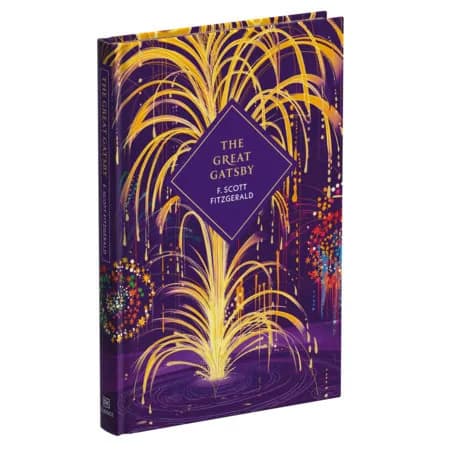
"I wouldn’t ask too much of her," I ventured. "You can’t repeat the past."
"Can’t repeat the past?" he cried incredulously. "Why of course you can!"
He looked around him wildly, as if the past were lurking here in the shadow of his house, just out of reach of his hand.
"I’m going to fix everything just the way it was before," he said, nodding determinedly. "She’ll see."
p. 110
Most of the big shore places were closed now and there were hardly any lights except the shadowy, moving glow of a ferryboat across the Sound. And as the moon rose higher the inessential houses began to melt away until gradually I became aware of the old island here that flowered once for Dutch sailors’ eyes — a fresh, green breast of the new world. Its vanished trees, the trees that had made way for Gatsby’s house, had once pandered in whispers to the last and greatest of all human dreams; for a transitory enchanted moment man must have held his breath in the presence of this continent, compelled into an aesthetic contemplation he neither understood nor desired, face to face for the last time in history with something commensurate to his capacity for wonder.
And as I sat there, brooding on the old unknown world, I thought of Gatsby's wonder when he first picked out the green light at the end of Daisy’s dock. He had come a long way to this blue lawn and his dream must have seemed so close that he could hardly fail to grasp it. He did not know that it was already behind him, somewhere back in that vast obscurity beyond the city, where the dark fields of the republic rolled on under the night.
Gatsby believed in the green light, the orgastic future that year by year recedes before us. It eluded us then, but that’s no matter — tomorrow we will run faster, stretch out our arms farther.... And one fine morning —
So we beat on, boats against the current, borne back ceaselessly into the past.
p. 180
We look at the present through a rear-view mirror. We march backwards into the future.
You know most people live ninety per cent in the past, seven per cent in the present, and that only leaves them three per cent for the future.