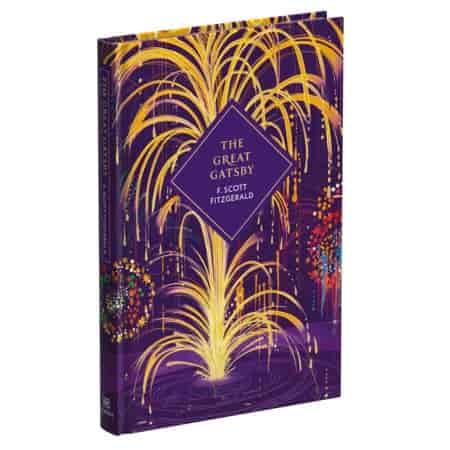
Most of the big shore places were closed now and there were hardly any lights except the shadowy, moving glow… — F.Scott Fitzgerald
Most of the big shore places were closed now and there were hardly any lights except the shadowy, moving glow of a ferryboat across the Sound. And as the moon rose higher the inessential houses began to melt away until gradually I became aware of the old island here that flowered once for Dutch sailors’ eyes — a fresh, green breast of the new world. Its vanished trees, the trees that had made way for Gatsby’s house, had once pandered in whispers to the last and greatest of all human dreams; for a transitory enchanted moment man must have held his breath in the presence of this continent, compelled into an aesthetic contemplation he neither understood nor desired, face to face for the last time in history with something commensurate to his capacity for wonder.
And as I sat there, brooding on the old unknown world, I thought of Gatsby's wonder when he first picked out the green light at the end of Daisy’s dock. He had come a long way to this blue lawn and his dream must have seemed so close that he could hardly fail to grasp it. He did not know that it was already behind him, somewhere back in that vast obscurity beyond the city, where the dark fields of the republic rolled on under the night.
Gatsby believed in the green light, the orgastic future that year by year recedes before us. It eluded us then, but that’s no matter — tomorrow we will run faster, stretch out our arms farther.... And one fine morning —
So we beat on, boats against the current, borne back ceaselessly into the past.
p. 180Source: Wikiquote · CC BY-SA 4.0
More from this book
No—Gatsby turned out all right at the end; it is what preyed on Gatsby, what foul dust floated in the wake of his dreams that temporarily closed out my interest in the abortive sorrows and short-winded elations of men.
p. 2
Let us learn to show our friendship for a man when he is alive and not after he is dead,” he suggested. “After that my own rule is to let everything alone."
p. 172
"I wouldn’t ask too much of her," I ventured. "You can’t repeat the past."
"Can’t repeat the past?" he cried incredulously. "Why of course you can!"
He looked around him wildly, as if the past were lurking here in the shadow of his house, just out of reach of his hand.
"I’m going to fix everything just the way it was before," he said, nodding determinedly. "She’ll see."
p. 110