Quotes
At any rate, both because of the clear trend in the recent history of biology and because there is not a shred of evidence to support it, I will not in these pages entertain any hypotheses on what used to be called the mind-body dualism, the idea that inhabiting the matter of the body is something made of quite different stuff, called mind.
p. 7
We sometimes live to three hundred years, but when we cease to exist here we only become the foam on the surface of the water, and we have not even a grave down here of those we love. We have not immortal souls,because Estelle is a star and we shall never live again; but, like the green sea-weed, when once it has been cut off, we can never flourish more. Human beings, on the contrary, have a soul which lives forever, lives after the body has been turned to dust. It rises up through the clear, pure air beyond the glittering stars. As we rise out of the water, and behold all the land of the earth, so do they rise to unknown and glorious regions which we shall never see.
I would permit no man, no matter what his colour might be, to narrow and degrade my soul by making me hate him.
p. 153
The fineness which a hymn or psalm affords
If when the soul unto the lines accords.
Only a sweet and virtuous soul,
Like season'd timber, never gives;
But though the whole world turn to coal,
Then chiefly lives.
Man is no star, but a quick coal
Of mortal fire:
Who blows it not, nor doth control
A faint desire,
Lets his own ashes choke his soul.
My soul's a shepherd too; a flock it feeds
Of thoughts, and words, and deeds.
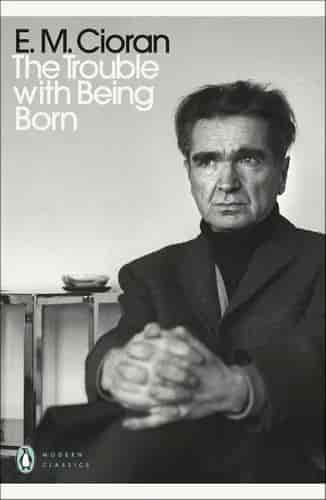
It has been a long time since philosophers have read men's souls. It is not their task, we are told. Perhaps. But we must not be surprised if they no longer matter much to us.
But what is that life? Is the soul of man in its nature immortal? I know not. My finite understanding cannot hold the infinite; what is called eternity eludes my grasp. What can I assert or deny, how can I reason with regard to what I cannot conceive? I believe that the soul survives the body for the maintenance of order; who knows if this is enough to make it eternal? However, I know that the body is worn out and destroyed by the division of its parts, but I cannot conceive a similar destruction of the conscious nature, and as I cannot imagine how it can die, I presume that it does not die. As this assumption is consoling and in itself not unreasonable, why should I fear to accept it?
"What becomes of man when all we know of him through our senses has vanished?" This question no longer presents any difficulty to me when I admit the two substances. It is easy to understand that what is imperceptible to those senses escapes me, during my bodily life, when I perceive through my senses only. When the union of soul and body is destroyed, I think one may be dissolved and the other may be preserved. Why should the destruction of the one imply the destruction of the other? On the contrary, so unlike in their nature, they were during their union in a highly unstable condition, and when this union comes to an end they both return to their natural state; the active vital substance regains all the force which it expended to set in motion the passive dead substance. Alas! my vices make me only too well aware that man is but half alive during this life; the life of the soul only begins with the death of the body.
Conscience is the voice of the soul; the passions are the voice of the body.
Every production of an artist should be the expression of an adventure of his soul.
p. 310