Quotes about slavery
118 quotes · 64 authors
Quotes
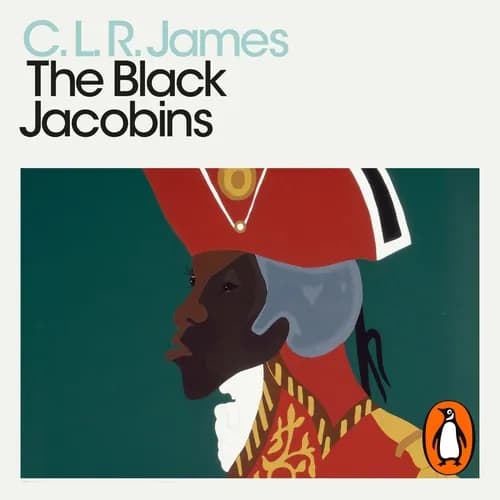
From their French masters, [the slaves] had known rape, torture, degradation, and, at the slightest provocation, death. They returned in kind. For two centuries the higher civilization had shown them that power was used for wreaking your will on those whom you controlled. Now that they held power they did as they had been taught.
p. 88
There are and always will be some who, ashamed of the behavior of their ancestors, try to prove that slavery wasn't so bad after all, that its evils and its cruelty were the exaggerations of propagandists and not the habitual lot of the slaves. Men will say (and accept) anything in order to foster national pride or soothe a troubled conscience.
p. 13
Dissimulation is the refuge of the slave.
p. 334
"If physical slavery is repulsive, how much more repulsive is the concept of servility of the spirit? […] But the man who enslaves himself voluntarily in the name of love is the basest of creatures. He degrades the dignity of man, and he degrades the conception of love. But that is the essence of altruism."
p. 738
In my mind’s eye, rather as if it were mistily being projected on a screen, I began envisioning descriptions I had read of how collectively millions of our ancestors had been enslaved. Many thousands were individually kidnaped, as my own forebear Kunta had been, but into the millions had come awake screaming in the night, dashing out into the bedlam of raided villages, which were often in flames. The captured able survivors were linked neck-by-neck with thongs into processions called “coffles,” which were sometimes as much as a mile in length. I envisioned the many dying, or left to die when they were too weak to continue the torturous march toward the coast, and those who made it to the beach were greased, shaved, probed in every orifice, often branded with sizzling irons; I envisioned them being lashed and dragged toward the longboats, their spasms of screaming and clawing with their hands into the beach, biting up great choking mouthfuls of the sand in their desperation efforts for one last hold on the Africa that had been their home; I envisioned them shoved, beaten, jerked down into slave ships’ stinking holds and chained onto shelves, often packed so tightly that they had to lie on their sides like spoons in a drawer...
I can understand the poor and stupid voting for Marxism or one of its fashionable variants. If you've no hope of being other than a slave, you may as well opt for the most efficient form of slavery.
p. 412
Democracy and slavery are inseparable. Why. Democracy as it existed among the ancients was no more than government by a number of men large enough to be called the people. But this designation is false. The true people, in such a state, the greatest number, the majority belong to the class of slaves, and slavery inevitably develops in a country governed this way, because it is impossible that those who spend their time making laws can make shoes and clothes, plant crops, work fields, etc.
To believe Christianity stands in opposition to slavery is at best to think anachronistically and at worst to not understand Christianity.
p. 57
Slavery was a central concern of governance form the time of the first nation-state. The Code of Hammurabi, the earliest known set of laws for governing an empire, prescribed death for anyone who harbored a fugitive or otherwise helped a slave to escape. The relationship between the law and bondage goes back even farther: Indeed, the oldest extant legal documents don't concern the sale of land, houses, or even animals, but slaves.
p. 60
Much was made by abolitionists that the King James version of the Bible didn't use the word slaves, but, instead, servants. This meant, in their minds, that God didn't really approve of slavery. But that argument was linguistic at best. Slavery was codified and even sanctified in the tenth commandment, throwing slaves (and wives) in with other property belonging to one's neighbor that one must not covet. The Bible even regulated--as opposed to banning outright--the killing of slaves, stating that if a slave were beaten to death, the slave owner should be punished (though not killed himself, as would be his fate were he to kill a freeman), but if the slave didn't die until a day or two after the beating, the slave owner "shall not be punished, for he [the slave] is his money."
p. 56
In order for a slave--or, for that matter, a slaveholder--to become free, a series of successive perceptions must be realized. First, the person must perceive that the owners (and slaves) are merely human, that is, putting all rhetoric aside, that there exists a dichotomy of privilege and exploitation, and that the privilege is a result of exploitation. … The second realization is, once again, that the owners and slaves are merely human, meaning this time that the exploitation and consequent privilege are not inevitable, but the result of social arrangements and force (as well as a huge dollop of bad luck on the part of those enslaved). … The third realization is yet again that the owners are merely human, by which I now mean they are vulnerable. Wealth does not protect them.
p. 63
There is not a negro from the coast of Africa who does not, in this respect, possess a degree of magnanimity which the soul of his sordid master is too often scarce capable of conceiving. Fortune never exerted more cruelly her empire over mankind, than when she subjected those nations of heroes to the refuse of the jails of Europe, to wretches who possess the virtues neither of the countries which they come from, nor of those which they go to, and whose levity, brutality, and baseness, so justly expose them to the contempt of the vanquished.