Quotes about selfishness
169 quotes · 113 authors
Quotes
Go beyond this, and I see nothing but injustice, hypocrisy, and falsehood among men; private interest, which in competition necessarily prevails over everything else, teaches all things to adorn vice with the outward show of virtue.
He found himself now in the agreeable situation of being able to do what was best for others and at the same time what was convenient to himself.
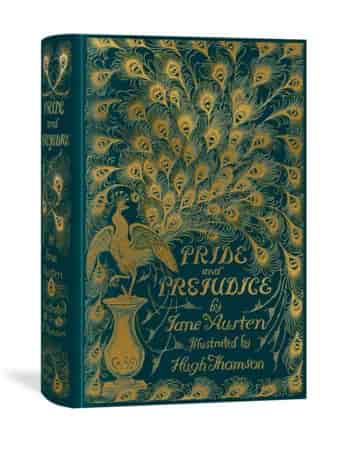
In point of fact, however, they were much more anxious to tell him about their doings than to listen to his.
p. 247
Egoism you say? There is nothing more universal than the individual, for what is the property of each is the property of all. Each man is worth more than the whole of humanity, nor will it do to sacrifice each to all save in so far as all sacrifice themselves to each. That which we call egoism is the principle of psychic gravity, the necessary postulate. "Love thy neighbor as thyself," we are told, the presupposition being that each man loves himself; and it is not said "Love thyself." And nevertheless, we do not know how to love ourselves.
"Sometimes," she said, "they threaten you with something — something you can’t stand up to, can’t even think about. And then you say, 'Don’t do it to me, do it to somebody else, do it to so-and-so.' And perhaps you might pretend, afterwards, that it was only a trick and that you just said it to make them stop and didn't really mean it. But that isn't true. At the time when it happens you do mean it. You think there's no other way of saving yourself, and you're quite ready to save yourself that way. You WANT it to happen to the other person. You don't give a damn what they suffer. All you care about is yourself."
She is a selfish, hypocritical woman, and I have no opinion of her.
He was one of those people who live up to their emotional incomes, who are always taut and tingling with vanity. Hence he had no strength to spare; hence he had no kindness, no geniality; for geniality is almost definable as strength to spare. He had no god-like carelessness; he never forgot himself; his whole life was, to use his own expression, an arrangement. He went in for "the art of living"—a miserable trick.
'Whose side are they on?' said Brocando.
'Sides? Their own, I suppose, just like everyone else.'
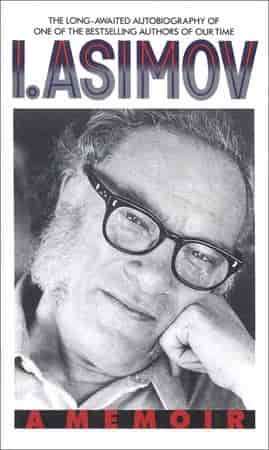
“It is a mistake,” he said, “to suppose that the public wants the environment protected or their lives saved and that they will be grateful to any idealist who will fight for such ends. What the public wants is their own individual comfort. We know that well enough from our experience in the environmental crisis of the twentieth century.”
p. 56
The whole world seems to live under the banner: “Freedom is wonderful—but only for me.”
p. 22
“You’re a gang of robbers,” he said once. “You’re seeing how quickly you can loot this planet of its resources, and you don’t give a damn about the next generation.”
“And what,” answered McKenzie, not very originally, “has the next generation ever done for us?”
p. 620
To be free, as I then knew myself to be, is to realize that all conquest is vain, even the conquest of self, which is the last act of egotism. To be joyous is to carry the ego to its last summit and to deliver it triumphantly. To know peace is total: it is the moment after, when the surrenderer is complete, when there is no longer even the consciousness of surrender. Peace is at the centre and when it is attainded the voice issues forth in praise and benediction. Then the voice carries far and wide, to the outermost limits of the universe. Then it heals, because it brings light and the warmth of compassion.
p. 80