Quotes
Their worship was not paid to the demon which such a being as they imagined would really be, but to their own idea of excellence. The evil is, that such a belief keeps the ideal wretchedly low; and opposes the most obstinate resistance to all thought which has a tendency to raise it higher. Believers shrink from every train of ideas which would lead the mind to a clear conception and an elevated standard of excellence, because they feel (even when they do not distinctly see) that such a standard would conflict with many of the dispensations of nature, and with much of what they are accustomed to consider as the Christian creed.
p. 42
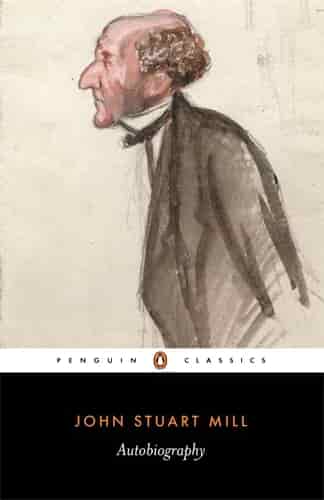
 Autobiography
My father was as well aware as anyone that Christians do not, in general, undergo the demoralizing consequences which seem inherent in such a creed, in the manner or to the extent which might have been expected from it. The same slovenliness of thought, and subjection of the reason to fears, wishes, and affections, which enable them to accept a theory involving a contradiction in terms, prevents them from perceiving the logical consequences of the theory. Such is the facility with which mankind believe at one and the same time things inconsistent with one another, and so few are those who draw from what they receive as truths, any consequences but those recommended to them by their feelings, that multitudes have held the undoubting belief in an Omnipotent Author of Hell, and have nevertheless identified that being with the best conception they were able to form of perfect goodness.
p. 41
AutobiographyUnbelievers (so called) as well as of believers, there are many species, including almost every variety of moral type. But the best among them, as no one who has had opportunities of really knowing them will hesitate to affirm (believers rarely have that opportunity), are more genuinely religious, in the best sense of the word religion, than those who exclusively arrogate to themselves the title.
p. 45
Autobiography[H]e regarded it with the feelings due not to a mere mental delusion, but to a great moral evil. He looked upon it as the greatest enemy of morality: first, by setting up factitious excellencies,—belief in creeds, devotional feelings, and ceremonies, not connected with the good of human kind,—and causing these to be accepted as substitutes for genuine virtues: but above all, by radically vitiating the standard of morals; making it consist in doing the will of a being, on whom it lavishes indeed all the phrases of adulation, but whom in sober truth it depicts as eminently hateful.
p. 40
AutobiographyThe great writers to whom the world owes what religious liberty it possesses, have mostly asserted freedom of conscience as an indefeasible right, and denied absolutely that a human being is accountable to others for his religious belief.
 On Liberty
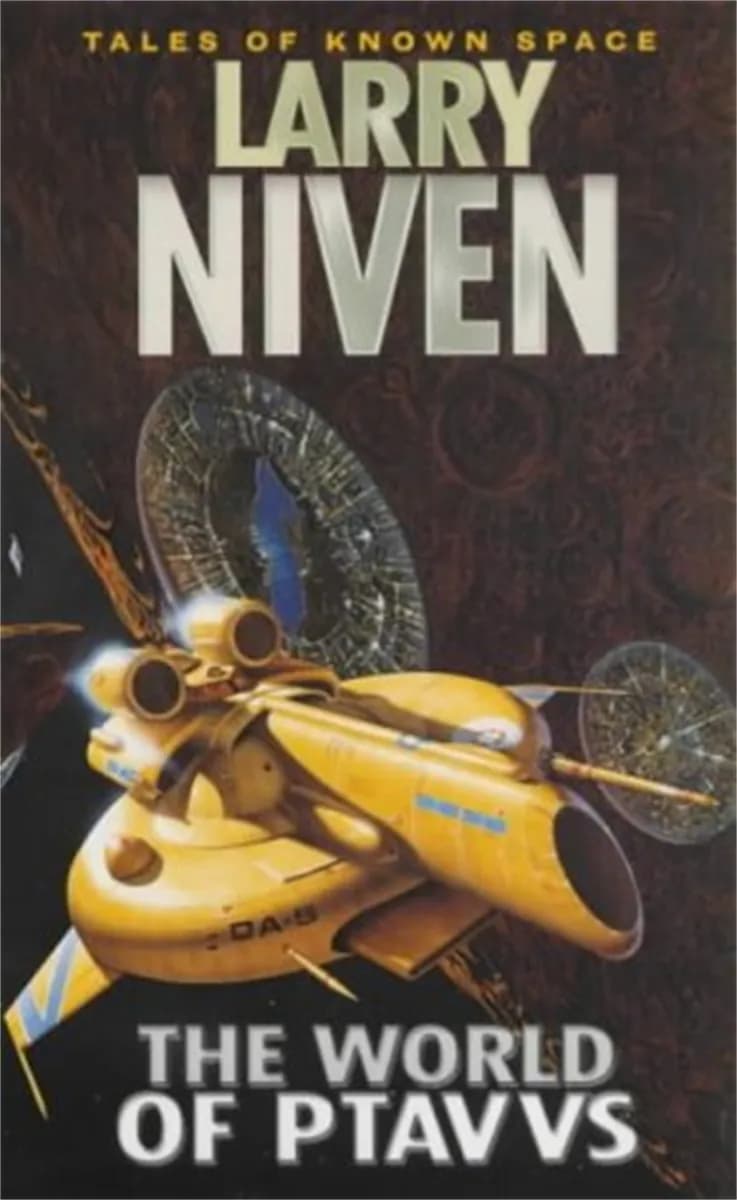
A thrint was master over every intelligent beast. This was the Powergiver’s primal decree, made before he made the stars. So said all of the twelve thrintun religions, though they fought insanely over other matters.
p. 85
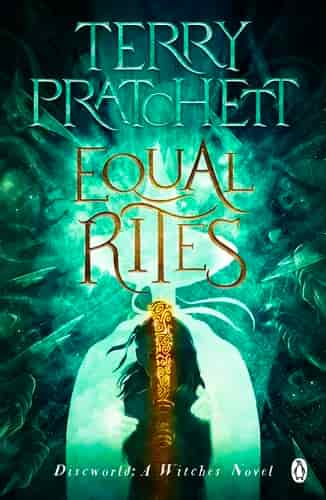
Granny had counted the temples with a thoughtful look in her eyes; gods were always demanding that their followers acted other than according to their true natures, and the human fallout this caused made plenty of work for witches.
I refused to make any changes.
I said to them, haughtily, “It isn’t written in the stars that I must make a million dollars, but it is written in the stars that I must be true to my principles.”
So they fired me. They had someone else do the changes, and on June 26, 1978, I made them remove my name from the book. The project was a fiasco from beginning to end.
What does one do in a case like this? One is helpless in the face of cowardly publishers, pliant school boards, and fanatical ignoramuses. All I can do is write essays denouncing creationism with its believe in Adam, Eve, a talking serpent, and a worldwide Flood, all in a six- to ten-thousand-year-old universe, and in a supernatural creation of all the species of life so that they were different from the start.
Some of my essays appeared in as august an organ as The New York Times Magazine and that roused the anger of many Fundamentalists—an anger I am happy and proud to inspire.
p. 307
If I were not an atheist, I would believe in a God who would choose to save people on the basis of the totality of their lives and not the pattern of their words. I think he would prefer an honest and righteous atheist to a TV preacher whose every word is God, God, God, and whose every deed is foul, foul, foul.
I would also want a God who would not allow a Hell. Infinite torture can only be a punishment for infinite evil, and I don’t believe that infinite evil can be said to exist even in the case of Hitler. Besides, if most human governments are civilized enough to try to eliminate torture and outlaw cruel and unusual punishments, can we expect anything less of an all-merciful God?
I feel that if there were an afterlife, punishment for evil would be reasonable and of a fixed term. And I feel that the longest and worst punishment should be reserved for those who slandered God by inventing Hell.
But all that is just playing. I am firm in my beliefs. I am an atheist and, in my opinion, death is followed by an eternal and dreamless sleep.
p. 338
I have never, in all my life, not for one moment, been tempted toward religion of any kind. The fact is that I feel no spiritual void. I have my philosophy of life, which does not include any aspect of the supernatural and which I find totally satisfying. I am, in short, a rationalist and believe only that which reason tells me is so.
p. 13
By the time I was reading the Bible, however, science fiction and science books had taught me their version of the universe and I was not ready to accept the creation tale of Genesis or the various miracles described throughout the book. My experience with the Greek myths (and, later, the grimmer Norse myths) made it quite obvious to me that I was reading Hebrew myths.
p. 13
I have always dealt with economic forces, rather than philosophic forces, but you can’t split history into neat little nonoverlapping divisions. For instance, religions tend to accumulate wealth when successful and that eventually tends to distort the economic development of a society.
p. 215