Quotes about power
121 quotes · 18 authors
Quotes
It is amusing to think how much conservative ingenuity has been wasted in the defence of the House of Lords by men who were desperately endeavouring to prove that the House of Lords consisted of clever men. There is one really good defence of the House of Lords, though admirers of the peerage are strangely coy about using it; and that is, that the House of Lords, in its full and proper strength, consists of stupid men. It really would be a plausible defence of that otherwise indefensible body to point out that the clever men in the Commons, who owed their power to cleverness, ought in the last resort to be checked by the average man in the Lords, who owed their power to accident. Of course, there would be many answers to such a contention, as, for instance, that the House of Lords is largely no longer a House of Lords, but a House of tradesmen and financiers, or that the bulk of the commonplace nobility do not vote, and so leave the chamber to the prigs and the specialists and the mad old gentlemen with hobbies. But on some occasions the House of Lords, even under all these disadvantages, is in some sense representative. When all the peers flocked together to vote against Mr. Gladstone's second Home Rule Bill, for instance, those who said that the peers represented the English people, were perfectly right. All those dear old men who happened to be born peers were at that moment, and upon that question, the precise counterpart of all the dear old men who happened to be born paupers or middle-class gentlemen. That mob of peers did really represent the English people--that is to say, it was honest, ignorant, vaguely excited, almost unanimous, and obviously wrong. Of course, rational democracy is better as an expression of the public will than the haphazard hereditary method. While we are about having any kind of democracy, let it be rational democracy. But if we are to have any kind of oligarchy, let it be irrational oligarchy. Then at least we shall be ruled by men.
We have public-house licensing laws, but not sumptuary laws. That is to say, we have laws against the festivity and hospitality of the poor, but no laws against the festivity and hospitality of the rich. We have laws against blasphemy—that is, against a kind of coarse and offensive speaking in which nobody but a rough and obscure man would be likely to indulge. But we have no laws against heresy—that is, against the intellectual poisoning of the whole people, in which only a prosperous and prominent man would be likely to be successful. The evil of aristocracy is not that it necessarily leads to the infliction of bad things or the suffering of sad ones; the evil of aristocracy is that it places everything in the hands of a class of people who can always inflict what they can never suffer.
An enormous amount of modern ingenuity is expended on finding defences for the indefensible conduct of the powerful. As I have said above, these defences generally exhibit themselves most emphatically in the form of appeals to physical science. And of all the forms in which science, or pseudo-science, has come to the rescue of the rich and stupid, there is none so singular as the singular invention of the theory of races.
That the human mind has a certain order of possible progress, in which some things must precede others, an order which governments and public instructors can modify to some, but not to an unlimited extent: that all questions of political institutions are relative, not absolute, and that different stages of human progress not only will have, but ought to have, different institutions: That government is always either in the hands, or passing into the hands, of whatever is the strongest power in society, and that what this power is, does not depend on institutions, but institutions on it: That any general theory or philosophy of politics supposes a previous theory of human progress, and that this is the same thing with a philosophy of history.
p. 162
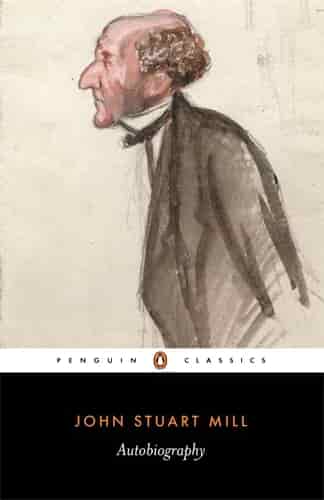
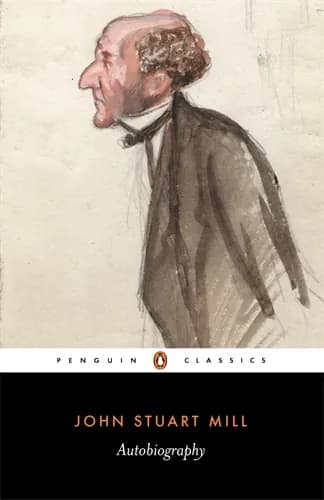 Autobiography
I thought the predominance of the aristocratic classes, the noble and the rich, in the English Constitution, an evil worth any struggle to get rid of; not on account of taxes, or any such comparatively small inconvenience, but as the great demoralizing agency in the country. Demoralizing, first, because it made the conduct of the government an example of gross public immorality, through the predominance of private over public interests in the State, and the abuse of the powers of legislation for the advantage of classes. Secondly, and in a still greater degree, because the respect of the multitude always attaching itself principally to that which, in the existing state of society, is the chief passport to power; and under English institutions, riches, hereditary or acquired, being the almost exclusive source of political importance; riches, and the signs of riches, were almost the only things really respected, and the life of the people was mainly devoted to the pursuit of them. I thought, that while the higher and richer classes held the power of government, the instruction and improvement of the mass of the people were contrary to the self-interest of those classes, because tending to render the people more powerful for throwing off the yoke: but if the democracy obtained a large, and perhaps the principal, share in the governing power, it would become the interest of the opulent classes to promote their education, in order to ward off really mischievous errors, and especially those which would lead to unjust violations of property. On these grounds I was not only as ardent as ever for democratic institutions, but earnestly hoped that Owenite, St. Simonian, and all other anti-property doctrines might spread widely among the poorer classes; not that I thought those doctrines true, or desired that they should be acted on, but in order that the higher classes might be made to see that they had more to fear from the poor when uneducated, than when educated.
p. 171
AutobiographyA general State education is a mere contrivance for molding people to be exactly like one another; and as the mold in which it casts them is that which pleases the dominant power in the government, whether this be a monarch, an aristocracy, or a majority of the existing generation; in proportion as it is efficient and successful, it establishes a despotism over the mind, leading by a natural tendency to one over the body.
 On Liberty
The only purpose for which power can be rightfully exercised over any member of a civilized community, against his will, is to prevent harm to others. His own good, either physical or moral, is not a sufficient warrant.
On LibertyWhatever crushes individuality is despotism, by whatever name it may be called, and whether it professes to be enforcing the will of God or the injunctions of men.
On LibertyWhen they're standing right in front of you, kings are a kind of speech impediment.
Keep 'em busy. That was one of the three rules of being chief that old Grimm had passed on to him. Act confidently, never say 'I don't know,' and when all else fails, keep 'em busy.
'What would Deftmenes be if we went around obeying orders all the time?'
'They might be ruling the Carpet,' said Pismire.
'Ha!' said Brocando, 'but the trouble about obeying orders is, it becomes a habit. And then everything depends on who's giving the orders.'
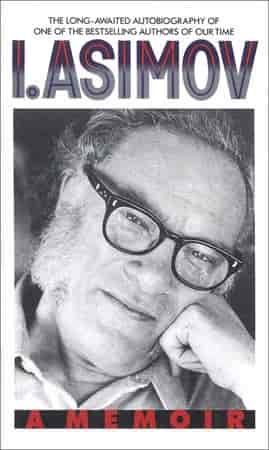
It is a mistake to think that because a group has suffered extreme persecution that is a sign that they are virtuous and innocent. They might be, of course, but the persecution process is no proof of that. The persecution merely shows that the persecuted group is weak. Had they been strong, then, for all we know, they might have been the persecutors.
p. 22