Quotes about patriotism
39 quotes · 28 authors
Quotes
Do we not already sing our love for and obligation to the land of the free and the home of the brave? Yes, but just what and whom do we love? Certainly not the soil, which we are sending helter-skelter downriver. Certainly not the waters, which we assume have no function except to turn turbines, float barges, and carry off sewage. Certainly not the plants, of which we exterminate whole communities without batting an eye. Certainly not the animals, of which we have already extirpated many of the largest and most beautiful species.
p. 204
No, I don’t mean love, when I say patriotism. I mean fear. The fear of the other. And its expressions are political, not poetical: hate, rivalry, aggression. It grows in us, that fear. It grows in us year by year.
p. 18
And I wondered, not for the first time, what patriotism is, what the love of country truly consists of, how that yearning loyalty that had shaken my friend’s voice arises, and how so real a love can become, too often, so foolish and vile a bigotry. Where does it go wrong?
p. 279
How does one hate a country, or love one? [...] I know people, I know towns, farms, hills and rivers and rocks, I know how the sun at sunset in autumn falls on the side of a certain plowland in the hills; but what is the sense of giving a boundary to all that, of giving it a name and ceasing to love where the name ceases to apply? What is love of one's country; is it hate of one's uncountry?
p. 228
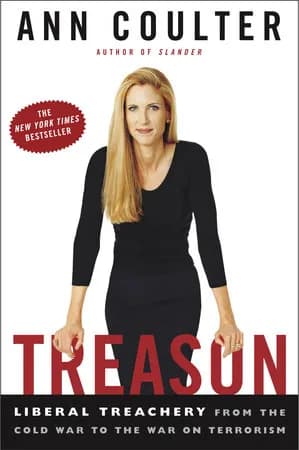
While consistently rooting against America, liberals have used a fictional event forged of their own hysteria — "McCarthyism" — to prevent Americans from ever asking the simple question: Do liberals love their country?
Patriotic and tribal feelings belong to the squalling childhood of the human race, and become no more charming in their senescence. They are particularly unattractive when evinced by a superpower.
In my country of birth the great new fictional practitioners have in their front rank names like Rushdie, Ishiguro, Kureishi, Mo. This attainment on their part makes me oddly proud to be whatever I am, and convinces me that internationalism is the highest form of patriotism.
We spend our lives in abusing England but grow very angry when we hear a foreigner saying exactly the same things.
A middle-class child is taught almost simultaneously to wash his neck, to be ready to die for his country, and to despise the "lower classes."
The highest treason in the USA is to say Americans are not loved, no matter where they are, no matter what they are doing there.
I am about to do a very un-ambassadorial thing ... I am about to tell you what I really feel. ... We are gathered here, friends ... to honor [the Hundred Martyrs to Democracy], children dead, all dead, all murdered in war. It is customary on days like this to call such lost children men. I am unable to call them men for this simple reason: that in the same war in which [the Martyrs] died, my own son died. My soul insists that I mourn not a man but a child.I do not say that children at war do not die like men, if they have to die. To their everlasting honor and our everlasting shame, they do die like men, thus making possible the manly jubilation of patriotic holidays.But they are murdered children all same.And I propose to you that if we are to pay our sincere respects to the hundred lost children of San Lorenzo, that we might best spend the day despising what killed them; which is to say, the stupidity and viciousness of all mankind.Perhaps, when we remember wars, we should take off our clothes and paint ourselves blue and go on all fours all day long and grunt like pigs. That would surely be more appropriate than noble oratory and shows of flags and well-oiled guns. ... [I]f today is really in honor of a hundred children murdered in war ... is today a day for a thrilling show? The answer is yes, on one condition: that we, the celebrants, are working consciously and tirelessly to reduce the stupidity and viciousness of all mankind.
"The highest possible form of treason," said [Horlick] Minton, "is to say that Americans aren't loved wherever they go, whatever they do. Claire tried to make the point that American foreign policy should recognize hate rather than imagine love.""I guess Americans are hated a lot of places.""People are hated a lot of places. Claire pointed out ... that Americans, in being hated, were simply paying the normal penalty for being people, and that they were foolish to think they should somehow be exempted from that penalty. But the loyalty board didn't pay any attention to that. All they knew was that Claire and I both felt that Americans were unloved."