Quotes
If I were a writer, how I would enjoy being told the novel is dead. How liberating to work in the margins, outside a central perception. You are the ghoul of literature. Lovely.
I am satisfied that if a book is a good one, it is so whatever the sex of the author may be. All novels are, or should be, written for both men and women to read, and I am at loss to conceive how a man should permit himself to write anything that would be really disgraceful to a woman, or why a woman should be censured for writing anything that would be proper and becoming for a man.
It’s a thing of beauty, the ability to spin the cloth of reality, and you’re a sucker for it: Isn’t story-telling what being human is all about?
p. 96
Sprockett buzzed briefly to himself. “Does that sort of thing happen out there in the RealWorld, or is it just in books?”
I thought for a moment. Of the untidy chaos I had seen in the RealWorld; of not knowing what was going to happen; of not knowing what, if anything, head relevance. The RealWorld was a sprawling mess of a book in need of a good editor. I thought then of the narrative order here in the BookWorld, our resolved plot lines and the observance of natural justice we took for granted.
“Literature is claimed to be a mirror of the world,” I said, “but the Outlanders are fooling themselves. The BookWorld is as orderly as people in the RealWorld hope their own world to be—it isn’t a mirror, it’s an aspiration.”
p. 359
If the real world were a book, it would never find a publisher. Overlong, detailed to the point of distraction—and ultimately, without a major resolution.
p. 76
One of the ghosts — an old woman — beckoned, urging her to come close.
Then she spoke, and Mary heard her say:
"Tell them stories. They need the truth. You must tell them true stories, and everything will be well, just tell them stories."
That was all, and then she was gone. It was one of those moments when we suddenly recall a dream that we’ve unaccountably forgotten, and back in a flood comes all the emotion we felt in our sleep. It was the dream she’d tried to describe to Atal, the night picture; but as Mary tried to find it again, it dissolved and drifted apart, just as these presences did in the open air. The dream was gone.
All that was left was the sweetness of that feeling, and the injunction to tell them stories.
As for the Bible, it was a book, and all books told the truth in the sense that their authors believed they were writing a kind of truth.
p. 265
"In some traditionalist universities not long ago, you could not research on authors who were still alive. This was a great incentive to slip a knife between their ribs one foggy evening, or a remarkable test of patience if your chosen novelist was in rude health and only 34".
Faith is for the part of the story that superficially isn’t believable.
How can one understand the inner life of a character, real or fictional, without knowing the state of her finances?
p. 42
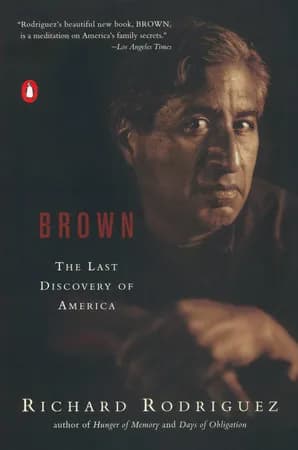
It is one thing to know your author-man or woman or gay or black or paraplegic or president. It is another thing to choose only man or woman or et cetera, as the only quality of voice empowered to address you, as the only class of sensibility or experience able to understand you, or that you are able to understand.
How a society orders its bookshelves is as telling as the books a society writes and reads. American bookshelves of the twenty-first century describe fractiousness, reduction, hurt. Books are isolated from one another, like gardenias or peaches, lest they bruise or become bruised, or, worse, consort, confuse. If a man in a wheelchair writes his life, his book will be parked in a blue-crossed zone: "Self-Help" or "Health." There is no shelf for bitterness. No shelf for redemption. The professor of Romance languages at Dresden, a convert to Protestantism, was tortured by the Nazis as a Jew — only that — a Jew. His book, published sixty years after the events it recounts, is shelved in my neighborhood bookstore as "Judaica." There is no shelf for irony.
Books should confuse. Literature abhors the typical. Literature flows to the particular, the mundane, the greasiness of paper, the taste of warm beer, the smell of onion or quince. Auden has a line: "Ports have names they call the sea." Just so will literature describe life familiarly, regionally, in terms life is accustomed to use — high or low matters not. Literature cannot by this impulse betray the grandeur of its subject — there is only one subject: What it feels like to be alive. Nothing is irrelevant. Nothing is typical.