Quotes
There is nothing to say about anything. So there can be no limit to the number of books.
There is, moreover, a certain simplicity of taste which goes straight to the heart; and this is only to be found in the classics. In oratory, poetry, and every kind of literature, Emile will find the classical authors as he found them in history, full of matter and sober in their judgment. The authors of our own time, on the contrary, say little and talk much. To take their judgment as our constant law is not the way to form our own judgment. These differences of taste make themselves felt in all that is left of classical times and even on their tombs. Our monuments are covered with praises, theirs recorded facts.
Speaking generally Emile will have more taste for the books of the ancients than for our own, just because they were the first, and therefore the ancients are nearer to nature and their genius is more distinct.
I leave modern history on one side, not only because it has no character and all our people are alike, but because our historians, wholly taken up with effect, think of nothing but highly coloured portraits, which often represent nothing. [Footnote: Take, for instance, Guicciardini, Streda, Solis, Machiavelli, and sometimes even De Thou himself. Vertot is almost the only one who knows how to describe without giving fancy portraits.] The old historians generally give fewer portraits and bring more intelligence and common-sense to their judgments; but even among them there is plenty of scope for choice, and you must not begin with the wisest but with the simplest. I would not put Polybius or Sallust into the hands of a youth; Tacitus is the author of the old, young men cannot understand him; you must learn to see in human actions the simplest features of the heart of man before you try to sound its depths. You must be able to read facts clearly before you begin to study maxims. Philosophy in the form of maxims is only fit for the experienced. Youth should never deal with the general, all its teaching should deal with individual instances. To my mind Thucydides is the true model of historians. He relates facts without giving his opinion; but he omits no circumstance adapted to make us judge for ourselves. He puts everything that he relates before his reader; far from interposing between the facts and the readers, he conceals himself; we seem not to read but to see. Unfortunately he speaks of nothing but war, and in his stories we only see the least instructive part of the world, that is to say the battles. The virtues and defects of the Retreat of the Ten Thousand and the Commentaries of Caesar are almost the same. The kindly Herodotus, without portraits, without maxims, yet flowing, simple, full of details calculated to delight and interest in the highest degree, would be perhaps the best historian if these very details did not often degenerate into childish folly, better adapted to spoil the taste of youth than to form it; we need discretion before we can read him. I say nothing of Livy, his turn will come; but he is a statesman, a rhetorician, he is everything which is unsuitable for a youth.
Things were easier for the old novelists who saw people all of a piece. Speaking generally, their heroes were good through and through, their villains wholly bad.
p. 196
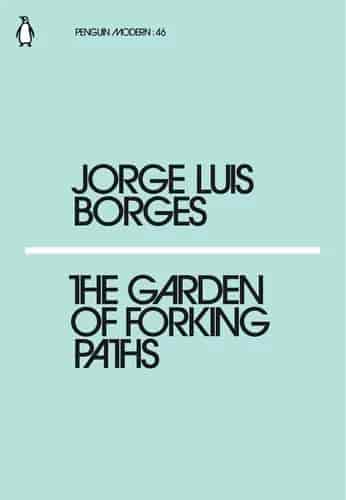
That history should have imitated history was already sufficiently marvellous; that history should imitate literature is inconceivable....
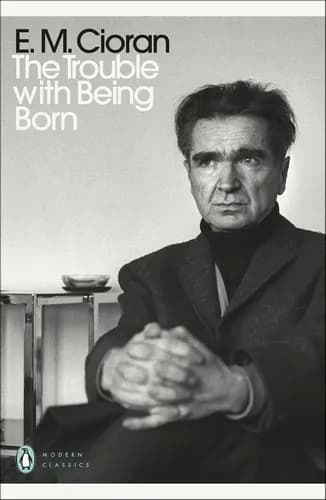
Writing long books is a laborious and impoverishing act of foolishness: expanding in five hundred pages an idea that could be perfectly explained in a few minutes. A better procedure is to pretend that those books already exist and to offer a summary, a commentary.
It was a bright cold day in April, and the clocks were striking thirteen. Winston Smith, his chin nuzzled into his breast in an effort to escape the vile wind, slipped quickly through the glass doors of Victory Mansions, though not quickly enough to prevent a swirl of gritty dust from entering along with him.
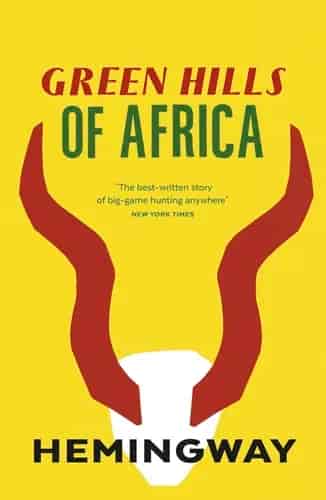
Then I started to think in Lipp's about when I had first been able to write a story about losing everything. It was up in Cortina d'Ampezzo when I had come back to join Hadley there after the spring skiing which I had to interrupt to go on assignment to Rhineland and the Ruhr. It was a very simple story called "Out of Season" and I had omitted the real end of it which was that the old man hanged himself. This was omitted on my new theory that you could omit anything if you knew that you omitted and the omitted part would strengthen the story and make people feel something more than they understood.
When writing a novel a writer should create living people; people not characters. A character is a caricature.
A serious writer is not to be confused with a solemn writer. A serious writer may be a hawk or a buzzard or even a popinjay, but a solemn writer is always a bloody owl.
All modern American literature comes from one book by Mark Twain called Huckleberry Finn. If you read it you must stop where the Nigger Jim is stolen from the boys. That is the real end. The rest is just cheating. But it's the best book we've had. All American writing comes from that. There was nothing before. There has been nothing as good since.