Quotes
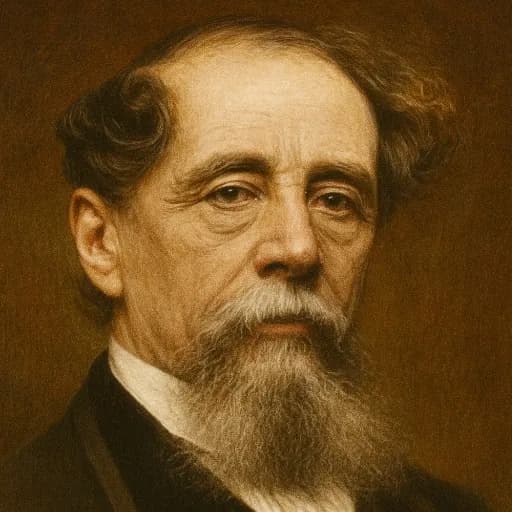
"If the law supposes that," said Mr. Bumble, squeezing his hat emphatically in both hands, "the law is a ass — a idiot. If that's the eye of the law, the law is a bachelor; and the worst I wish the law is, that his eye may be opened by experience — by experience."
The law should regulate in certain areas of culture — but it should regulate culture only where that regulation does good. Yet lawyers rarely test their power, or the power they promote, against this simple pragmatic question: "Will it do good?" When challenged about the expanding reach of the law, the lawyer answers, "Why not?"
We should ask, "Why?" Show me why your regulation of culture is needed. Show me how it does good. And until you can show me both, keep your lawyers away.
I'm a lawyer. I make lawyers for a living. I believe in the law. I believe in the law of copyright. Indeed, I have devoted my life to working in law, not because there are big bucks at the end but because there are ideals at the end that I would love to live.
Yet much of this book has been a criticism of lawyers, or the role lawyers have played in this debate. The law speaks to ideals, but it is my view that our profession has become too attuned to the client. And in a world where the rich clients have one strong view, the unwillingness of the profession to question or counter that one strong view queers the law.
The evidence of this bending is compelling. I'm attacked as a "radical" by many within the profession, yet the positions that I am advocating are precisely the positions of some of the most moderate and significant figures in the history of this branch of the law.
Overregulation stifles creativity. It smothers innovation. It gives dinosaurs a veto over the future. It wastes the extraordinary opportunity for a democratic creativity that digital technology enables.
In addition to these important harms, there is one more that was important to our forebears, but seems forgotten today. Overregulation corrupts citizens and weakens the rule of law.
The war that is being waged today is a war of prohibition. As with every war of prohibition, it is targeted against the behavior of a very large number of citizens. According to The New York Times, 43 million Americans downloaded music in May 2002. According to the RIAA, the behavior of those 43 million Americans is a felony. We thus have a set of rules that transform 20 percent of America into criminals.
The legal system doesn't work. Or more accurately, it doesn't work for anyone except those with the most resources. Not because the system is corrupt. I don't think our legal system (at the federal level, at least) is at all corrupt. I mean simply because the costs of our legal system are so astonishingly high that justice can practically never be done.
It is not my contention that chemical insecticides must never be used. I do contend that we have put poisonous and biologically potent chemicals indiscriminately into the hands of persons largely or wholly ignorant of their potential for harm. We have subjected enormous numbers of people to contact with these poisons, without their consent and often without their knowledge. If the Bill of Rights contains no guarantee that a citizen shall be secure against lethal poisons distributed either by private individuals or by public officials, it is surely only because our forefathers, despite their considerable wisdom and foresight, could conceive of no such problem.
From all evil against which the law bars you, you should be barred, at an infinite distance, by honour, by conscience, and nobility. Does the law require patriotism, philanthropy, self-abnegation, public service, purity of purpose, devotion to the needs of others who have been placed in the world below you? The law is a great thing, — because men are poor and weak, and bad. And it is great, because where it exists in its strength, no tyrant can be above it. But between you and me there should be no mention of law as the guide of conduct. Speak to me of honour, of duty, and of nobility; and tell me what they require of you.
[The law i]s like a single-bed blanket on a double bed and three folks in the bed and a cold night. There ain't enough blanket to cover the case, no matter how much pulling and hauling, and somebody is always going to nigh catch pneumonia. Hell, the law is like the pants you bought last year for a growing boy, but it is always this year and the seams are popped and the shankbone's to the breeze. The law is always too short and too tight for growing humankind. The best you can do is do something and then make up some law to fit and by the time that law gets on the books you would have done something different.
Cicero, in invoking the law of heaven, invoked what was by nature of heaven: law — inviolable principle, better than the vacillating gods.
p. 80
We never forbid where we do not also have the power to prevent.
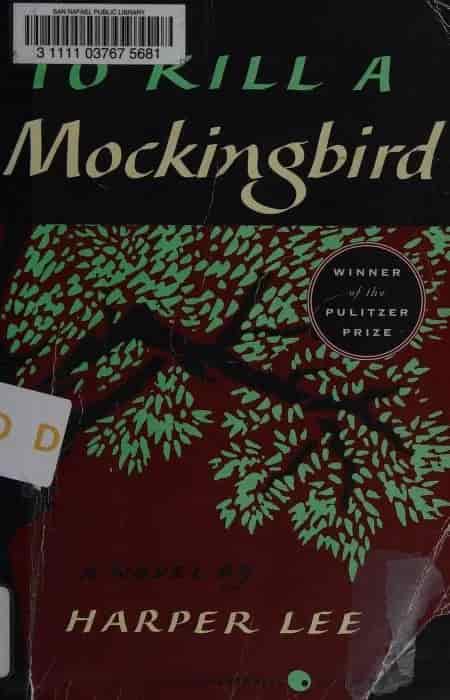
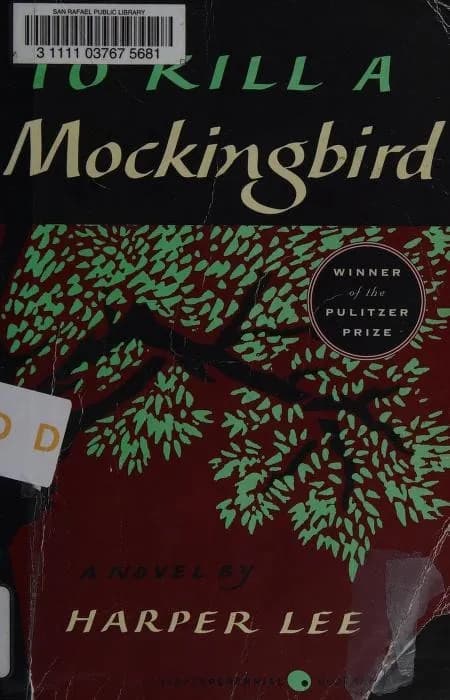
I’m no idealist to believe firmly in the integrity of our courts and in the jury system — that is no ideal to me, it is a living, working reality. Gentlemen, a court is no better than each man of you sitting before me on this jury. A court is only as sound as its jury, and a jury is only as sound as the men who make it up.
But there is one way in this country in which all men are created equal — there is one human institution that makes a pauper the equal of a Rockefeller, the stupid man the equal of an Einstein, and the ignorant man the equal of any college president. That institution, gentlemen, is a court. It can be the Supreme Court of the United States or the humblest J.P. court in the land, or this honourable court which you serve. Our courts have their faults, as does any human institution, but in this country our courts are the great levellers, and in our courts all men are created equal.