Quotes
: And thou didst indeed dare to transgress that law?
: Yes; for it was not Zeus that had published me that edict; not such are the laws set among men by the justice who dwells with the gods below; nor deemed I that thy decrees were of such force, that a mortal could override the unwritten and unfailing statutes of heaven. For their life is not of to-day or yesterday, but from all time, and no man knows when they were first put forth.
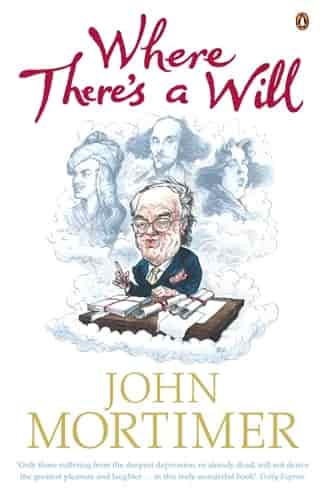
A barrister's job is to put the case for the defence as effectively and clearly as would his client if he had an advocate's skills. The barrister's belief or disbelief in the truth of this story is irrelevant: it's for the jury to decide this often difficult question.
Are people naturally destructive, immoral, predatory and self-seeking, only to be kept in order by harsh laws and fiercely deterrent mandatory sentences? Or are men and women naturally orderly, merciful, humane and bred with a need for justice and mutual aid? Of course these qualities, or defects, are not evenly distributed, and undoubtedly there is much of each in all of us, but when it comes to the law some sort of distinction can be drawn. Are you a Shylock or a Bassanio?
Shylock pinned his faith on the words in the contract, the nature of his bond and the duty of the state to uphold the letter of the law regardless of human suffering. Bassanio put another point of view. More important than the sanctity of the law was the plight of the individual parties in the particular case.
Beliefs about how you live your life, matters of private decision, views best kept for private enjoyment, prejudice or entertainment, can't be imposed by the operation of criminal law. Attempts to enforce such views can only make the government the subject of ridicule.
The British judiciary continues to label animal protectionists as 'extremists', whilst being unable to consider the Holocaust carnage inside every abattoir to be extreme.
We can already catch glimpses of a world in which the bonds which bind the individual are no longer laws, but social habits--the result of the need felt by each one of us to seek the support, the co-operation, the sympathy of his neighbours.
Assuredly the idea of a society without a State will give rise to at least as many objections as the political economy of a society without private capital. We have all been brought up from our childhood to regard the State as a sort of Providence; all our education, the Roman history we learned at school, the Byzantine code which we studied later under the name of Roman law, and the various sciences taught at the universities, accustom us to believe in Government and in the virtues of the State providential.
To maintain this superstition whole systems of philosophy have been elaborated and taught; all politics are based on this principle; and each politician, whatever his colours, comes forward and says to the people, "Give me the power, and I both can and will free you from the miseries which press so heavily upon you."
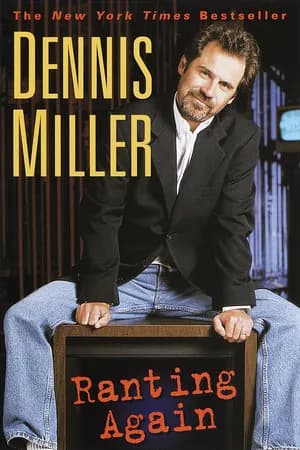
[about the woman who sued McDonald's because her coffee was too hot] We have trouble convicting people who confess to murder, but this woman is able to take three mil off of McDonald's? If the judge had any common sense, the trial should have gone like this: "Will the defendant please rise? Yeah, it's your fault. You're stupid. Coffee is supposed to be hot. Why didn't you blow on it before you chugged it down like a pledge having his first beer? Get out of my courtroom you stupid, stupid woman. Take your pinstriped parasite lawyer with you. Next case!"
I think the American legal system sucks worse than a Celine Dion cover version of "Whole Lotta Love."
"There's no way to rule innocent men. The only power any government has is to crack down on criminals. Well, when there aren't enough criminals, one makes them. One declares so many things to be a crime that it becomes impossible for men to live without breaking laws. Who wants a nation of law-abiding citizens? What's there in that for anyone? But just pass the kinds of laws that can neither be observed nor enforced nor objectively interpreted—and you create a nation of lawbreakers—and then you cash in on guilt. Now that's the system, Mr. Rearden, that's the game, and once you understand it, you'll be much easier to deal with."
p. 436
"In a moral society, these are the criminals, and the statutes are written to protect you against them. But when a society establishes criminals-by-right and looters-by-law, men who use force to seize the wealth of disarmed victims—then money becomes its creators' avenger. Such looters believe it safe to rob defenseless men, once they've passed a law to disarm them. But their loot becomes the magnet for other looters, who get it from them as they got it. Then the race goes, not to the ablest at production, but to those most ruthless at brutality. When force is the standard, the murderer wins over the pickpocket. And then that society vanishes, in a spread of ruins and slaughter."
p. 413
How fragile was that elegant, complicated bridge of order and reason which the law had constructed down the centuries over the abyss of social and psychological chaos.
p. 229
As an attorney, I assure you the law isn't a line engraved in marble, immovable and unchangeable through the centuries. Rather… the law is like a string, fixed at both ends but with a great deal of play in it — very loose, the line of the law — so you can stretch it this way or that, rearrange the arc of it so you are nearly always — short of blatant theft or cold-blooded murder — safely on the right side. That's a daunting thing to realize but true.