Quotes about language
220 quotes · 136 authors
Quotes
To a text-based life-form, unpredictable syntax and poor grammar is a source of huge discomfort. Ill-fitting grammar are like ill-fitting shoes. You can get used to it for a bit, but then one day your toes fall off and you can’t walk to the bathroom. Poor syntax is even worse. Change word order and a sentence useless for anyone Yoda except you have.
p. 20
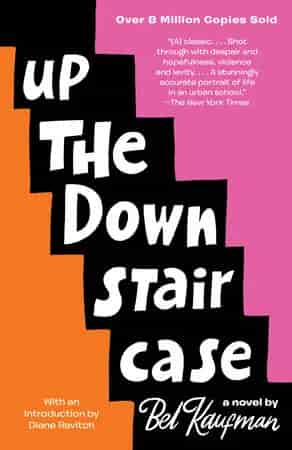
The clerical work is par for the course. "Keep on file in numerical order" means throw in wastebasket. You'll soon learn the language. "Let it be a challenge to you" means you're stuck with it; "interpersonal relationships" is a fight between kids; "ancillary civic agencies for supportive discipline" means call the cops; "Language Arts Dept." is the English office; "literature based on child's reading level and experiential background" means that's all they've got in the Book Room; "non-academic-minded" is a delinquent; and "It has come to my attention" means you're in trouble.
When I was a boy and refused to speak Spanish (because I spoke English), then could not speak Spanish from awkwardness, then guilt, Mexican relatives criticized my parents for letting me “lose it”—my culture, they said.
An Hispanic-American writer tells me, ‘I will never give up my family language; I would as soon give up my soul.’ Thus he holds to his chest a skein of words, as though it were the source of his family ties. He credits to language what he should credit to family members. A convenient mistake. For as long as he holds on to words, he can ignore how much else has changed in his life.
But the bilingualists simplistically scorn the value and necessity of assimilation. They do not seem to realize that there are two ways a person is individualized. So they do not realize that while one suffers a diminished sense of private individuality by becoming assimilated into public society, such assimilation makes possible the achievement of public individuality. Supporters of bilingual education thus want it both ways. They propose bilingual schooling as a way of helping students acquire the skills of the classroom crucial for public success. But they likewise insist that bilingual instruction will give students a sense of their identity apart from the public. Behind this screen there gleams an astonishing promise: One can become a public person while still remaining a private person. At the very same time one can be both! There need be no tension between the self in the crowd and the self apart from the crowd! Who would not want to believe such an idea?
I grew up victim to a disabling confusion. As I grew fluent in English, I no longer could speak Spanish with confidence.
Supporters of bilingual education today imply that students like me miss a great deal by not being taught in their family’s language. What they seem not to recognize is that, as a socially disadvantaged child, I considered Spanish to be a private language. What I needed to learn in school was that I had the right—and the obligation—to speak the public language of los gringos.
A powerful enough metaphor grows its own truth.
p. 734
The arrival of language was like the invasion of a parasitic system. Co-opting those areas of the brain that were the least dedicated. The most susceptible to appropriation.
The world has no name, he said. The names of the cerros and the sierras and the deserts exist only on maps. We name them so that we do not lose our way. Yet it was because the way was lost to us already that we have made those names. The world cannot be lost. We are the ones. And it is because these names and these coordinates are our own naming that they cannot save us. That they cannot find for us the way again.
We have an odd relationship with words. We learn a few when we are small, throughout our lives we collect others through education, conversation, our contact with books, and yet, in comparison, there are only a tiny number about whose meaning, sense, and denotation we would have absolutely no doubts if, one day, we were to ask ourselves seriously what they meant. Thus we affirm and deny, thus we convince and are convinced, thus we argue, deduce, and conclude, wandering fearlessly over the surface of concepts about which we have only the vaguest of ideas, and, despite the false air of confidence that we generally affect as we feel our way along the road in the verbal darkness, we manage, more or less, to understand each other and even, sometimes, to find each other.
Perhaps it is the language that chooses the writers it needs, making use of them so that each might express a tiny part of what it is.
p. 47