Quotes
It is not so impossible, however, that a man should possess all knowledge which is likely to be useful to him in his work, and this, I have endeavoured in my case to do.
p. 225
My name is Sherlock Holmes. It is my business to know what other people don't know.
p. 254
I consider that a man's brain originally is like a little empty attic, and you have to stock it with such furniture as you choose. A fool takes in all the lumber of every sort that he comes across, so that the knowledge which might be useful to him gets crowded out, or at best is jumbled up with a lot of other things, so that he has a difficulty in laying his hands upon it. Now the skillful workman is very careful indeed as to what he takes into his brain-attic. He will have nothing but the tools which may help him in doing his work, but of these he has a large assortment, and all in the most perfect order. It is a mistake to think that this little room has elastic walls and can distend to any extent. Depend upon it, there comes a time when for any addition of knowledge, you forget something that you knew before. It is of the highest importance, therefore, not to have useless facts elbowing out the useful ones.
"But the Solar System!" I protested. "What the deuce is it to me?" he interrupted impatiently; "you say that we go round the sun. If we went round the moon it would not make a pennyworth of difference to me or to my work."
It was easier to know it than to explain why I know it. If you were asked to prove that two and two made four, you might find some difficulty, and yet you are quite sure of the fact.
p. 26
Because learning does not consist only of knowing what we must or we can do, but also of knowing what we could do and perhaps should not do.
A monk should surely love his books with humility, wishing their good and not the glory of his own curiosity; but what the temptation of adultery is for laymen and the yearning for riches is for secular ecclesiastics, the seduction of knowledge is for monks.
"The best thing for being sad," replied Merlin, beginning to puff and blow, "is to learn something. That's the only thing that never fails. You may grow old and trembling in your anatomies, you may lie awake at night listening to the disorder of your veins, you may miss your only love, you may see the world about you devastated by evil lunatics, or know your honour trampled in the sewers of baser minds. There is only one thing for it then — to learn. Learn why the world wags and what wags it. That is the only thing which the mind can never exhaust, never alienate, never be tortured by, never fear or distrust, and never dream of regretting. Learning is the only thing for you. Look what a lot of things there are to learn".
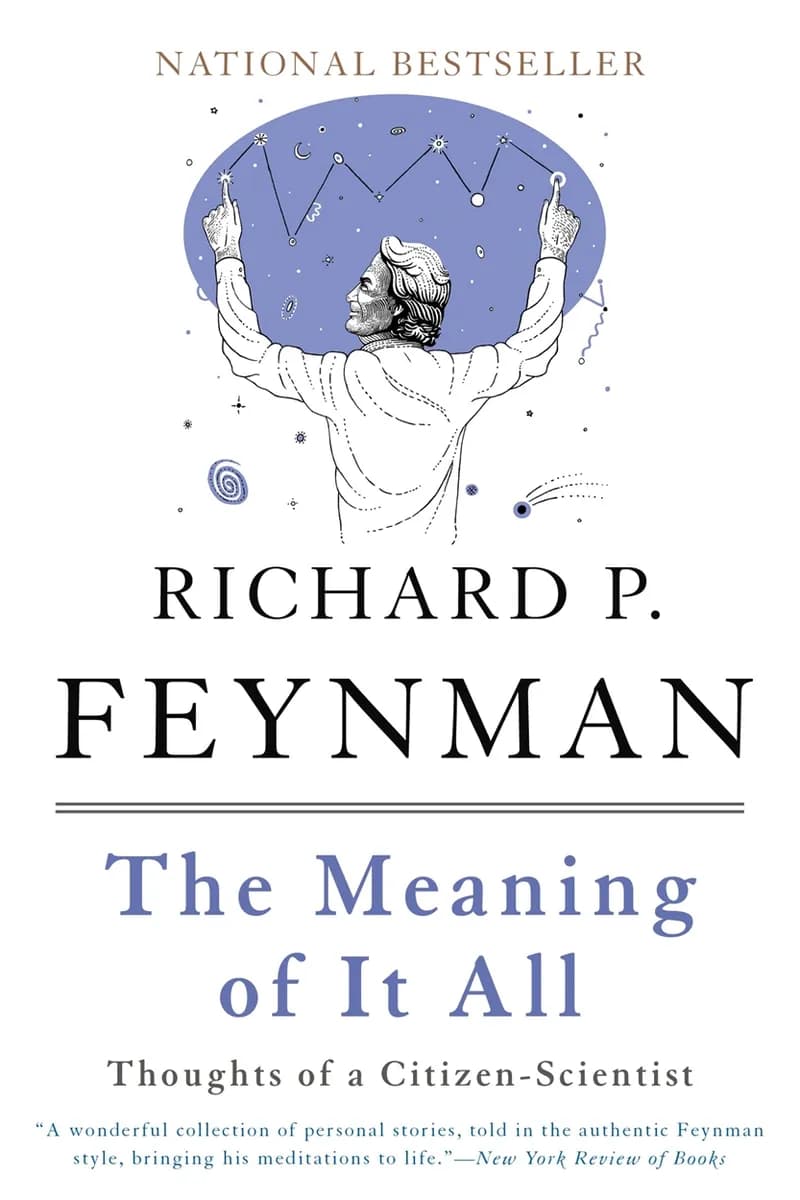
Some people say, "How can you live without knowing?" I do not know what they mean. I always live without knowing. That is easy. How you get to know is what I want to know.
We absolutely must leave room for doubt or there is no progress and no learning. There is no learning without having to pose a question. And a question requires doubt. People search for certainty. But there is no certainty. People are terrified — how can you live and not know? It is not odd at all. You only think you know, as a matter of fact. And most of your actions are based on incomplete knowledge and you really don't know what it is all about, or what the purpose of the world is, or know a great deal of other things. It is possible to live and not know.
The first one has to do with whether a man knows what he is talking about, whether what he says has some basis or not. And my trick that I use is very easy. If you ask him intelligent questions — that is, penetrating, interested, honest, frank, direct questions on the subject, and no trick questions — then he quickly gets stuck. It is like a child asking naive questions. If you ask naive but relevant questions, then almost immediately the person doesn't know the answer, if he is an honest man.
You can know the name of that bird in all the languages of the world, but when you're finished, you'll know absolutely nothing whatever about the bird. You'll only know about humans in different places, and what they call the bird. ... I learned very early the difference between knowing the name of something and knowing something.
p. 14