Quotes
We witness a passing phase of eternity. Important things happen but some people never notice. Accidents intervene. You are not present at episodes. You depend on reports. And people shutter their minds. What good are reports? History in a news account? Preselected at an editorial conference, digested and excreted by prejudice? Accounts you need seldom come from those who make history. Diaries, memoirs and autobiographies are subjective forms of special pleading. Archives are crammed with such suspect stuff.
Governments may rise and fall for reasons which appear insignificant, Prince. What small events! An argument between two women... which way the wind blows on a certain day... a sneeze, a cough, the length of a garment or the chance collision of a fleck of sand and a courtier's eye. It is not always the majestic concerns of Imperial ministers which dictate the course of history, nor is it necessarily the pontifications of priests which move the hands of God.
No matter how exotic human civilization becomes, no matter the developments of life and society nor the complexity of the machine/human interface, there always come interludes of lonely power when the course of humankind, depends upon the relatively simple actions of single individuals.
The gravest error a thinking person can make is to believe that one particular version of history is absolute fact. History is recorded by a series of observers, none of whom is impartial. The facts are distorted by sheer passage of time and — especially in the case of the Butlerian Jihad — thousands of years of humanity's dark ages, deliberate misrepresentations by religious sects, and the inevitable corruption that comes from an accumulation of careless mistakes. The wise person, then, views history as a set of lessons to be learned, choices and ramifications to be considered and discussed, and mistakes that should never again be made.
In truth, is it better to remember or to forget? We must balance this decision between our history and our humanity.
When we consider the founders of our nation: Jefferson, Washington, Samuel and John Adams, Madison and Monroe, Benjamin Franklin, Tom Paine and many others; we have before us a list of at least ten and maybe even dozens of great political leaders. They were well educated. Products of the European Enlightenment, they were students of history. They knew human fallibility and weakness and corruptibility. They were fluent in the English language. They wrote their own speeches. They were realistic and practical, and at the same time motivated by high principles. They were not checking the pollsters on what to think this week. They knew what to think. They were comfortable with long-term thinking, planning even further ahead than the next election. They were self-sufficient, not requiring careers as politicians or lobbyists to make a living. They were able to bring out the best in us. They were interested in and, at least two of them, fluent in science. They attempted to set a course for the United States into the far future — not so much by establishing laws as by setting limits on what kinds of laws could be passed. The Constitution and its Bill of Rights have done remarkably well, constituting, despite human weaknesses, a machine able, more often than not, to correct its own trajectory. At that time, there were only about two and a half million citizens of the United States. Today there are about a hundred times more. So if there were ten people of the caliber of Thomas Jefferson then, there ought to be 10 x 100 = 1,000 Thomas Jefferson's today. Where are they?
Much of human history can, I think, be described as a gradual and sometimes painful liberation from provincialism, the emerging awareness that there is more to the world than was generally believed by our ancestors.
p. 240
I pity from the bottom of my heart any nation or body of people that is so unfortunate as to get entangled in the net of slavery. I have long since ceased to cherish any spirit of bitterness against the Southern white people on account of the enslavement of my race. No one section of our country was wholly responsible for its introduction, and, besides, it was recognized and protected for years by the General Government. Having once got its tentacles fastened on to the economic and social life of the Republic, it was no easy matter for the country to relieve itself of the institution. Then, when we rid ourselves of prejudice, or racial feeling, and look facts in the face, we must acknowledge that, notwithstanding the cruelty and moral wrong of slavery, the ten million Negroes inhabiting this country, who themselves or whose ancestors went through the school of American slavery, are in a stronger and more hopeful condition, materially, intellectually, morally, and religiously, than is true of an equal number of black people in any other portion of the globe. This is so to such an extend that Negroes in this country, who themselves or whose forefathers went through the school of slavery, are constantly returning to Africa as missionaries to enlighten those who remained in the fatherland. This I say, not to justify slavery — on the other hand, I condemn it as an institution, as we all know that in America it was established for selfish and financial reasons, and not from a missionary motive — but to call attention to a fact, and to show how Providence so often uses men and institutions to accomplish a purpose.
“It can’t make things any worse.”
“If there’s one thing that a study of history has taught us, it is that things can always get worse,” said my friend.
p. 5
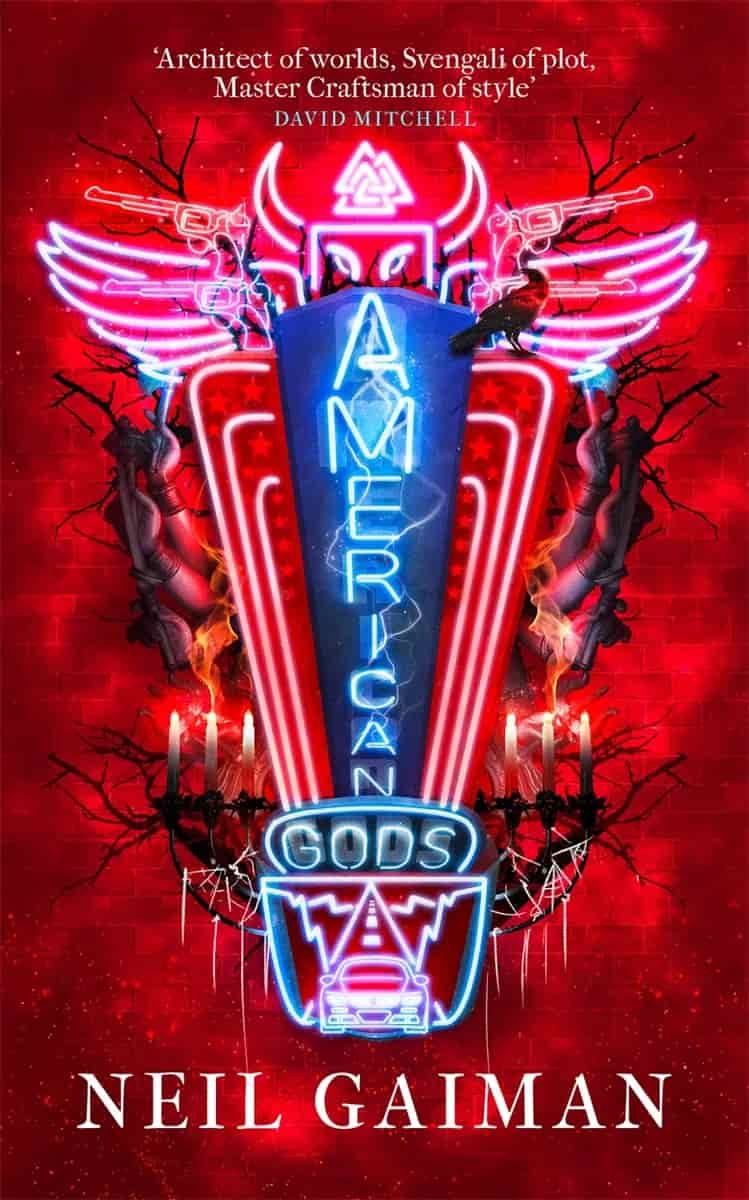
The important thing to understand about American history, wrote Mr. Ibis, in his leather-bound journal, is that it is fictional, a charcoal-sketched simplicity for children, or the easily bored. For the most part it is uninspected, unimagined, unthought, a representation of the thing, and not the thing itself. It is a fine fiction, he continued, pausing for a moment to dip his pen in the inkwell and collect his thoughts, that America was founded by pilgrims, seeking the freedom to believe as they wished, that they came to the Americas, spread and bred and filled the empty land.
In truth, the American colonies were as much a dumping ground as an escape, a forgetting place.
What would become of history, had we not a dependence on the veracity of the historian, according to the experience, what we have had of mankind?
There is no creature whose inward being is so strong that it is not greatly determined by what lies outside it. A new Theresa will hardly have the opportunity of reforming a conventual life, any more than a new Antigone will spend her heroic piety in daring all for the sake of a brother's burial: the medium in which their ardent deeds took shape is forever gone. But we insignificant people with our daily words and acts are preparing the lives of many Dorotheas, some of which may present a far sadder sacrifice than that of the Dorothea whose story we know.