Quotes
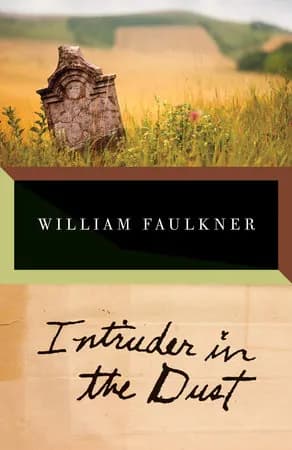
It's all now you see. Yesterday won't be over until tomorrow and tomorrow began ten thousand years ago. For every Southern boy fourteen years old, not once but whenever he wants it, there is the instant when it's still not yet two o'clock on that July afternoon in 1863, the brigades are in position behind the rail fence, the guns are laid and ready in the woods and the furled flags are already loosened to break out and Pickett himself with his long oiled ringlets and his hat in one hand probably and his sword in the other looking up the hill waiting for Longstreet to give the word and it's all in the balance, it hasn't happened yet, it hasn't even begun yet, it not only hasn't begun yet but there is still time for it not to begin against that position and those circumstances which made more men than Garnett and Kemper and Armistead and Wilcox look grave yet it's going to begin, we all know that, we have come too far with too much at stake and that moment doesn't need even a fourteen-year-old boy to think This time. Maybe this time with all this much to lose and all this much to gain: Pennsylvania, Maryland, the world, the golden dome of Washington itself to crown with desperate and unbelievable victory the desperate gamble, the cast made two years ago; or to anyone who ever sailed a skiff under a quilt sail, the moment in 1492 when somebody thought This is it: the absolute edge of no return, to turn back now and make home or sail irrevocably on and either find land or plunge over the world's roaring rim.
“Dont you see?” he cried. “Dont you see? This whole land, the whole South, is cursed, and all of us who derive from it, whom it ever suckled, white and black both, lie under the curse? Granted that my people brought the curse onto the land: maybe for that reason their descendants alone can—not resist it, not combat it—maybe just endure and outlast it until the curse is lifted. Then your peoples’ turn will come because we have forfeited ours. But not now. Not yet. Dont you see?”
p. 266
History proves nothing because it contains everything.
Just as the least cultivated nations are usually the best, so those travel best who travel least; they have made less progress than we in our frivolous pursuits, they are less concerned with the objects of our empty curiosity, so that they give their attention to what is really useful. I hardly know any but the Spaniards who travel in this fashion. While the Frenchman is running after all the artists of the country, while the Englishman is getting a copy of some antique, while the German is taking his album to every man of science, the Spaniard is silently studying the government, the manners of the country, its police, and he is the only one of the four who from all that he has seen will carry home any observation useful to his own country. The ancients travelled little, read little, and wrote few books; yet we see in those books that remain to us, that they observed each other more thoroughly than we observe our contemporaries. Without going back to the days of Homer, the only poet who transports us to the country he describes, we cannot deny to Herodotus the glory of having painted manners in his history, though he does it rather by narrative than by comment; still he does it better than all our historians whose books are overladen with portraits and characters. Tacitus has described the Germans of his time better than any author has described the Germans of to-day. There can be no doubt that those who have devoted themselves to ancient history know more about the Greeks, Carthaginians, Romans, Gauls, and Persians than any nation of to-day knows about its neighbours.
I observe that in modern times men only get a hold over others by force or self-interest, while the ancients did more by persuasion, by the affections of the heart; because they did not neglect the language; of symbolic expression. All agreements were drawn up solemnly, so that they might be more inviolable; before the reign of force, the gods were the judges of mankind; in their presence, individuals made their treaties and alliances, and pledged themselves to perform their promises; the face of the earth was the book in which the archives were preserved. The leaves of this book were rocks, trees, piles of stones, made sacred by these transactions, and regarded with reverence by barbarous men; and these pages were always open before their eyes. The well of the oath, the well of the living and seeing one; the ancient oak of Mamre, the stones of witness, such were the simple but stately monuments of the sanctity of contracts; none dared to lay a sacrilegious hand on these monuments, and man's faith was more secure under the warrant of these dumb witnesses than it is to-day upon all the rigour of the law.
Thus the universe was peopled with gods like themselves. The stars, the winds and the mountains, rivers, trees, and towns, their very dwellings, each had its soul, its god, its life. The teraphim of Laban, the manitos of savages, the fetishes of the negroes, every work of nature and of man, were the first gods of mortals; polytheism was their first religion and idolatry their earliest form of worship. The idea of one God was beyond their grasp, till little by little they formed general ideas, and they rose to the idea of a first cause and gave meaning to the word "substance," which is at bottom the greatest of abstractions.
The perception of our action upon other bodies must have first induced us to suppose that their action upon us was effected in like manner. Thus man began by thinking that all things whose action affected him were alive. He did not recognise the limits of their powers, and he therefore supposed that they were boundless; as soon as he had supplied them with bodies they became his gods. In the earliest times men went in terror of everything and everything in nature seemed alive. The idea of matter was developed as slowly as that of spirit, for the former is itself an abstraction.
I would prefer to begin the study of the human heart with reading the lives of individuals; for then the man hides himself in vain, the historian follows him everywhere; he never gives him a moment's grace nor any corner where he can escape the piercing eye of the spectator; and when he thinks he is concealing himself, then it is that the writer shows him up most plainly. "Those who write lives," says Montaigne, "in so far as they delight more in ideas than in events, more in that which comes from within than in that which comes from without, these are the writers I prefer; for this reason Plutarch is in every way the man for me."
War only makes manifest events already determined by moral causes, which few historians can perceive.
The philosophic spirit has turned the thoughts of many of the historians of our times in this direction; but I doubt whether truth has profited by their labours. The rage for systems has got possession of all alike, no one seeks to see things as they are, but only as they agree with his system.
I leave modern history on one side, not only because it has no character and all our people are alike, but because our historians, wholly taken up with effect, think of nothing but highly coloured portraits, which often represent nothing. [Footnote: Take, for instance, Guicciardini, Streda, Solis, Machiavelli, and sometimes even De Thou himself. Vertot is almost the only one who knows how to describe without giving fancy portraits.] The old historians generally give fewer portraits and bring more intelligence and common-sense to their judgments; but even among them there is plenty of scope for choice, and you must not begin with the wisest but with the simplest. I would not put Polybius or Sallust into the hands of a youth; Tacitus is the author of the old, young men cannot understand him; you must learn to see in human actions the simplest features of the heart of man before you try to sound its depths. You must be able to read facts clearly before you begin to study maxims. Philosophy in the form of maxims is only fit for the experienced. Youth should never deal with the general, all its teaching should deal with individual instances. To my mind Thucydides is the true model of historians. He relates facts without giving his opinion; but he omits no circumstance adapted to make us judge for ourselves. He puts everything that he relates before his reader; far from interposing between the facts and the readers, he conceals himself; we seem not to read but to see. Unfortunately he speaks of nothing but war, and in his stories we only see the least instructive part of the world, that is to say the battles. The virtues and defects of the Retreat of the Ten Thousand and the Commentaries of Caesar are almost the same. The kindly Herodotus, without portraits, without maxims, yet flowing, simple, full of details calculated to delight and interest in the highest degree, would be perhaps the best historian if these very details did not often degenerate into childish folly, better adapted to spoil the taste of youth than to form it; we need discretion before we can read him. I say nothing of Livy, his turn will come; but he is a statesman, a rhetorician, he is everything which is unsuitable for a youth.
To remove these two obstacles at once, and to bring the human heart within his reach without risk of spoiling his own, I would show him men from afar, in other times or in other places, so that he may behold the scene but cannot take part in it. This is the time for history; with its help he will read the hearts of men without any lessons in philosophy; with its help he will view them as a mere spectator, dispassionate and without prejudice; he will view them as their judge, not as their accomplice or their accuser.